
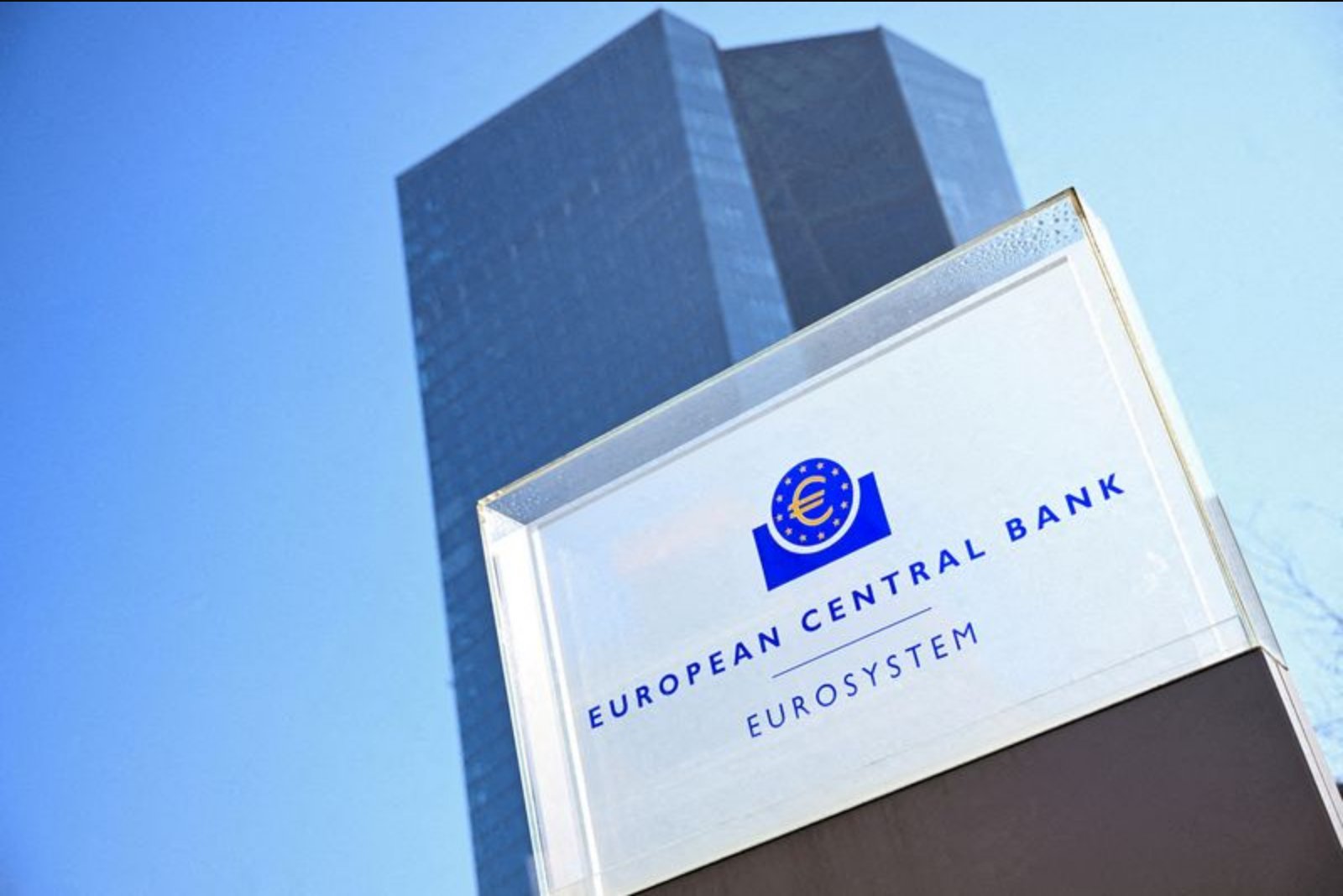
The European Central Bank decided to pause on changing interest rates on Thursday, joining several other major central banks that held policy steady this week. Yet the tone from policymakers was clear - a further rise in borrowing costs is still a live option if the current spike in energy-driven consumer prices begins to feed through more broadly into the economy.
Inflation has accelerated well beyond the ECB's 2% target since the outbreak of the Iran war, and officials are closely monitoring whether this increase will generate second-round effects - such as higher wage demands and broader price pressures - that would make inflation self-sustaining. At present there is little visible evidence of those secondary effects, and the services sector - historically a mainstay of price momentum - is cooling faster than some forecasters expected. That moderation reduces immediate pressure on the ECB and gives policymakers additional time to assess incoming data that do not yet fully reflect the war's economic implications.
Still, any postponement of tightening is expected to be brief. Investors are pricing in a potential rate move in June, followed by two further hikes later in the year, a forecast driven by the view that peace in Iran is unlikely in the near term and oil prices have climbed above $110 a barrel - approaching stress levels anticipated in the ECB's "adverse" scenario.
"Essentially, the ECB wants to signal to price and wage setters that it’s alert and will not let inflation get embedded," Morgan Stanley economist Jens Eisenschmidt said. He added that the likely increases would not radically alter the broader interest rate backdrop: "These hikes wouldn’t fundamentally change the interest rate environment. They would essentially move the deposit rate from broadly neutral to the upper range of neutral."
Economic growth, however, is cooling rapidly, presenting a policy dilemma. The ECB faces the task of containing inflation without tipping an already fragile economy into recession. Recent surveys this week depicted a sharp deterioration in business sentiment, a faster-than-expected decline in the services sector, falling corporate profits, continued export weakness linked to tariffs, and indications that banks plan to tighten lending to companies.
Despite these headwinds, the surveys also revealed that both households and firms expect inflation to accelerate. Data scheduled for release just hours before the ECB's decision were forecast to show headline inflation in the 21-nation euro area rising to 2.9% in April from 2.6% in March - a level clearly above the bank's 2% objective.
"There are high chances of second-round effects," BNP Paribas Chief Economist Luigi Speranza said. "The probability that some of the increase in energy prices, in food prices propagates and spills over to core inflation in a more perceived way is really high."
Despite concern over inflation, policymakers signaled they were not hurried to act immediately. Other major central banks - including the Bank of Japan, the U.S. Federal Reserve and the Bank of Canada - also left rates unchanged this week, and the Bank of England was expected to follow suit. ECB officials have argued that the roughly six weeks between policy meetings can be important, and that waiting for more comprehensive data is warranted before undertaking further hikes.
They also emphasized that the current inflation episode differs from the 2022 surge, when conditions were more acute: inflation then was significantly higher, policy rates were still negative, government fiscal positions were looser, labour markets were tighter, and households had larger pandemic-era savings buffers available to spend.
Market strategists have been mapping scenarios in which sustained high oil prices would prompt the ECB to act. "We believe that, if the spot price of Brent crude oil were to remain above $95 per barrel by the ECB’s June meeting, the ECB would raise rates by 25 basis points in June and then again in September," Nomura said. The firm added that the Governing Council would want to see clear evidence that the shock is producing persistently higher inflation or is materially lifting inflation expectations before voting to raise rates.
For now, the ECB appears to be balancing the need to demonstrate vigilance to price and wage setters with the risks that further tightening could exacerbate an already weakening growth picture. The coming weeks of data will be pivotal in determining whether policymakers shift from signaling to action.
Impacted areas: energy prices, services sector, corporate profits, exports, and bank lending conditions.