
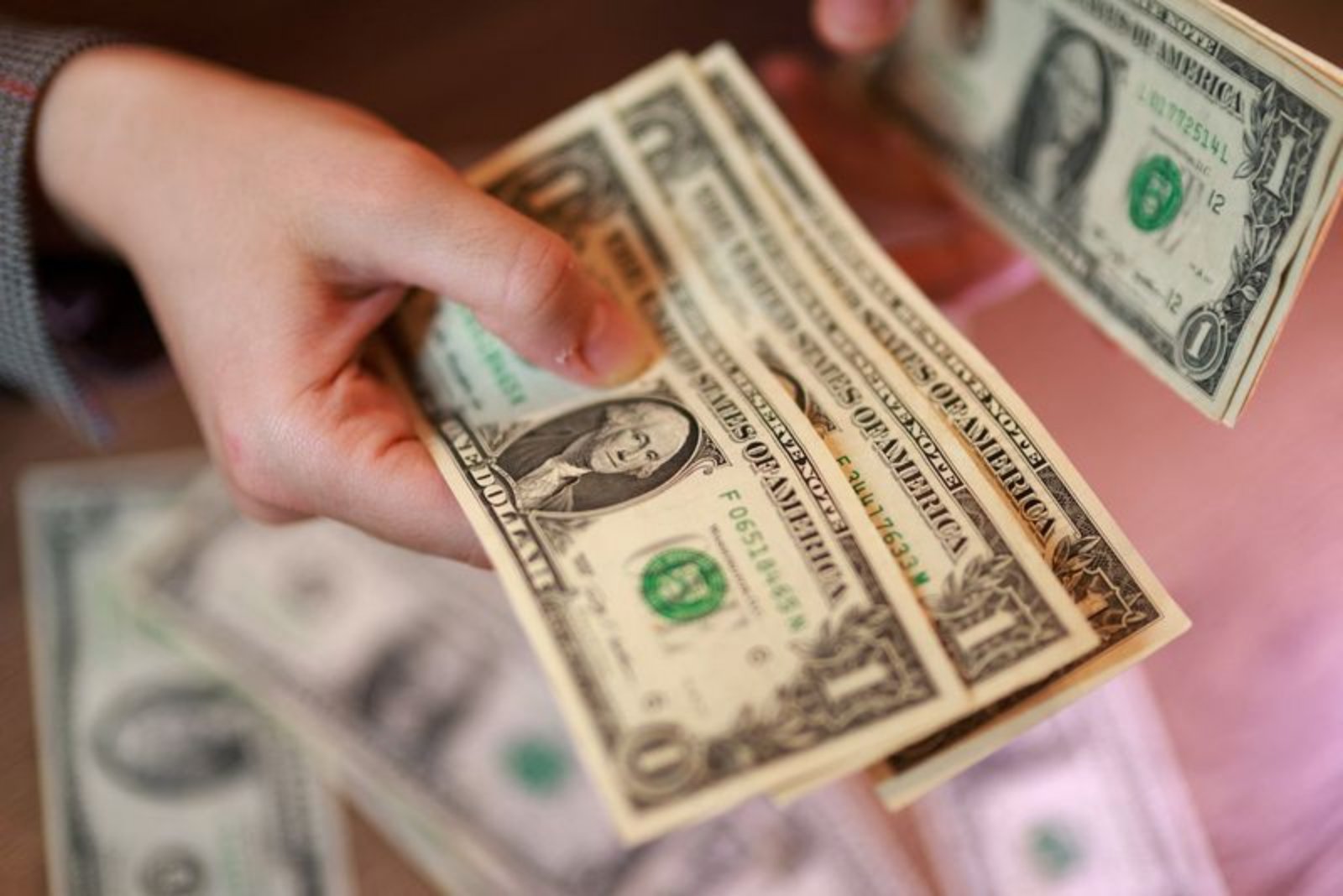
The U.S. dollar climbed on Wednesday after data showed a sharp increase in producer prices for April, a development that pushed the greenback to a two-week high as markets also turned attention to the opening of talks between U.S. President Donald Trump and Chinese President Xi Jinping in Beijing.
The U.S. Labor Department reported that the Producer Price Index for final demand surged 1.4% in April, the largest monthly gain since March 2022 and well above the 0.5% rise economists polled by Reuters had expected. March's increase was revised up to 0.7%.
On a year-on-year basis, the PPI rose 6.0% in the 12 months through April, the strongest annual increase since December 2022 and ahead of the 4.9% forecast. The March year-on-year figure was revised to a 4.3% increase, correcting earlier reporting.
"That escalated quickly," said Brian Jacobsen, chief economist at Annex Wealth Management in Menomonee Falls, Wisconsin. He pointed to a 15.6% jump in the index for gasoline and said higher transportation and distribution costs have driven up producer prices. Jacobsen added that, for now, the energy-driven surge poses a larger threat to corporate margins than to consumer inflation, although sustained price elevations could transmit to consumers over time.
Market reaction
The dollar index, which tracks the greenback against a basket of currencies, rose 0.24% to 98.56 after touching 98.601, its highest level since April 30. The euro slipped 0.3% to $1.1702.
The strong producer price reading followed an annual consumer price release that showed its largest gain in three years, underscoring recent upside surprises in U.S. inflation measures.
Markets have largely discounted the prospect of a Federal Reserve rate cut this year. Expectations for a hike of at least 25 basis points at the Fed's December meeting increased to 35.6% according to the CME FedWatch tool, up from 16.3% a week earlier.
Diplomatic backdrop and Chinese markets
President Trump arrived in Beijing on Wednesday, accompanied by a delegation that included notable business figures. He and his party received an elaborate welcome as he prepared to press Chinese leaders to "open up" to U.S. business during the opening of a two-day summit.
The Chinese yuan ticked stronger, gaining 0.03% to 6.789 per dollar after reaching 6.7852, its strongest level since February 2023.
Before his arrival in Beijing, Trump said he did not expect to need China’s assistance to resolve the war in Iran or to alleviate Tehran’s control over the Strait of Hormuz.
Commodities and geopolitical risk
U.S. crude oil rose 0.27% to $102.46 a barrel, while Brent crude eased 0.24% to $107.51 per barrel, holding above the $100 mark. Oil prices remained elevated as a fragile ceasefire between the U.S. and Iran continued to hold, but the Strait of Hormuz was reported to be effectively closed. President Trump said the ceasefire was "on life support" after Tehran rejected a U.S. proposal to end the conflict, a development that reduced hopes of an imminent peace deal.
Foreign exchange dynamics beyond the dollar
The Japanese yen weakened 0.14% to 157.82 per dollar. A sharp move stronger on Tuesday had prompted talk of a "rate check" by authorities, a step that can precede formal currency intervention. Former Bank of Japan Governor Haruhiko Kuroda said Japan's recent foreign exchange intervention may have prevented the yen from falling below 160 per dollar, but he warned it was unlikely to provide lasting support for the currency.
Sterling fell 0.3% to $1.3496 amid domestic political turmoil. Reports said a health minister was preparing to resign, a move that could trigger a leadership contest for Prime Minister and complicate efforts to set out the government's agenda.
Outlook
The combination of a hotter-than-expected PPI print, continued strength in consumer prices, and elevated oil prices has prompted investors to reassess the timing and direction of U.S. monetary policy. Coupled with diplomatic and geopolitical developments in Beijing and the Middle East, the data and events of the day contributed to significant moves in currency and commodity markets.
Market participants will continue to weigh incoming economic data against the evolving political backdrop as they calibrate expectations for interest rates, corporate margins, and cross-border flows of capital.