
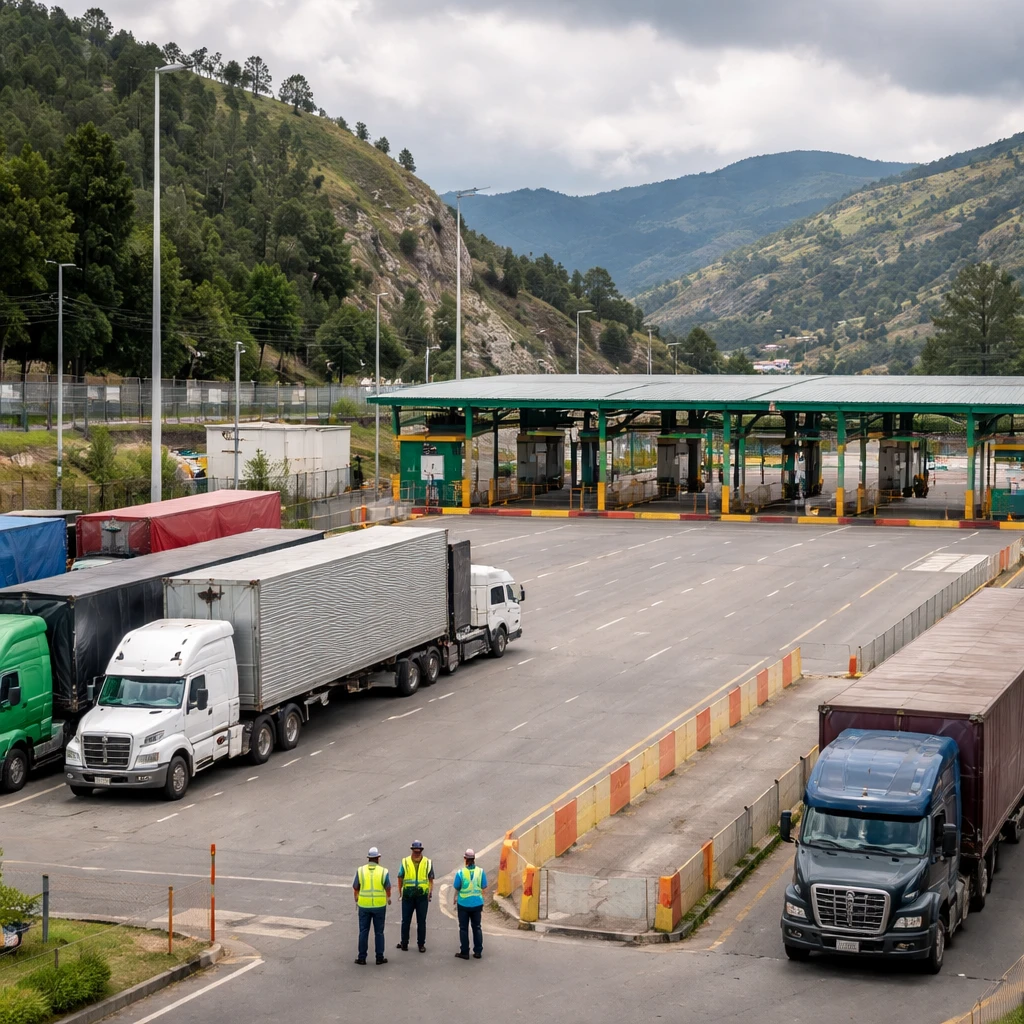
Trade flows between Colombia and Ecuador have been brought to a virtual standstill after Ecuadorean President Daniel Noboa enacted a 100% tariff that took effect on Friday, industry groups operating along the shared border said.
Officials in Quito have not specified which goods are covered by the new punitive rate. The measure marks a further escalation from lower tariff levels that were first introduced in February.
In response, Colombia on Thursday formalized a set of differentiated tariffs - 35%, 50% and 75% - applied to about 190 products from Ecuador, according to the government of President Gustavo Petro.
Quito has defended the 100% tariff as a reaction to a trade imbalance with Colombia and has accused Bogotá of failing to adequately address drug trafficking along the countries' 586-kilometer border. President Petro has repeatedly dismissed that accusation.
Colombia's trade minister described Bogotá's measures on Thursday as appropriate and framed the response as intended to limit the economic impact of Ecuador's tariffs on the Colombian economy.
Commercial traffic has already shown signs of collapse at major crossing points. "It's a whim, the very inflated egos of the two presidents have kept escalating this," Carlos Bastidas, head of the Heavy Transport Association of Carchi in Ecuador, told Reuters. He said the movement of goods is minimal now and warned it could fall to zero in the coming week.
Bastidas provided a snapshot of conditions at the Rumichaca International Bridge, noting that as many as 150 trucks might normally queue to cross there; on Friday roughly five vehicles were present.
Industry groups operating along the border described trade as nearly halted following the imposition of the 100% tariff. Bogotá has enacted its own differentiated duties on about 190 Ecuadorean products as part of the tit-for-tat measures. Clear indications of how long the standoff will last were not provided by either government.
Context and outlook
The current impasse represents a rapid escalation of tariff measures between the two neighboring governments. While Quito has cited trade imbalances and security concerns along the border, Bogotá has rejected the security allegations and responded with targeted tariffs it says are intended to shield the Colombian economy.