
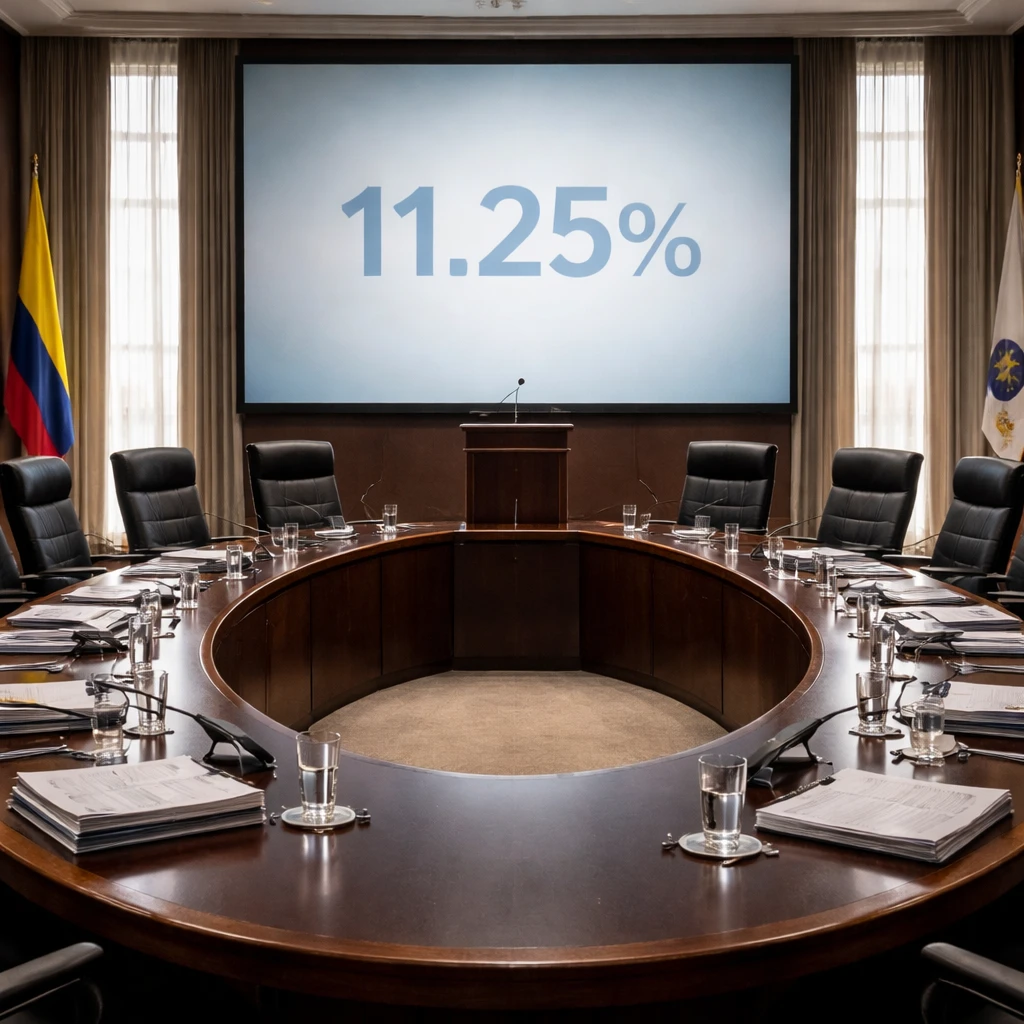
Colombia's central bank on Thursday left its key policy interest rate unchanged at 11.25%, surprising most market watchers who had widely expected another increase. The decision was unanimous among board members, bank governor Leonardo Villar said as he read the policy statement.
Only one analyst out of a 28-person Bloomberg survey had anticipated a pause. The remainder of respondents had forecast rate hikes ranging from 0.5 to 0.75 percentage points, reflecting widespread expectations of further tightening before the bank opted to hold.
"The decision taken today by the board continues to support the recovery of economic activity without putting at risk the convergence of inflation to its target," Villar said in the statement, reiterating the bank's stated balance between growth and price stability.
The pause follows a period of heightened tension between the central bank and President Gustavo Petro. The president publicly criticized policymakers after they raised borrowing costs in March, and the strained relationship has manifested in high-profile incidents. Last month, Finance Minister Germán Ávila - who holds a vote on the monetary policy board and chairs its meetings - reportedly walked out of a meeting in protest.
President Petro has used strong language in public settings toward the central bank's board. During a televised cabinet meeting earlier in the month, he described board members as fascists and accused them of attempting to carry out genocide by starving Colombians. He also indicated he might raise the minimum wage again if the bank pushed through another rate increase. This year Petro approved a record 23% rise in the minimum wage, which monetary policymakers have cited as one of the inflationary risks facing the economy.
Inflation remains a persistent challenge for Colombia. The country has recorded inflation above its target for five consecutive years, and annual consumer price growth accelerated to 5.6% last month - the highest reading since 2024, according to the data cited by the bank.
The timing of the policy decision is notable: it comes roughly one month before the first round of presidential elections. Senator Iván Cepeda, an ally of President Petro, is leading the early vote count, though recent polls referenced in the reporting indicate he may face a close runoff in June against either conservative candidates Paloma Valencia or Abelardo de la Espriella.
With inflation pressures and political tensions both prominent in the public debate, the central bank's unanimous hold on rates introduces additional questions about the near-term path of monetary policy, economic activity and electoral dynamics.