
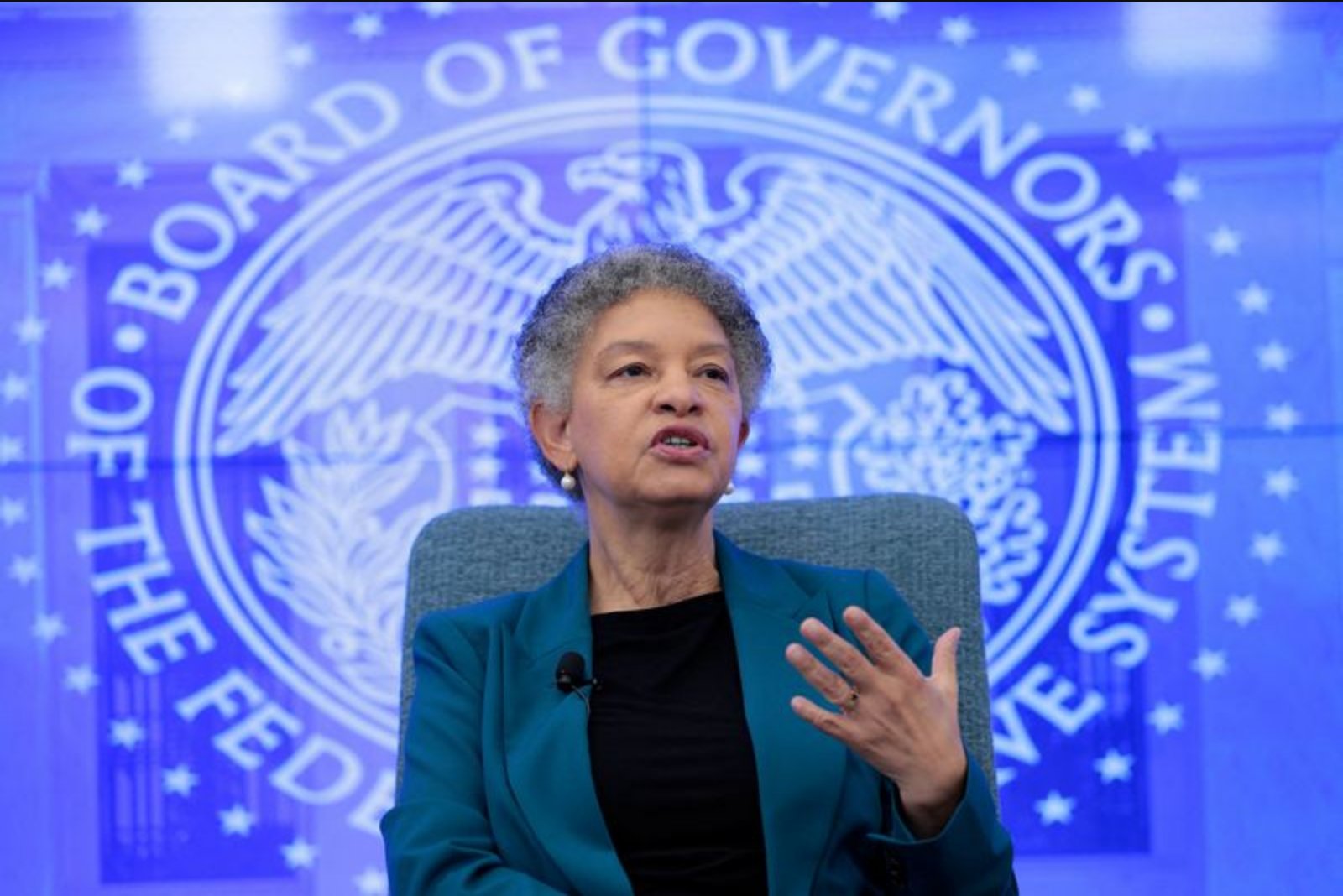
Boston Federal Reserve President Susan Collins said Wednesday that additional tightening of monetary policy could become necessary if inflation pressures fail to subside. In prepared remarks to the Boston Economic Club, Collins framed the potential for further rate hikes as conditional - not her base case, but a scenario she could envision if inflation does not return durably to the Fed’s 2% objective.
"While it is not in my most likely outlook, I could envision a scenario in which some policy tightening is needed to ensure that inflation returns durably to 2% in a timely manner," Collins said. She tied a large share of the monetary outlook to the trajectory of the ongoing war in the Middle East, warning that the longer the conflict continues, the greater the inflation risk.
Collins said the Fed’s current policy stance is - in her view - positioned to adapt as the outlook and balance of risks change. She added that, "given this outlook and the balance of risks, I believe it will likely be important to maintain the current slightly restrictive monetary policy stance for some time." That characterization underscores her preference for holding policy settings at levels that are modestly restrictive rather than moving quickly toward easing.
On the inflation side, Collins said the recent uptick in price pressures is layered on top of an extended period of above-target inflation, which has eroded her willingness to "look through" another supply-driven spike. "More than five years of above-target inflation has reduced my patience for 'looking through' another supply shock," she said, stressing the importance of keeping long-term inflation expectations anchored in the current environment.
Collins cautioned that even a rapid resolution of the U.S.-Israel war with Iran would still leave global supply chains disturbed and under pressure. She noted that although the U.S. economy is relatively insulated from some international shocks, continued conflict raises the likelihood of "more substantial negative spillovers" over time.
On the domestic growth and labor outlook, Collins described her forecast as consistent with "resilient demand," "solid" economic growth and the prospect of a "modest" rise in unemployment. She characterized labor market dynamics as "low-hire, low-fire," indicating a period in which hiring and separations are both subdued relative to past cycles.
Regarding the timing of a decline in inflation, Collins said she does not expect the current high levels of price growth to abate this year. She noted, however, that inflation could begin to ease in 2027. At the same time, she acknowledged elevated odds of alternative outcomes, stating that "the likelihood of other scenarios - with higher and more persistent inflation, more adverse labor market outcomes, or both - has increased."
Collins is not a current voting member of the Federal Open Market Committee, which at its meeting late last month left the target range for the federal funds rate unchanged at 3.50%-3.75%. In recent weeks, several Fed officials have moved away from earlier expectations that rate cuts might resume later this year, a shift driven in part by inflationary pressures tied to the war in the Middle East.
The case for easing policy was further weakened when April data showed stronger-than-expected job growth, an outcome that gave policymakers additional room to concentrate on inflation. Other Fed officials have echoed Collins’ view that, depending on how inflation evolves, higher interest rates may be necessary to bring inflation back to the 2% target.
Taken together, Collins’ remarks underline a cautious Federal Reserve stance: the central bank appears prepared to keep policy somewhat restrictive for an extended period, and to tighten further if inflation does not move back toward the target in a sustainable way. Much of that calculus, she emphasized, hinges on how long international conflicts continue and how much they continue to influence prices and supply chains.