
Britain's annual State Opening of Parliament took place under an unusual political cloud on Wednesday as an impending leadership challenge loomed over the ceremony.
Prime Minister Keir Starmer arrived at the landmark event seeking to steady a government shaken by substantial losses for Labour in recent local and regional polls. He had framed the ceremonial address by King Charles as an opportunity to reassert his authority and to "get on with the job of changing our country for the better".
What was already expected to be a tense day - one that forced the prime minister to appear publicly alongside political opponents who have relished his difficulties - grew more fraught at about 1000 GMT when a major report said a prominent minister was preparing to quit.
The Times reported that Wes Streeting, the health secretary and widely viewed as one of the most likely figures to mount a challenge to Starmer, was poised to resign, a move that would likely trigger a leadership contest. When the report emerged, King Charles - wearing full ceremonial military dress and accompanied by Queen Camilla - was still approaching Parliament in his royal carriage.
Streeting's team had no immediate comment following the report. Earlier, they had said he did not want to distract from the King’s Speech.
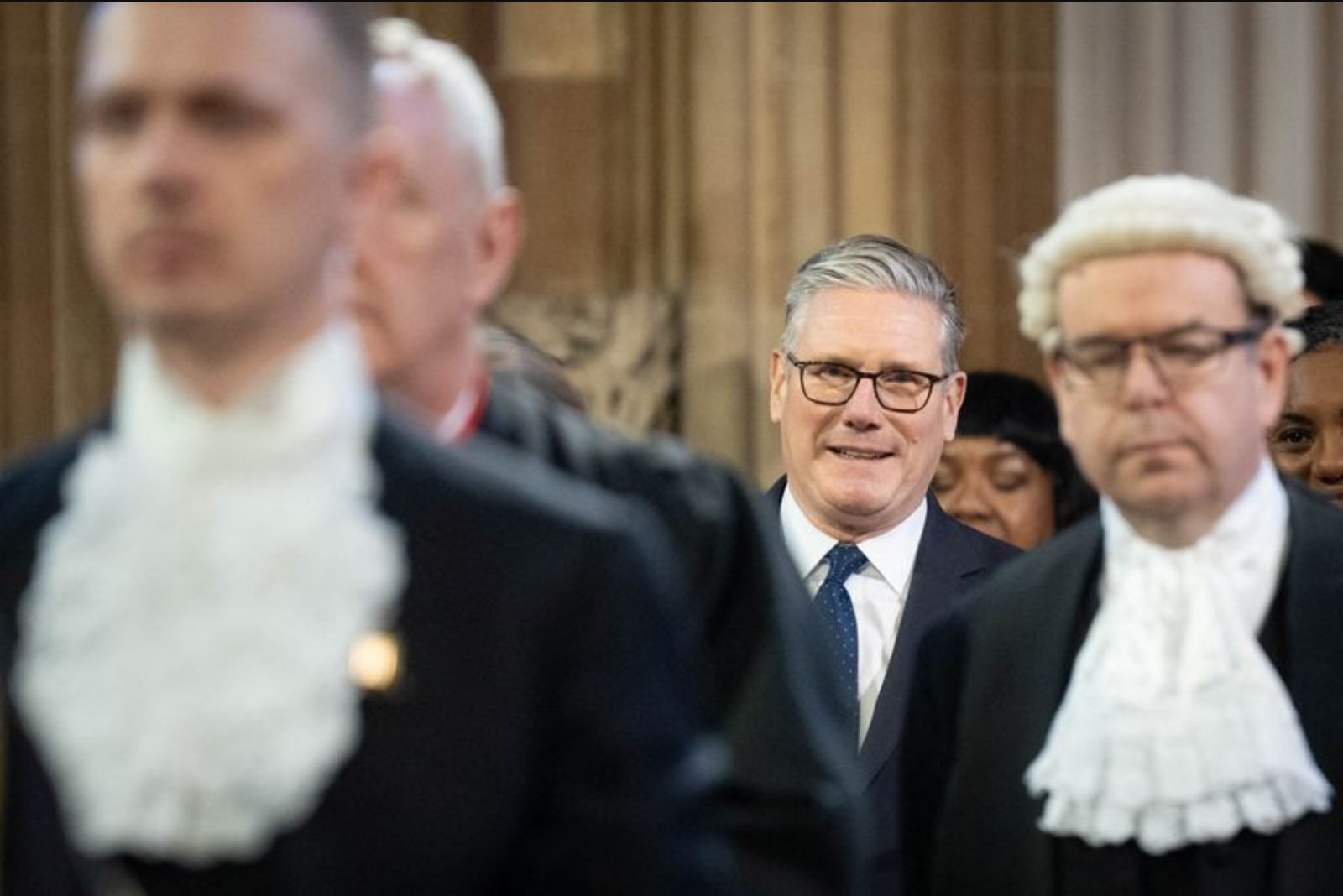
Despite the turbulence, the centuries-old ceremony continued. Starmer led the procession of lawmakers from the House of Commons to the House of Lords, a ritual that is part of the complex reopening of the legislature that occurs roughly once a year.
As the king's representative knocked on the heavy door that guards the chamber, one lawmaker quipped "Not now, Andy" - a reference to Andy Burnham, the mayor of Greater Manchester and another figure discussed as a potential challenger who, because of his current office, is not entitled to participate in the ceremony.
Television footage captured moments of constrained civility: the prime minister exchanging terse small talk with Kemi Badenoch, leader of the main opposition Conservative Party, who had posted on social media the previous day that Starmer "would be lucky to survive two weeks in his job, let alone two years." Behind Starmer, members of his own party followed; the article notes that almost a quarter of Labour lawmakers want him to step down.
Once inside the Lords, King Charles delivered a speech drafted by Starmer's government, setting out their programme and objectives for the coming 12 months. He brought the address to a close with the line: "I pray that the blessing of Almighty God may rest upon your counsels."
The ceremonial aspects of the State Opening proceeded around a moment of acute political uncertainty. Reported moves by a senior minister to resign, the visible unease within Labour ranks, and pointed remarks from opposition figures combined to make the event as much about internal party stability as about the government's forward agenda.
At several points the unfolding scene juxtaposed pageantry with partisan friction: royal procession and ritual alongside rumours of a leadership contest and public signs of division within the governing party. The day's proceedings concluded with the government programme formally presented to Parliament, even as the question of who leads the party and the government remained unsettled.