
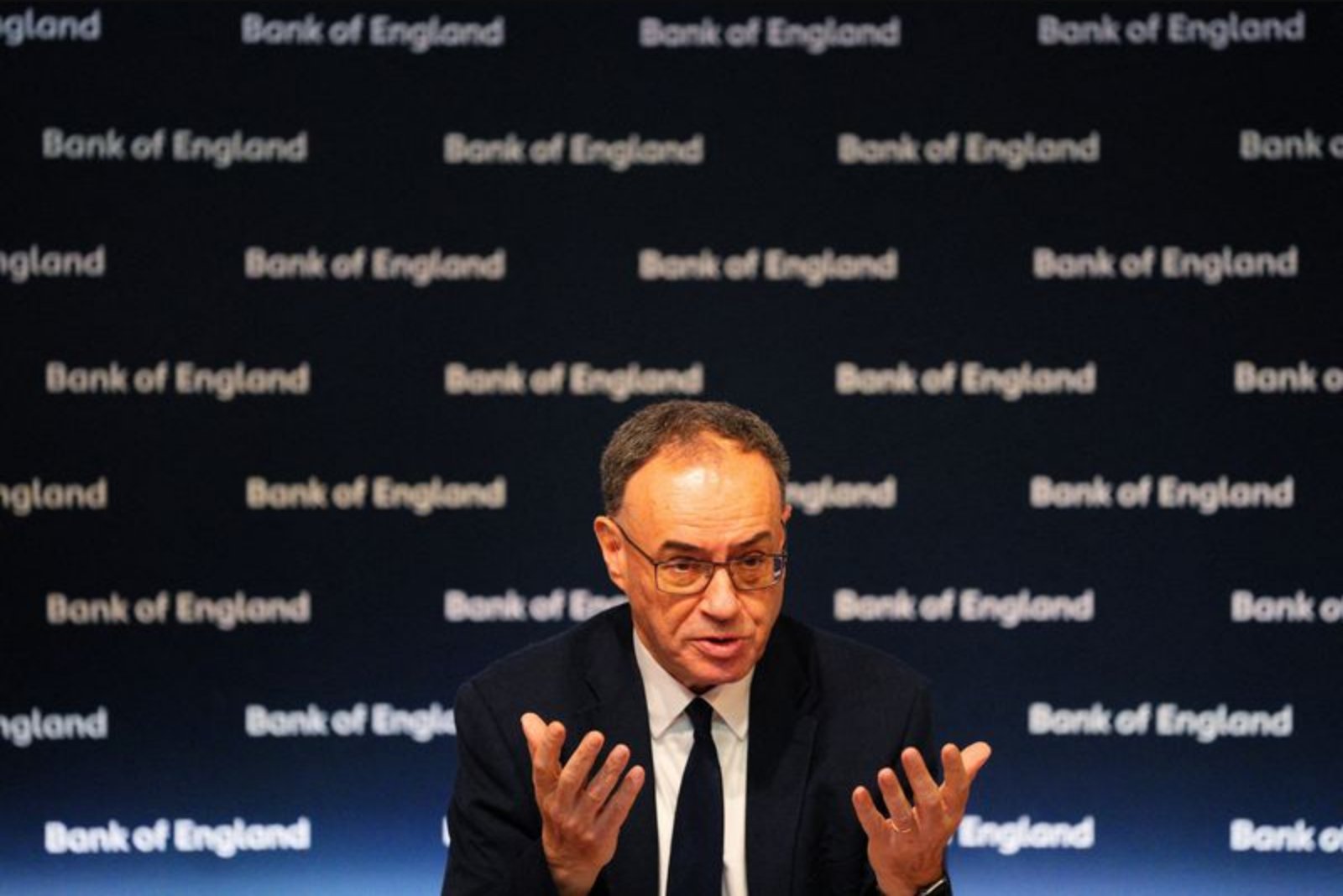
LONDON, April 30 - The Bank of England left its key interest rate unchanged at 3.75% on Thursday and presented scenarios assessing the economic fallout from the war in Iran. At a press conference, Governor Andrew Bailey described a range of outcomes, including one in which policymakers might need to deliver a "forceful" increase in borrowing costs.
On the immediate channels linking the conflict to UK inflation, Bailey emphasized the central role of energy prices. He said: "Where we go from here will depend on the size and duration of the shock to energy prices itself driven by how the conflict in the Middle East evolves and how those higher energy prices affect consumer prices in the United Kingdom."
He highlighted that some of the indirect consequences of higher energy costs would be concentrated in the food sector. "The indirect effects on the inflation are likely to be largest for food prices since food production and distribution are energy intensive," Bailey said, noting that energy-related cost increases can feed into consumer food prices through production and logistics channels.
Bailey also spelled out how slower-moving, second-round effects could complicate the policy response. "Second round effects could arise, for example, if a rise in inflation expectations leads workers to bargain more strongly for wage increases and firms raise wages to maintain real pay for their employees, which in turn would increase their costs and could lead them to set higher prices," he said. That chain - from expectations to wages to prices - is presented as a potential amplifying mechanism for inflation.
Beyond wage dynamics, the governor noted uncertainty could damp business investment. "The uncertainty of the situation is likely to weigh further on firms investment intentions. In addition to being highly uncertain, second-round effects build more slowly than direct and indirect effects that leaves monetary policy with a difficult judgement call," he warned. The slower pace of these second-round channels means they may become visible after the more immediate impacts on energy and consumer prices.
The central bank's assessment sets out a range of plausible inflation paths tied to developments in the Middle East and the transmission of higher energy costs through the economy. One scenario would require a notably stronger monetary response, while others would allow for the current policy stance to be maintained, depending on how the shocks evolve and feed into wages, prices, and corporate decisions.
Key points
- The Bank of England left the policy rate at 3.75% while outlining scenarios linked to the Iran war.
- Higher energy prices are the primary channel to UK consumer inflation, with the largest indirect effects expected in food.
- Second-round effects - including stronger wage bargaining and weaker business investment - could amplify inflation and complicate monetary policy.
Risks and uncertainties
- Scale and persistence of the energy price shock tied to the Middle East conflict - impacts energy and food sectors.
- Potential for rising inflation expectations to trigger wage-price dynamics - affects labour costs and corporate pricing.
- Heightened uncertainty potentially reducing firms' investment intentions - relevant to business investment and broader economic activity.