
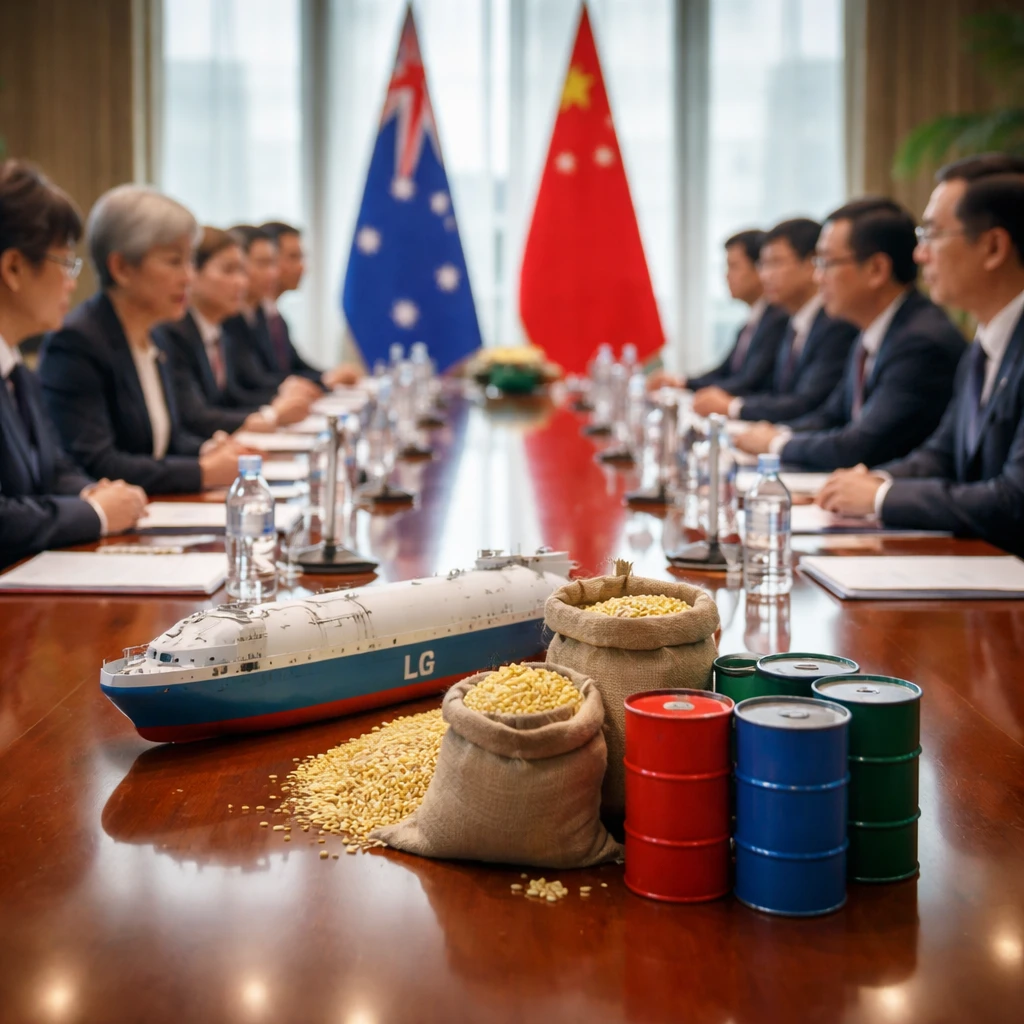
Australian Foreign Minister Penny Wong told Chinese officials on Wednesday that the continuity of commodity and food shipments depends on ongoing imports of petrol, jet fuel and fertilizer. The comments came after meetings in Beijing with Chinese Foreign Minister Wang Yi and other officials.
Wong said she made a point of outlining how inputs China supplies to Australia - among them jet fuel - underpin the Australian resources sector. She linked those inputs directly to the maintenance of trade flows in commodities that are important to both countries.
The Albanese government is delivering a consistent message across the region that emphasizes existing mutual dependence. Canberra is pressing to ensure energy deliveries continue while making clear that Australia will continue to supply liquefied natural gas, coal, food and iron ore.
In a related diplomatic move earlier in April, Wong signed an addition to the free trade agreement with Singapore designed to support stable supplies of essential goods, including food and energy. That step is part of Canberra's broader effort to shore up supply lines for critical commodities.
Wong also noted that China has been restricting exports of some fuels since the war began. She said the Beijing government has begun to facilitate the sale of jet fuel to Australian companies, but she emphasized that discussions are still at an early stage.
These exchanges underline Canberra's strategy of underscoring trade interdependence as a means of protecting commodity flows. The focus is on keeping inputs that support Australia's resource and export sectors moving, while maintaining Australia's own deliveries of major exports.
Key points
- Wong told Chinese officials that stable commodity and food shipments depend on continued imports of petrol, jet fuel and fertilizer - sectors affecting energy and agriculture markets.
- Australia is stressing mutual dependence across the region to secure ongoing energy deliveries, while pledging to continue exports of liquefied natural gas, coal, food and iron ore - impacting resources and commodity markets.
- Canberra has pursued trade measures, including an addition to the Singapore free trade agreement, to help ensure stable supplies of essential goods such as food and energy - relevant to trade and logistics sectors.
Risks and uncertainties
- China has limited exports of some fuels since the war began, which creates uncertainty for energy and transport fuel supplies.
- Facilitation by Beijing for sales of jet fuel to Australian companies is at an early stage, leaving the extent and timing of resumed flows unclear - a short-term risk for aviation fuel markets.
- Efforts to secure stable deliveries depend on diplomatic progress and implementation of trade arrangements, posing ongoing uncertainty for commodity and resource sectors.