
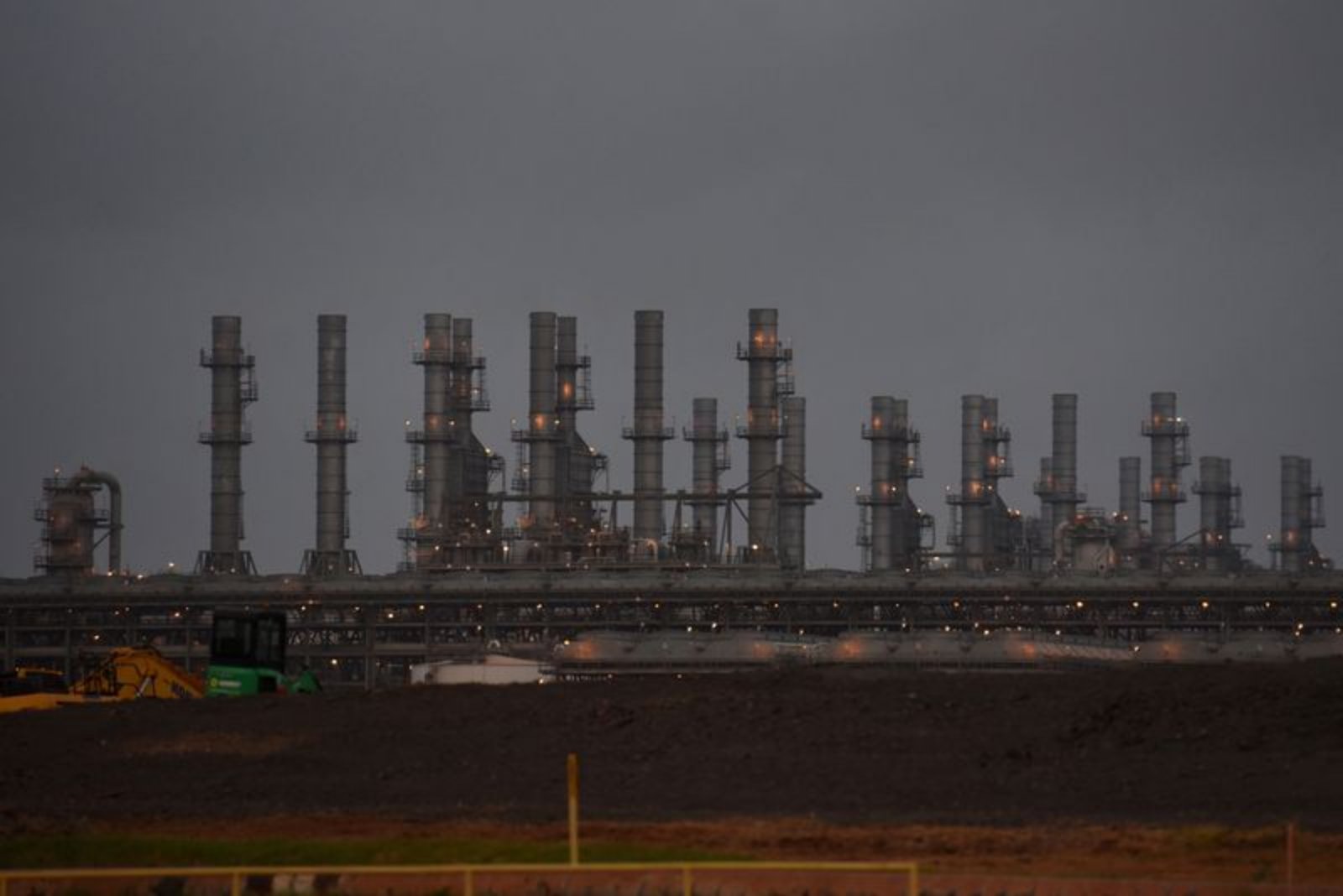
The conflict involving Iran has tightened supplies of liquefied natural gas around the world and produced a stark divergence between global and U.S. gas markets. Damage to Gulf production and threats to shipping have effectively taken a significant share of LNG off the market, sending prices in Europe and Asia sharply higher. In the United States, by contrast, an abundance of natural gas has pushed benchmark prices down to multi-month lows even as producers confront gridlocked transport and export capacity.
Energy flows from the Gulf have been curtailed after attacks on facilities and threats to tankers using the Strait of Hormuz, leaving approximately 20% of globally traded LNG unavailable, according to market descriptions. The removal of that capacity - including damage at Qatari facilities and the effective closure of part of the key shipping lane - has tightened supplies for import-dependent countries in Europe and Asia, where prices have climbed by as much as 84% and 108% respectively to roughly $21 to $22 per million British thermal units (mmBtu).
But the U.S. market is not following that same trajectory. Futures tied to Henry Hub in Louisiana have fallen by up to 12% since the conflict began on February 28, reaching a 17-month low of $2.52 per mmBtu. That divergence is more extreme than what has been seen in oil, where international and U.S. benchmarks have both risen by more than 50% - Brent at about $111 a barrel and the U.S. benchmark at roughly $104 a barrel - after the same events.
Part of the gap stems from physical constraints inside the United States. Domestic production is ample: record output of 107.7 billion cubic feet per day (bcfd) in 2025 has been reported, and federal outlooks foresee further increases as demand rises from data centers and new LNG projects. Yet pipelines that would move that gas to coastal liquefaction plants and to market are operating near capacity. The export terminals themselves were already close to their limits before the geopolitical shock, meaning there is limited scope to convert additional U.S. gas into the chilled cargoes that overseas buyers now urgently seek.
That bottleneck is particularly visible in West Texas, where spot pricing at the Waha Hub has been negative almost every day this year. With take-away pipelines out of the Permian Basin full, local producers have at times had to pay counterparties to accept deliveries - effectively treating gas as a byproduct for which disposal becomes a cost.
"Meaningful transport relief doesn’t show up until late this year or early 2027, when larger pipeline projects are anticipated to start," analysts at Bank of America said in a report, highlighting the timing mismatch between rapidly rising global demand for LNG and the slower pace of U.S. network expansions.
Not all U.S. regions feel the same squeeze. Areas with weaker links to the national pipeline grid remain vulnerable to international price dynamics because they must rely on imported LNG when domestic flows are insufficient. New England is an example cited by analysts, where limited pipeline connectivity forces the region to import costly LNG and even burn oil for power during winter months when heating demand spikes.
The sudden global scramble for cargoes has produced short-term winners among companies with available export volumes. Energy firms that had spare LNG on hand were able to sell into the gap left by cancelled deliveries from Qatar, according to market observers. Venture Global, identified as the nation’s second-largest LNG operator after Cheniere Energy, was singled out for having spot cargoes ready to offer, a position that allowed it to capitalize on heightened international demand.
"Venture Global is (relatively) new to the LNG game and had spot cargoes available to put out to the highest bidder," said Bob Yawger, director of energy futures at Mizuho. "Suddenly everybody needs LNG now that QatarEnergy is out of the picture."
U.S. LNG capacity is also slated to grow substantially over the coming years based on projects currently under construction. Capacity is projected to rise from roughly 18 bcfd in 2025 to around 35 bcfd by 2030, which would nearly double export capability - though the timing of those additions does not immediately relieve the present mismatch between domestic supply and international demand.
Even where export capacity increases are in the pipeline, the benefit will largely accrue to the companies that operate the liquefaction plants. Producers who sell gas into the domestic market have had less ability to take advantage of the international price spike because much of their output is tied to domestic pricing structures. Those domestic prices have been suppressed by near-record production levels, weak seasonal demand in the spring, and ample storage inventories.
Facing depressed prices at home, some U.S. gas companies have voluntarily reduced output rather than flood the market further. EQT, identified in market reports as the second-largest U.S. gas producer behind Expand Energy, announced strategic production curtailments intended to hold gas in the ground until seasonal demand - and prices - improve. As EQT’s chief financial officer Jeremy Knop explained to analysts after the company released earnings,
"Our strategic curtailments act as a form of storage, keeping gas in the ground (during) seasonally low periods of demand."
That approach reflects a broader set of choices producers face when transport constraints and limited export flexibility prevent them from accessing international price premiums. With pipelines full and export terminals operating near capacity, cheap U.S. gas cannot easily flow to the regions that are currently willing to pay far higher prices.
In short, the current market dislocation has created a two-tier global gas market: import-dependent regions in Europe and Asia are paying sharply higher prices for LNG as they compete for scarce cargoes displaced by the Gulf disruptions, while the domestic U.S. market remains oversupplied and price-sensitive due to logistical limits on moving additional volumes to export facilities.
Key points
- Attacks on Gulf energy infrastructure and threats to shipping have removed about 20% of global LNG supplies, sending prices in Europe and Asia up to roughly $21-22 per mmBtu while U.S. Henry Hub futures fell to around $2.52 per mmBtu.
- U.S. pipelines are constrained and export plants were already near capacity, so additional domestic gas cannot be readily converted for export even as international buyers compete for cargoes.
- Firms with spare LNG cargoes, such as Venture Global, have been able to sell into the short-term market disruption; many U.S. producers selling at domestic prices have seen limited benefit and some have curtailed output.
Risks and uncertainties
- Transport capacity limitations in the U.S. could persist until late this year or early 2027, delaying relief from pipeline bottlenecks and keeping domestic gas stuck inland - affecting producers and pipeline operators.
- Continued damage to or threats against Gulf energy infrastructure and shipping lanes could prolong global LNG shortages and support elevated prices in Europe and Asia, with implications for energy importers and power generators.
- Low domestic gas prices may prompt additional production curtailments, which could affect supply balances and the revenue outlook for U.S. gas producers and companies supplying liquefaction plants.