
Overview
Central banks across major economies are showing visibly less consensus on how to respond to the current global energy shock, a development that could increase policy uncertainty and market volatility. As Brent crude approaches $120 a barrel - roughly double its level at the start of the year - officials face a stark choice between tightening policy to combat inflation or easing to support growth. The prevailing stance among many policymakers appears to be to wait in the hope that the Iran war ends soon, but notable pockets of dissent are intensifying.
Recent votes underline deepening splits
At the U.S. Federal Reserve's recent meeting the federal funds target rate was left unchanged in a 3.50-3.75% range, as anticipated. Yet the accompanying vote revealed sharp divisions: four policymakers dissented, producing an 8-4 split. Those dissents included one vote to cut rates and three votes calling for removal of the policy statement's 'easing bias.' That 8-4 outcome represents the most divided vote on the Fed's rate-setting committee since 1992.
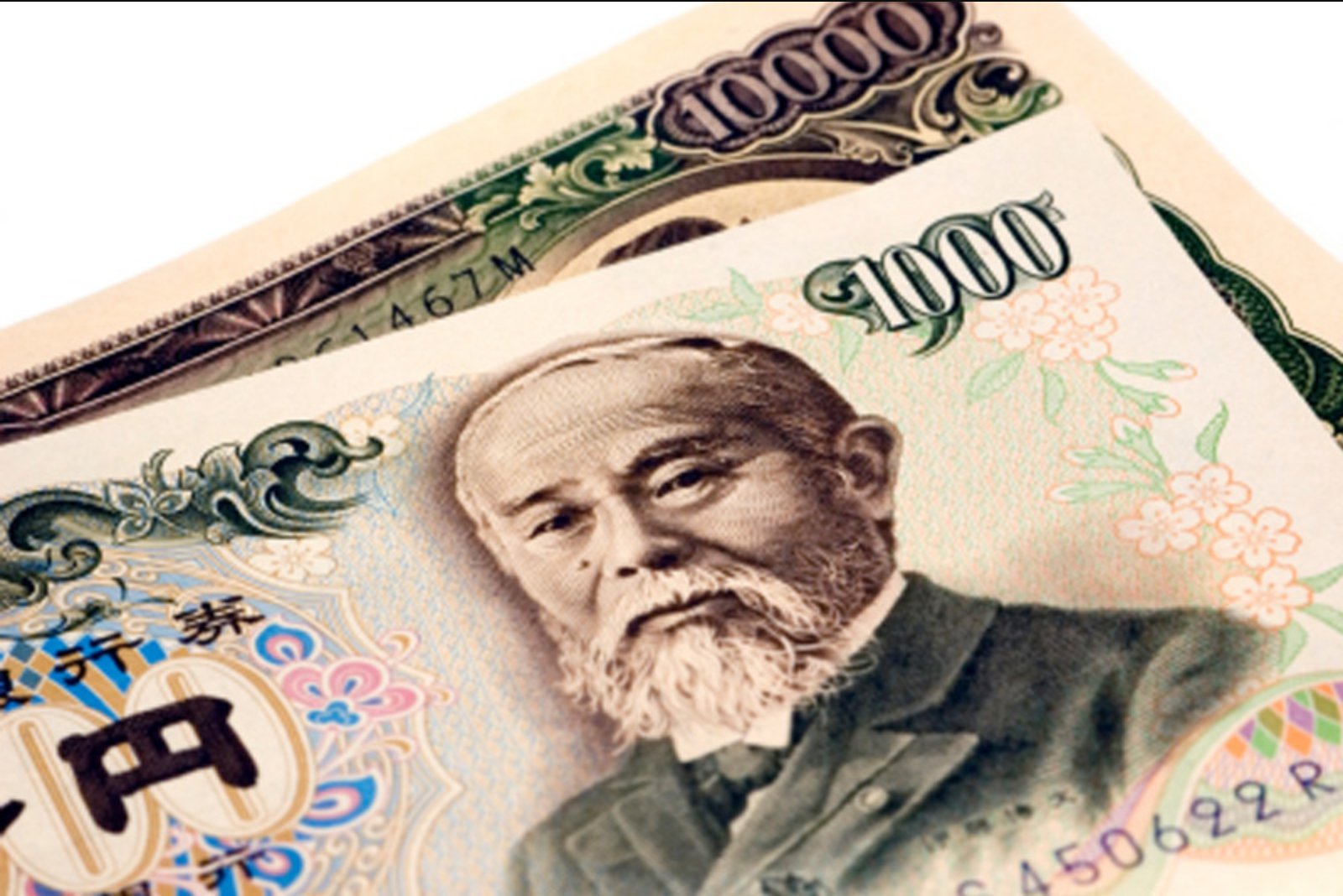
Similarly, the Bank of Japan kept its key policy rate on hold at 0.75%, but the decision was not unanimous. The BOJ's vote tallied 6-3, with three officials openly calling for a rate increase - the largest split on that board since 2016. Market responses in Japan - weakness across the currency, bond and equity markets following the split decision - suggest the central bank's messaging has not landed clearly with investors.
Leadership change at the Fed complicates the picture
The Fed is entering a leadership transition. Jerome Powell, in what was described as his last meeting as Fed chair though not as a board member, noted that a range of views across the committee should not be surprising. "It’s only natural that you have a range of views on the committee," Powell said, adding that the diversity of views is partly a function of "the extraordinarily challenging set of supply shocks that we’ve been dealing with now for five to six years." He listed a sequence of shocks driving that environment: the COVID-19 pandemic in 2020, Russia’s invasion of Ukraine in 2022, President Donald Trump’s tariffs in 2025, and the current Iran war.
Kevin Warsh is set to replace Powell next month after a period of intense public pressure on the outgoing chair and reported legal threats directed at the institution. Warsh has stated that the president has not asked him to make any policy promises. Still, President Trump said he would be "disappointed" if Warsh did not immediately vote to cut rates, underscoring the political scrutiny surrounding the transition.
Those dynamics raise a distinct potential problem: a Fed chair who finds himself at odds with a rate-setting majority. Occasional dissents have historically tended not to unsettle markets, but the situation could be different if the chair is routinely in the minority or if votes become closer. "This scenario of a Chair Warsh in the minority position on interest rates would create waves in financial markets," said Ryan Chahrour, professor of economics at Cornell University. "But Warsh will work very hard to avoid this outcome."
Evidence linking dissent to market volatility
Research has linked greater dissent within central bank deliberations to heightened market volatility. A study by Kwok Ping Tsang and Zichao Yang used a deep learning model to detect "hidden dissent" in official transcripts - disagreement that does not appear in formal votes. Their findings indicate that such hidden dissent correlates with increases in expected stock market volatility, downward pressure on equity prices, and upward moves in bond yields and measures of perceived interest rate risk.
The authors argued that the process by which a committee reaches decisions - including the degree of underlying consensus or dissent - supplies market participants with information beyond the formal policy statement or general tone. Applied to the current environment, that suggests that both overt and covert divisions among officials could complicate investors' efforts to predict central bank actions.
Implications for communication and market expectations
The combination of sharp geopolitical-driven commodity shocks and visible splits on policy committees makes clear, unified central bank communication more vital than usual. Increasingly vocal differences at policy-setting meetings raise the likelihood that investors and businesses will receive mixed signals about the likely trajectory of interest rates. That is precisely the kind of uncertainty markets and companies find unwelcome when they seek to price risk and plan investment.
The situation is not limited to the Fed. The Bank of Japan's recent split vote and the subsequent movements in Japanese markets demonstrate that unclear or contested messaging can have immediate effects on currency, bond and equity markets. Whether the observed dissent is openly expressed in votes or remains "hidden" in meeting transcripts, the evidence indicates it can materially influence financial conditions.
Conclusion
The present confluence of elevated oil prices, an ongoing geopolitical shock, and growing dissent within central banks presents a testing environment for policymakers. With leadership change at the Fed imminent and visible splits at major central banks, investors should prepare for a period in which policy signals may be less consistent, and market volatility correspondingly higher. How committees manage both public messaging and internal consensus in the coming months will directly affect the clarity of the guidance that markets receive.
Note: This article presents an analysis of recent central bank decision-making and the potential market implications based on publicly reported votes, comments by officials, and academic research cited above.