
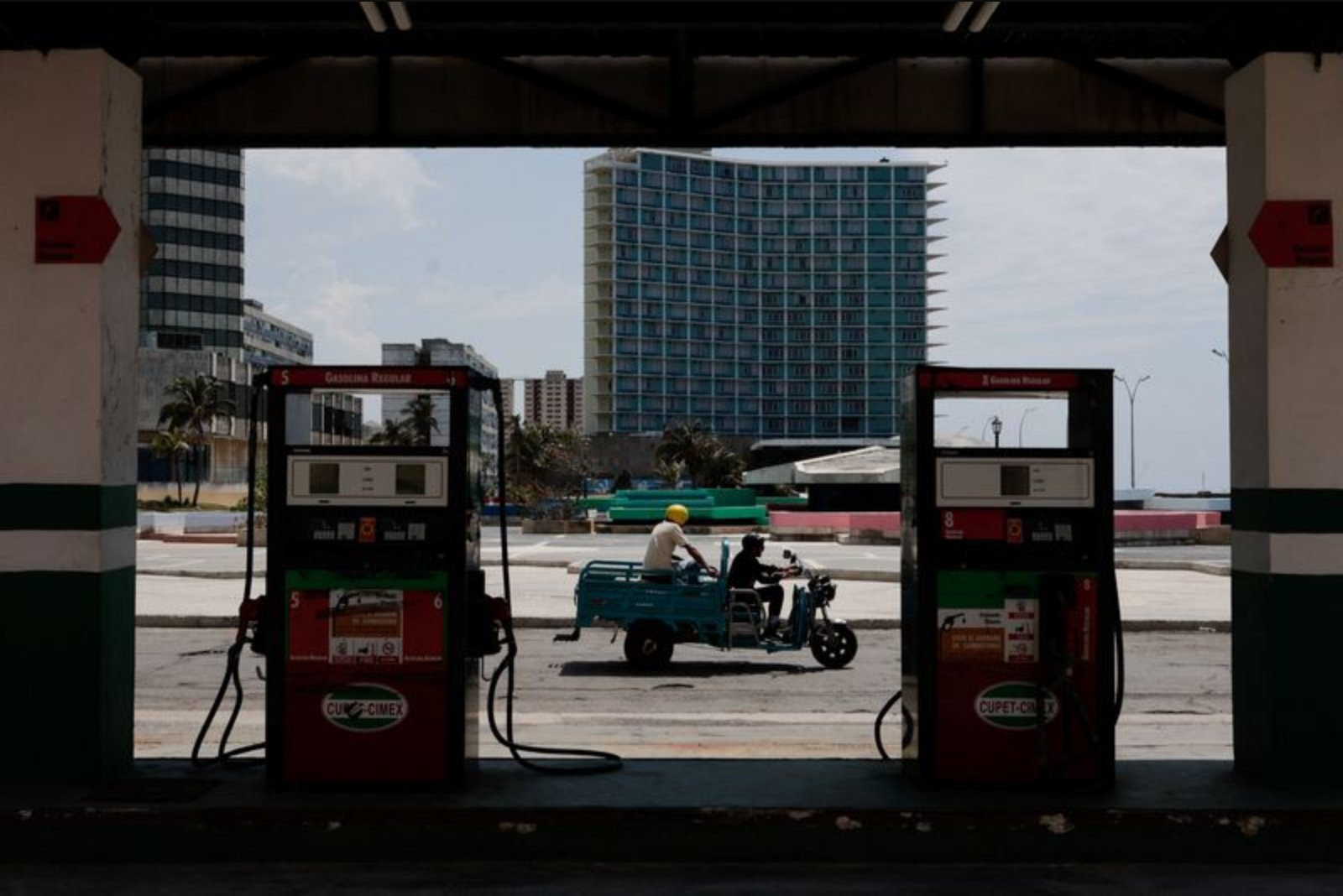
HAVANA, May 13 - Cuba has completely depleted its stocks of diesel and fuel oil, the nation’s energy and mines minister announced on Wednesday, as the capital grapples with its most severe rolling blackouts in decades.
“We have absolutely no fuel (oil), and absolutely no diesel,” Energy Minister Vicente de la O told state media, describing the national electricity system as being in a “critical” state and confirming that there are no reserves to draw on.
The minister said blackout durations have surged across Havana this week and the previous week, with many neighborhoods enduring outages of 20 to 22 hours a day. That escalation of power cuts is occurring against a backdrop of existing shortages of food, fuel and medicine, raising tensions in the city of nearly 10 million people.
According to the energy ministry, the national grid is currently being run solely on a mix of domestic crude oil, natural gas and renewable energy. Cuba has added 1,300 megawatts of solar capacity over the past two years, but de la O said much of that potential is being lost because grid instability - itself aggravated by fuel shortages - reduces the efficiency and output of the solar installations.
Only one large oil tanker, the Russian-flagged Anatoly Kolodkin, has delivered crude to Cuba since December, and that single shipment provided temporary relief in April, the minister said.
Authorities continue to seek fuel imports despite the blockade, but de la O warned that rising global oil and transportation prices amid the U.S.-Israeli war with Iran are complicating those efforts. “Cuba is open to anyone that wants to sell us fuel,” he said.
The minister also noted that neither Mexico nor Venezuela - historically major suppliers of oil to the island - have sent fuel to Cuba since an executive order issued in January 2026 by President Trump that threatened tariffs on countries shipping fuel to the communist-run nation.
The renewed and widening power cuts come as the U.S. blockade on fuel imports to Cuba enters its fourth month, a measure that officials say has severely disrupted public services across the Caribbean island.
Last week, the United Nations labeled the fuel blockade unlawful, stating it had obstructed the Cuban people’s right to development and undermined their rights to food, education, health, and water and sanitation.
Context and present conditions
- The national grid is operating on domestic crude, natural gas and renewables only.
- Installed solar capacity of 1,300 megawatts has been diminished in effect by grid instability.
- Only one major crude delivery - the Russian-flagged Anatoly Kolodkin - has reached Cuba since December, easing conditions temporarily in April.
Ongoing efforts and constraints
Cuban authorities say they remain in talks to secure fuel imports despite the blockade, but cite higher global oil and transport costs amid the U.S.-Israeli war with Iran as additional obstacles to procurement.