
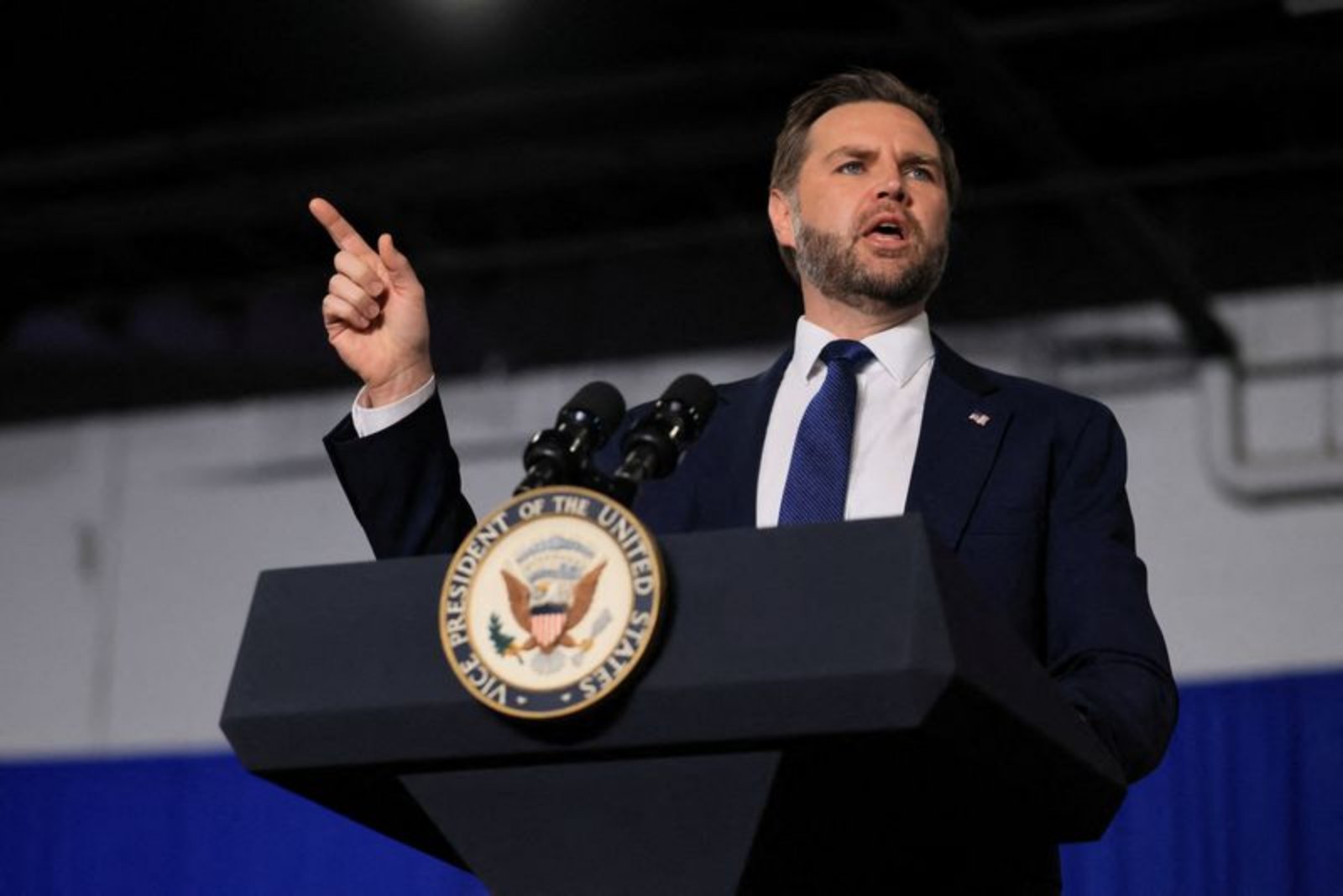
WASHINGTON, June 18 - U.S. Vice President JD Vance said he has observed a "weird panic" and an almost hysterical response in Israel to the agreement reached between the United States and Iran, in remarks contained in an interview published in the New York Times on Thursday. His comments come as Israeli officials across the political spectrum have voiced criticism of the deal, arguing it fails to satisfy their concerns about Iran's nuclear and ballistic missile programs and could restrict Israel's military options against the Iran-backed Hezbollah militia in Lebanon.
Vance rejected the notion that the agreement would permit Iran to benefit while continuing the same behavior. "There is this weird panic almost in the Israeli system that I’ve picked up on where they assume that everything that is contemplated that is good for Iran will happen - but that will happen without the Iranians changing any behavior," he said in the interview. "That’s not how the deal is written."
On the issue of sanctions, Vance said the United States would not lift measures if Iran remained involved in funding a terrorist organization - an apparent reference to Hezbollah, which U.S. authorities have long designated a foreign terrorist organization. He used that point to underscore limits to the agreement as written and to emphasize contingencies tied to Iranian behavior.
Vance also framed the Israeli response as rooted in a lack of trust toward the United States. "I find this whole freakout in Israel a little bit odd because I think that it comes from a place of mistrust, and I think that America has earned the trust of that region of the world," he said. "We’ve done a very good job by that particular country and that particular government."
He added that assertions the United States had struck a disastrous deal were not supported by the facts and were inconsistent with the longer arc of the U.S.-Israeli relationship. "And I think that the idea that we’ve made a terrible deal is not supported by the facts, but just doesn’t make any sense if you consider the broad length of the relationship," he said.
The comments followed public attempts by President Donald Trump to downplay Israeli objections. Speaking during closing remarks at the Group of Seven summit in France, the president suggested that Prime Minister Benjamin Netanyahu could adopt a "softer touch" in confronting Hezbollah militants in Lebanon, marking a notable public rebuke of an allied leader in the context of the disagreements over the Iran agreement.
Trump and Iranian leaders this week approved a memorandum of understanding that, according to U.S. officials, sets aside the most difficult issues for a later phase of negotiations. That memorandum leaves those toughest matters unresolved for now, and there is no assurance they will ever be fully resolved.
Responding specifically to hard-line Israeli critics of the deal, Vance named far-right cabinet ministers Itamar Ben-Gvir and Bezalel Smotrich and challenged them to state concrete alternatives. "I guess my response to them would be: What is your exact proposal? You’re a country of 9 million people. You can’t just kill your way out of solving every single national security problem that you have," he said.
Vance’s remarks underscore a widening rhetorical gap between Washington and some Israeli officials over how to handle Iran-related threats, while also signaling that U.S. leadership believes current arrangements and mechanisms within the deal will constrain unacceptable Iranian behavior. At the same time, the deferral of the most contentious issues to a subsequent negotiation phase leaves substantive uncertainties about how those matters will be addressed and whether they will be settled at all.
Contextual note: The interview and subsequent exchanges between U.S. and Israeli officials have highlighted tensions over how to balance diplomatic engagement with security concerns in the region, and how allied governments interpret and respond to negotiated agreements that include phased approaches to difficult issues.