
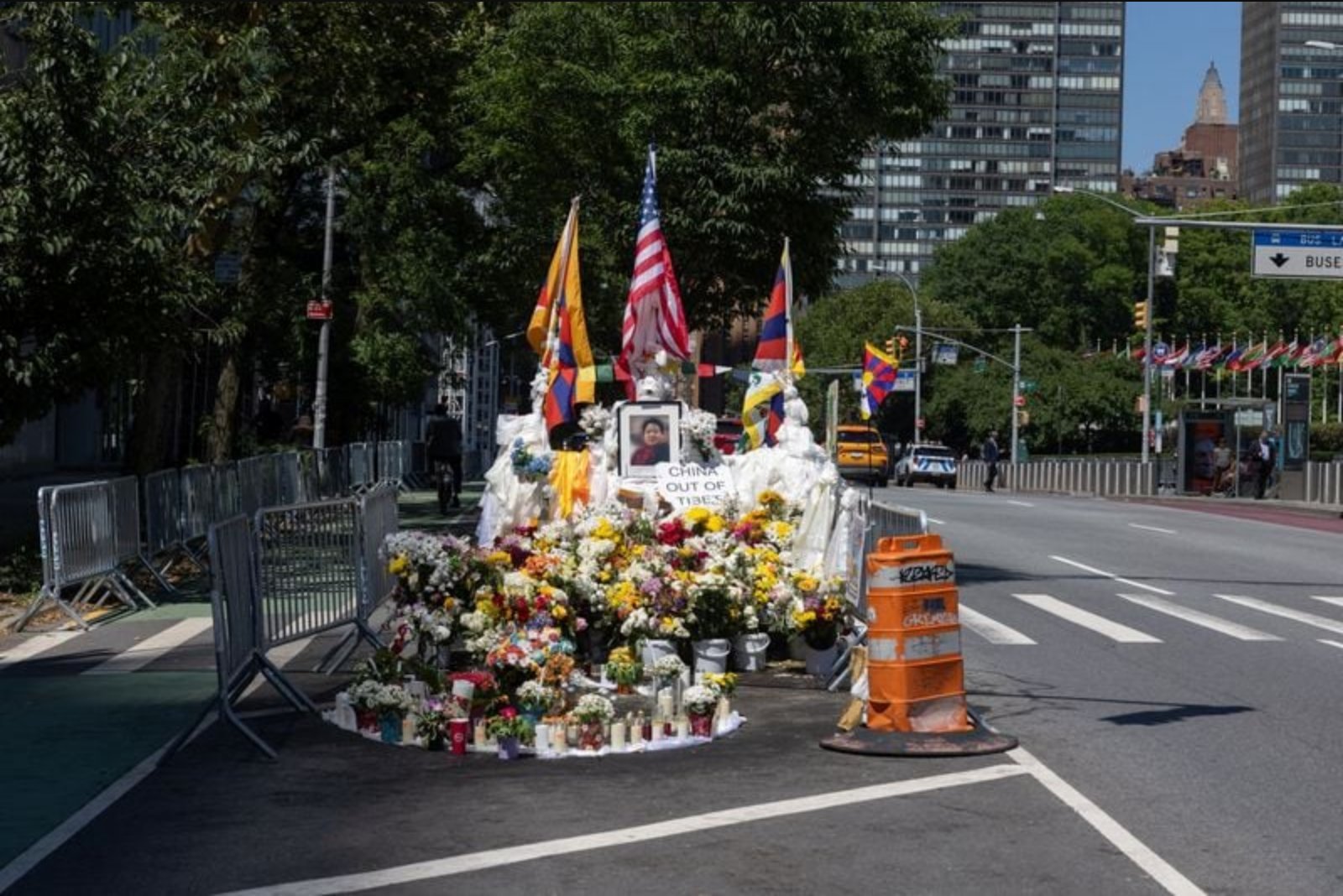
A Tibetan man who set himself on fire near United Nations headquarters in New York has died from severe burns suffered in the incident, U.S. officials and activist groups said. The death, reported on Thursday, prompted renewed statements from Washington about its position on Tibetan cultural and political rights and a reiteration of calls for Beijing to engage in direct talks.
Activists and an exiled Tibetan media outlet identified the man as Lobga Rangzen. Voice of Tibet reported that he "self-immolated outside the UN headquarters in New York after a live appeal for Tibetan independence and unity." The account from exiled Tibetan sources framed the act as a public appeal for independence and unity among Tibetans.
Responding to the death, a State Department spokesperson issued a formal statement emphasizing U.S. support for Tibetans' ability to "celebrate and preserve their unique culture, language, and religion without fear of interference." The statement added that the United States "will continue to call on China to return to direct dialogue, without pre-conditions, with the Dalai Lama and his representatives, and with the democratically elected Tibetan leaders, to resolve differences and achieve meaningful autonomy for Tibetans."
Washington has historically signaled support for Tibetan human rights across administrations of both major U.S. political parties, and the recent remarks reflect that continuity in U.S. policy.
Chinese authorities, for their part, reiterated longstanding positions following the New York incident. Beijing stated that Tibet has been "an inalienable part of the country's territory since ancient times" and that it expects "relevant countries will handle the matter in accordance with domestic laws." In prior exchanges, Chinese officials have said Washington was in "no position" to criticize Beijing on Tibet-related issues.
China continues to assert broad control over Tibet and treats the Dalai Lama as a separatist figure. The Chinese government maintains it must approve the Dalai Lama's successor, citing what it describes as a centuries-old ritual requirement. The Dalai Lama, who is the spiritual leader of Tibetan Buddhists and a Nobel Peace Prize laureate, has urged Tibetan followers to reject any successor chosen by Beijing.
The Chinese government describes its 1950 takeover of Tibet as a "peaceful liberation" from feudalistic serfdom. That characterization is disputed by international human-rights organizations and Tibetan exile communities, who regularly criticize Beijing's governance of Tibetan areas as oppressive. China rejects those assessments.
Ethnic minority policy remains a highly sensitive topic within China. Authorities subject Tibetans and other minorities to heightened surveillance intended to detect and deter alleged "separatism," according to observers. The International Campaign for Tibet reports that there have been 159 self-immolations by Tibetans since 2009, and that 11 of those incidents occurred while individuals were in exile.
The events in New York and the official responses underline continuing tensions over Tibetan rights, leadership succession and the contested relationship between Beijing, Tibetan exiles and governments that comment publicly on the issue.