
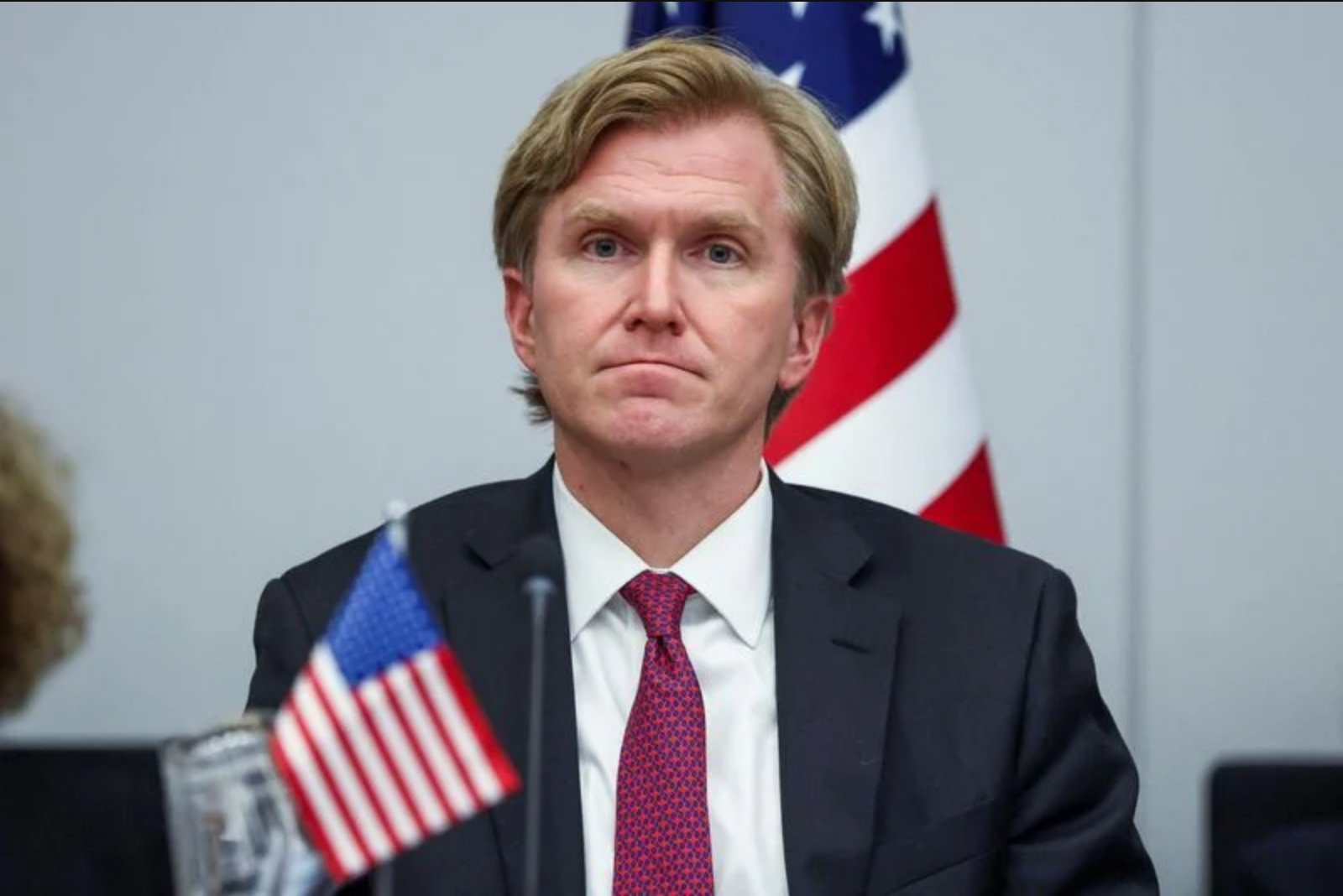
In a speech delivered in Cusco, Peru, Pentagon policy chief Elbridge Colby outlined what the administration describes as a modernized Monroe Doctrine and urged Latin American nations to align behind it. The address, which invoked the phrase "Donroe Doctrine" - a play on President Donald Trump’s name - described a pronounced shift in operational posture and strategic emphasis for U.S. policy in the Western Hemisphere.
Colby laid out recent and planned military measures as evidence of that shift. He said the U.S. military initiated strikes on drug boats in the fall and that Washington deposed Venezuelan president Nicolas Maduro in January. He also announced plans to conduct joint counter-narcotics strikes with like-minded partners, noting that such operations are already under way in Ecuador.
Colby argued the administration is closing the gap between traditional defense priorities and the immediate concerns of ordinary Americans. "No longer do we separate America’s defense strategy from the concerns of regular Americans - from the flood of lethal drugs into their communities and the accompanying horrendous violence, or from the impact of unchecked illegal migration into our nation," he said in prepared remarks.
Addressing a gathering of the Conference of Defense Ministers of the Americas, which includes Canada, Colby acknowledged there are anxieties about reviving the Monroe Doctrine label. He characterized those fears as reflecting a "distorted" interpretation of its intent. "The best tradition of the Monroe Doctrine is about protecting our own security and interests by empowering and enabling Latin American nations," he said.
Some critics have portrayed the U.S. language as a form of modern imperialism. Colby rejected comparisons to historical colonial powers, stating the United States should not be equated with imperial states such as Britain or Portugal - which he said were smaller countries that exploited colonies to amass wealth and influence. "The fact is that America doesn’t need your assets or your dependency," he said, adding that the U.S. is "an enormous country, by far the world’s most powerful state, with the world’s largest and most dynamic market, its most productive economy, its dominant currency, splendid stores of raw materials." He concluded that Washington desires its neighbors to prosper: "We seek your success in securing our neighborhood."
Colby delivered his remarks against a backdrop of political realignment across the region, where a series of elections have brought right-leaning, pro-Trump governments to power. The address referenced specific leadership changes, including conservative Keiko Fujimori in Peru and Abelardo de la Espriella in Colombia, and noted that Argentina, Chile, Ecuador, Bolivia and Panama have also moved rightward. The speech framed these shifts as a reversal of the "pink tide" that had earlier produced a string of leftist administrations in the early 2020s. Observers in the region have seen once-marginal hard-right figures gain support by promising tougher security measures.
The address touched on Washington’s posture toward leftist governments as well. Colby highlighted that the United States had previously imposed sanctions on leftist Colombian president Gustavo Petro, accusing him of failing to suppress drug trafficking. The article noted Petro’s successor, De la Espriella, has publicly committed to join the administration’s Shield of the Americas, pursue stronger actions against drug traffickers, loosen business regulations, reduce taxes, and restart oil and gas projects that were paused under Petro.
Colby also warned Latin American governments to shield critical national infrastructure from outside influence, a remark that the speech suggested was aimed at China. He urged nations to "protect your critical assets" from external actors. In parallel with appeals for strategic caution, Colby pressed regional governments to increase defense spending. He called attention to the fact that some countries spend less than 1% of GDP on defense and said, "There is no reason why any country, particularly those facing significant narco-terrorist threats, should spend so little on defense."
The Pentagon chief tied these policy prescriptions to an expanded role for the U.S. military in countering transnational criminal networks and migration flows, and to deeper security cooperation with aligned regional partners. His presentation was explicit about ongoing and planned use of force in service of those objectives, and it invited allied participation in coordinated operations already underway in the hemisphere.
Key takeaways:
- The administration is promoting a revived Monroe Doctrine framework intended to link U.S. regional defense priorities with counter-narcotics and migration concerns.
- Recent actions described by the Pentagon include strikes on drug boats, the deposing of Venezuelan president Nicolas Maduro in January, and joint counter-narcotics efforts already taking place in Ecuador.
- The appeal accompanies a regional political shift toward right-leaning governments and calls for increased defense spending, which could affect security and energy policy coordination across multiple economies.
Risks and uncertainties:
- Critics view the rhetoric as akin to modern imperialism, raising the risk of diplomatic friction between the United States and governments or constituencies that oppose such framing - a factor that could complicate defense and trade relationships.
- Tensions over external influence and calls to protect strategic assets introduce uncertainty for countries with significant foreign economic ties, which may affect investment and energy sectors.
- Low defense spending in some nations, coupled with pressure to increase allocations, creates uncertainty for budget priorities and could strain fiscal balances in countries facing narco-terrorist threats.
Note: This report presents the statements and policy positions as articulated at the Conference of Defense Ministers of the Americas without additional interpretation beyond the original remarks.