
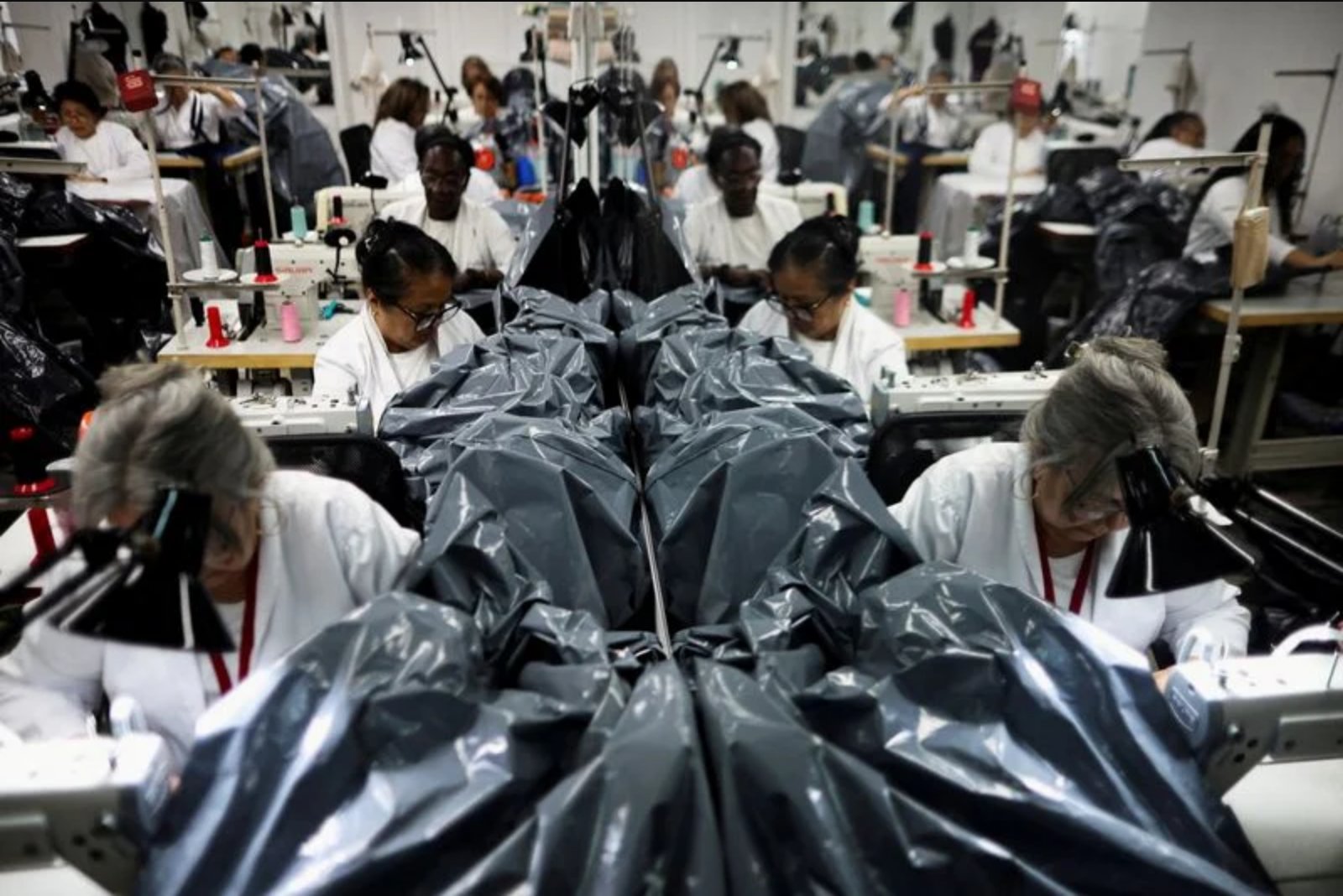
MARACAY, Venezuela, July 8 - Inside a cramped design studio where sketches of eveningwear hang on the walls, a fashion designer has shifted the focus of his business to meet an urgent, grim need. Instead of colorful fabrics and fitted silhouettes, rows of industrial sewing machines now stitch black sheets of plastic into body bags after a series of powerful earthquakes two weeks ago killed more than 3,500 people.
The designer, Efrain Mogollon, begins his workday as he always has, at a desk beside renderings of elegant garments. But the atmosphere in his workshop is markedly different. Workers who normally produce playful, vibrant clothing have traded bolts of fabric in pinks, reds and blues for rolls of black polyethylene spread across a large table.
On the streets of Catia la Mar, a coastal community in La Guaira state near Caracas that was among the worst affected by the June 24 tremors of magnitudes 7.2 and 7.5, piles of concrete, brick and rebar mark where buildings once stood. Mogollon loaded several of the plastic-wrapped sheaths into the back of an ambulance there. The sheaths are plain except for a small embossed image of Jesus Christ affixed to a zipper.
"It is a completely different feeling," Mogollon said, describing the emotional shift from making celebratory clothing to assembling coverings for the dead. He added that the work brings a measure of satisfaction in knowing the studio is contributing, from its limited platform, to the immediate needs of the community.
In the tightly packed workshop, female mannequins and unused bolts of colored fabric rest against the wall while seamstresses stretch sheets of black plastic and feed them through machines. Mary Castillo, one of the seamstresses, has been sewing these body bags every day for two weeks. She described the work as painful but said it has provided a sense of purpose amid the tragedy.
"It is very sad. But we have to keep working and make the effort to move forward," Castillo said.
Across affected areas, civilians have been central to search and recovery operations, supported by professional rescue teams from abroad, firefighters and army volunteers. Much of the in-kind aid during the initial days after the quakes - including food and clothing - came from local residents, particularly in La Guaira.
International humanitarian organizations, including the International Rescue Committee, have said that the response has not met the scale of humanitarian need, highlighting a gap between the demand for relief and the capacity of coordinated aid efforts.
Back at the atelier, the transition from couture to crisis production underscores how local businesses and community actors have adapted their capabilities to respond to immediate human needs. The studio's racks of colorful textiles now stand largely unused as the sewing lines continue their somber work.
Location and timeline: The fabrication work is taking place in a Maracay-area workshop following earthquakes on June 24 registering magnitudes 7.2 and 7.5. The conversion to body bag production began in the two weeks since the tremors, and the casualties reported exceed 3,500.