
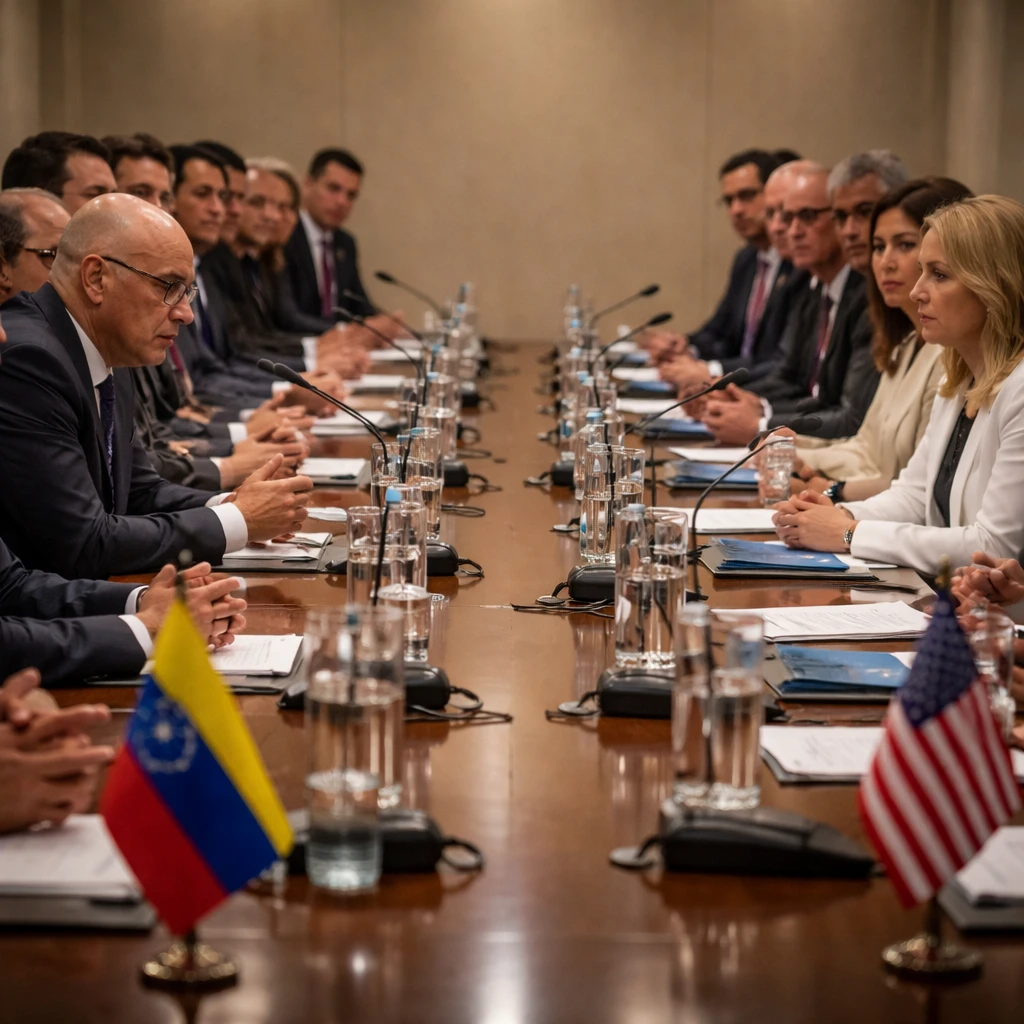
Negotiations supported by the United States between Venezuela's interim government and a faction of the opposition are due to begin on Saturday, with a notable absence drawing attention: Maria Corina Machado, the country's best-known opposition figure, will not participate.
The talks are framed as an effort to remake Venezuela's political architecture ahead of eventual elections and illustrate what the report describes as an unprecedented level of U.S. influence over Venezuelan affairs since U.S. President Donald Trump’s administration removed Nicolas Maduro in a January raid and installed acting President Delcy Rodriguez. On the government side, negotiations will be led by Jorge Rodríguez - Delcy Rodriguez's brother and the current head of the National Assembly - a veteran negotiator who has participated in earlier talks involving the U.S. and opposition forces.
The opposition's delegation will be headed by Dinorah Figuera. Three sources familiar with the matter told reporters that the U.S. asked Figuera to take the lead because she presides over an opposition-dominated cohort of the national assembly elected in 2015 that the United States continues to recognize as the country's last democratically-elected legislature.
Maria Corina Machado is not taking part in the negotiations, a development that has frustrated some observers of Venezuela's politics. Machado, a Nobel Peace Prize laureate and the country's most popular opposition leader, left Venezuela late last year to accept her Nobel and had been living largely in hiding since a contested 2024 presidential election. She has since pledged to return to Venezuela to contribute to the response to June's twin earthquakes - a plan that reportedly irks U.S. officials who believe the timing is inappropriate.
Media reports that the U.S. told Machado not to return have been denied by Trump. Machado has frequently been sidelined by Washington since Maduro's removal, with U.S. officials publicly asserting that she lacks sufficient support to lead the country. Prior to a mid-June visit by Figuera to Caracas, Machado was reportedly unaware that the talks were scheduled to begin, according to three sources. Another source said Machado had been informed about the negotiations but was not included in the opposition delegation because she is not a member of the 2015 assembly.
"Machado is right to distance herself from this process," said a person with knowledge of the negotiations. "If the negotiations go well and lead to free elections, she will become Venezuela’s first female president. If the negotiations go badly, she will have proven her point: that negotiations need representatives who have legitimacy and who are accepted and viewed positively by the public."
Those leading the talks face a constrained timeline to produce tangible outcomes that can restore confidence among Venezuelans and compensate for Machado's absence from the negotiating table, the same source added. Machado herself said last week that she would not take part in the talks but would not obstruct "real progress". She said she would judge the talks' success based on whether democratic institutions were restored, political prisoners freed, and elections scheduled, among other benchmarks.
Requests for comment from Machado and Figuera went unanswered.
On the agenda, the interim government has signaled it will press for the lifting of remaining U.S. sanctions. Historically, the United States has temporarily eased sanctions affecting Venezuela's oil, gas and gold sectors after agreements between the government and opposition were struck that purportedly advanced fair electoral processes.
Venezuelan opposition figures have engaged in repeated talks over the years with the Maduro-era authorities, which have staffed the nation's top courts and electoral bodies with allies. A prior negotiated deal for 2024 elections had promised a fair contest with full opposition participation, but Machado was barred from those elections. International observers and the U.S. assessed that Machado’s movement won roughly two-thirds of votes cast in that contest, yet electoral and judicial authorities validated Maduro as the winner, allowing him to retain power.
Analysts warn that excluding Machado's faction from the current talks effectively shuts out a significant segment of Venezuelan political life. "The absence of Machado’s faction from the upcoming talks effectively excludes an important segment of the country," said Ricardo Rios, head of the Poder y Estrategia political risk consultancy. He added that the Venezuelan opposition has long been fragmented and suggested the omission is unlikely to cause new splits.
The United States has stated that Venezuela should first achieve stabilization and economic recovery before moving to hold elections. In recent months, Trump has relaxed certain sanctions and publicly lauded Rodriguez's leadership. U.S. Secretary of State Marco Rubio, who has been a long-time supporter of Machado, told journalists that Machado could still participate in the talks if Venezuelans broadly supported her role, while emphasizing that the U.S. is a facilitator rather than a director of the negotiations.
"In order for Venezuela to have the reconciliation that that country requires to move forward on all these other projects, every element of Venezuelan society needs to be represented. And obviously, Maria Corina represents an important element of that," Rubio said.
U.S. involvement is also described by opposition sources as an element of protection. One opposition source remarked that American engagement offers security for opposition members who have frequently faced detention and prosecution on what they say are politically motivated charges. A source close to Figuera's group characterized the U.S. as a "central player" in the negotiations, adding that it would not remain passive during the process.
As negotiators convene, they will need to demonstrate quick progress toward restoring democratic norms and addressing the list of issues that Machado and others have outlined as measures of success. The talks will test whether the U.S.-backed format can secure broad acceptance among Venezuelans and whether the exclusion of a high-profile opposition faction will undermine the effort to rebuild trust in the country's institutions.
Key points
- U.S.-backed negotiations open with government led by Jorge Rodríguez and opposition delegation headed by Dinorah Figuera; Maria Corina Machado is absent.
- Talks aim to overhaul political institutions ahead of elections and include discussions about lifting remaining U.S. sanctions; sectors potentially impacted include oil, gas and gold.
- U.S. role is described as central and providing security assurances to opposition participants who face legal and political risks.
Risks and uncertainties
- Exclusion of Machado's faction could delegitimize the process for segments of the electorate, posing political risk to the perceived inclusiveness of any agreement - impacting political stability and investor confidence.
- The talks depend on quick, credible progress to restore democratic institutions and release political prisoners; failure to deliver could prolong sanctions and delay recovery in key sectors such as oil, gas and gold.
- Heavy U.S. involvement is a double-edged sword - while it offers security assurances, it may also fuel perceptions that negotiations are externally driven rather than domestically owned.