
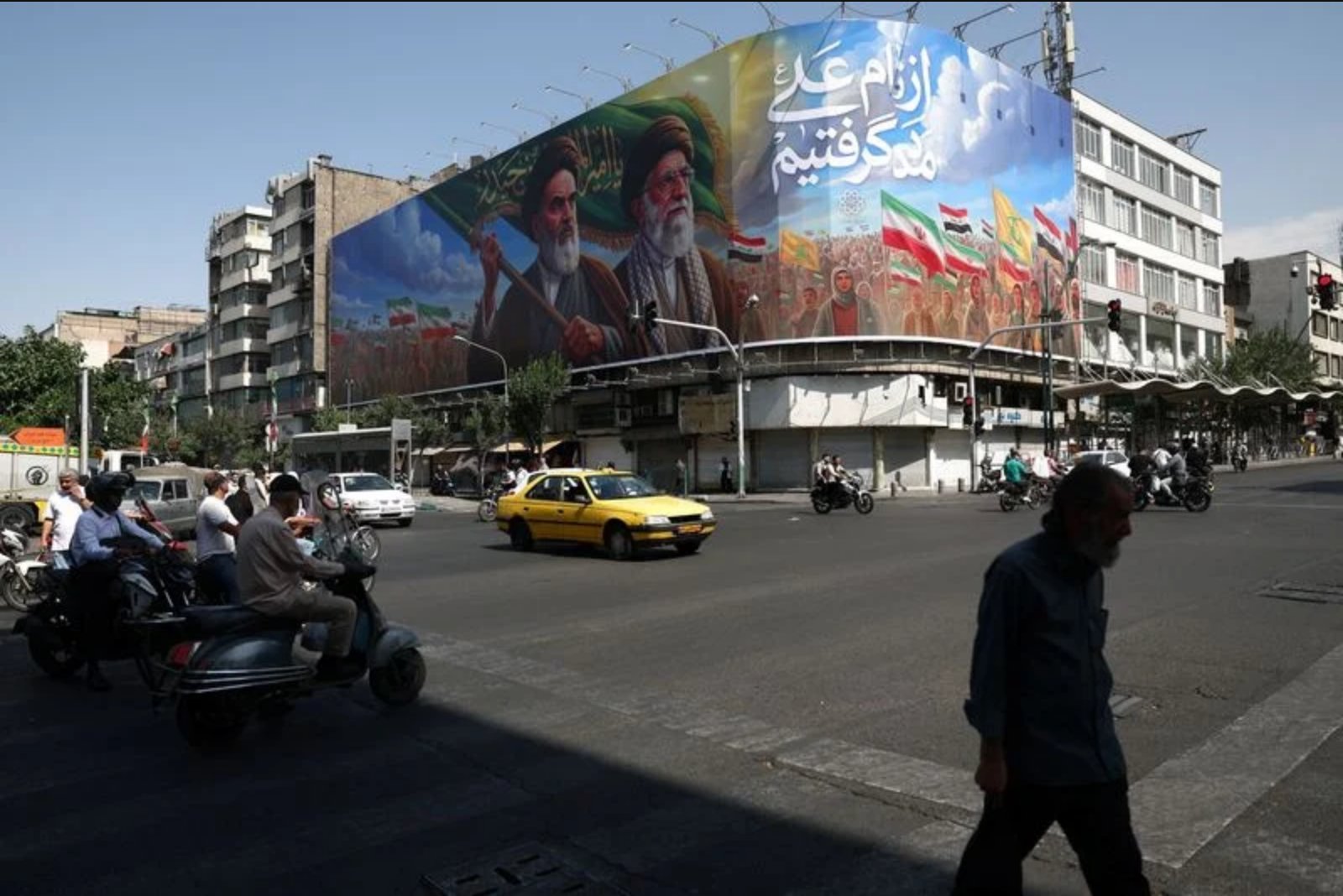
The United States and Iran traded air attacks for a second straight day, further straining a tentative ceasefire and undercutting hopes for a rapid negotiated end to the conflict that began with heavy U.S.-Israeli air strikes in late February. The escalation followed the downing earlier this week of a U.S. Apache attack helicopter near the Strait of Hormuz, which set off a series of tit-for-tat strikes across Iranian territory and against U.S. bases in the region.
The U.S. military said its most recent operations targeted "military surveillance capabilities, communication systems, and air defense sites across Iran" in response to what it called Tehran’s "unwarranted and continued aggression." Central Command reported that the strikes lasted roughly four hours and were declared complete shortly after they began, near midnight in Tehran.
Iran’s Islamic Revolutionary Guard Corps (IRGC) said it launched counter-attacks on 18 U.S. military targets, including airbases in Kuwait and Bahrain and the U.S. Navy’s Fifth Fleet in Bahrain. The IRGC also reported a second consecutive night of strikes on the al-Azraq air base in Jordan, stating 12 ballistic missiles were fired at the U.S. facility.
Regional U.S. allies reported defensive actions in response to the strikes. Kuwait’s army said its air defenses were engaging hostile aerial targets, while Bahraini officials said air defenses intercepted and destroyed incoming Iranian aerial attacks, according to a media adviser to Bahrain’s king.
Iran’s top joint military command warned that it would fire on any vessel attempting to transit the Strait of Hormuz, a waterway that the article notes has been largely closed for months. Iranian state media reported that two U.S. ships had been fired upon. U.S. Central Command denied that the strait had been closed or that any U.S. ships were struck, saying commercial vessels continued to transit the passage despite Iranian threats.
Explosions were reported by Iranian news agencies across multiple cities, including Sirik, Kargan, Bandar Abbas, Minab, and Karaj near the strait, and Varamin further north near the Caspian Sea. The coverage indicated strikes and counterstrikes were not confined to one region of the country.
President Donald Trump reiterated a demand that Iran immediately sign a peace agreement, telling Fox News reporter Trey Yingst that U.S. strikes would pause for now but that heavy bombing would resume if Iranian leaders did not sign an agreement "immediately," according to Yingst’s post on X. In remarks quoted by U.S. officials, Defense Secretary Pete Hegseth framed the strikes as a tool to compel Iran into a deal and to strengthen Washington’s diplomatic position, saying: "We will strike them hard tonight, and hopefully Iran makes a good decision." He added, "If we need to negotiate with bombs, we’ll negotiate with bombs."
Oil markets reacted to the threat of further escalation. Prices rose nearly $3 after President Trump’s warning of renewed bombing, and gains extended in early Asian trade the following day, reflecting market sensitivity to supply disruptions tied to the conflict.
The exchange of fire followed earlier U.S. operations that targeted radar and air defense systems around the Strait of Hormuz, which were carried out in response to Monday’s downing of the Apache. Iran then launched missile and drone attacks on U.S. bases in Jordan, Kuwait and Bahrain, with a U.S. official saying there was no significant damage from those strikes.
Tehran accused U.S. strikes of hitting reservoirs supplying drinking water to 10 villages and described the action as a deliberate violation of international law. Foreign ministry spokesperson Esmaeil Baghei was quoted as saying, "This is not collateral damage - it is a calculated war crime and a flagrant violation of human rights." The Pentagon did not immediately respond to requests for comment on that allegation.
The broader conflict has already caused significant human and economic disruption. The war has killed thousands and disrupted roughly a fifth of global crude oil and liquefied natural gas supply, contributing to higher energy prices. In the maritime domain, Iran has blocked passage through the Strait of Hormuz while the United States has maintained a blockade on Iranian ports, creating reciprocal restrictions on commerce in critical shipping lanes.
Domestically in the United States, the war has become a political challenge for the White House. Polling cited by officials shows declining approval ratings for President Trump amid rising gasoline prices, and some Republican figures have expressed concern that public dissatisfaction with the conflict could affect control of Congress in the upcoming midterm elections.
In parallel to the U.S.-Iran exchanges, fighting continued in Lebanon between Israeli forces and Iran-backed Hezbollah militants. Lebanese security sources reported that Israeli airstrikes in southern Lebanon killed at least 13 people on Wednesday, while Hezbollah claimed it had launched fresh attacks against Israeli positions. The Israeli military reported two "launches" falling near areas where Israeli troops are operating in southern Lebanon and noted sirens sounded in several northern Israeli communities early on Thursday.
Tehran’s negotiating demands, as stated publicly by Iranian officials, include an end to Israeli strikes in Lebanon, the lifting of sanctions on Iran, the release of billions of dollars in frozen assets, and recognition of its control over the Strait of Hormuz. President Trump has framed U.S. demands differently, saying Iran must end restrictions on shipping through Hormuz and must be prevented from developing a nuclear weapon - an ambition Iran denies.
Analysis and implications
The recent round of strikes underscores the fragile nature of the ceasefire that had been in place since April. The spillover effects are apparent in energy markets and shipping lanes, with immediate price reactions and continued risks to crude oil and liquefied natural gas supplies. The role of regional bases and allied air defenses in Kuwait, Bahrain and Jordan highlights the geographic spread of the confrontation and the operational interdependencies that affect logistics and base security.
For industrial and supply chain stakeholders, the disruptions to a significant portion of global energy shipments and the intermittent closure of a key maritime chokepoint complicate transport planning, inventory management and working capital tied to energy inputs. Defense logistics and the resilience of military supply lines remain central to how operations play out in the near term, given the reported targeting of surveillance, communications and air defense infrastructure.