
World July 26, 2026 03:23 AM

US and Japan Join Philippine Naval Drills Amid Tensions with China in South China Sea

Five-day maritime exercises ran July 21-25 as Manila and Beijing exchanged accusations after an encounter in disputed waters

By Priya Menon
Share
Twitter Reddit Facebook LinkedIn

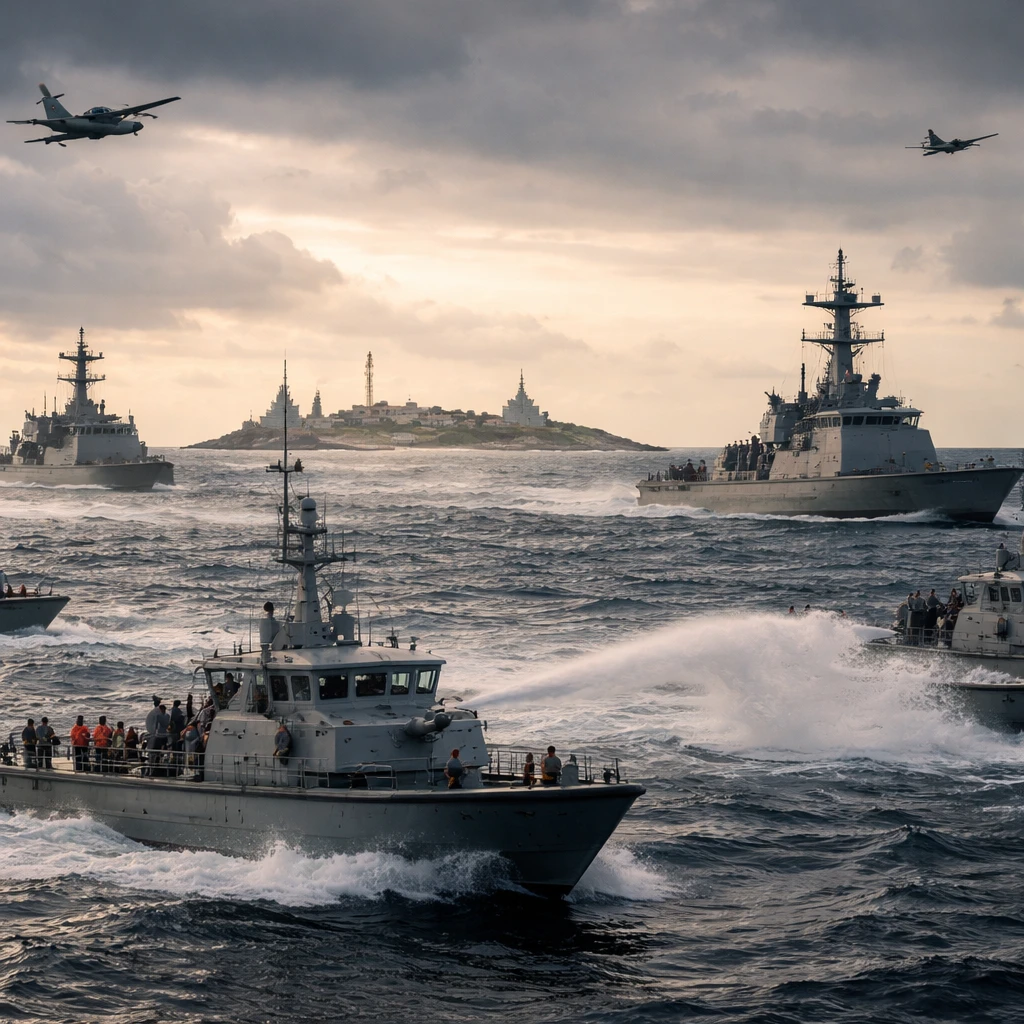
The United States and Japan participated with the Philippines in five days of maritime exercises in the South China Sea from July 21 to 25, focused on improving interoperability among allied forces. The drills came amid rising tensions after an encounter between Philippine and Chinese vessels, with each side accusing the other of hostile actions. Philippine military officials said the exercises signaled sustained cooperation to promote regional stability, while China has repeatedly asserted broad claims over the sea and rejected an international ruling that invalidated those claims.

US and Japan Join Philippine Naval Drills Amid Tensions with China in South China Sea
Summarize with
ChatGPT Perplexity Claude Grok Gemini

Key Points

  • The United States and Japan joined the Philippines in five-day maritime exercises from July 21 to 25 to improve interoperability among allied naval, coast guard, and air assets; sectors impacted include defense and regional security markets.
  • The drills coincided with maritime incidents between Philippine and Chinese vessels, including an alleged baton strike at Second Thomas Shoal and reported water cannon use near Scarborough Shoal; these events affect operational risk assessments for maritime firms and insurers.
  • Philippine military leadership emphasized the strategic importance of forward outposts when the new armed forces chief visited Thitu Island and pledged to bolster troops' operational capabilities; this has implications for defense procurement and logistics planning.

Manila, July 26 - The United States and Japan joined the Philippines in multiday maritime exercises in the South China Sea, held from July 21 to 25, the Philippine military said on Sunday. The drills brought together warships, coast guard vessels, and surveillance and fighter aircraft in coordinated operations intended to improve interoperability among the partner nations.


The exercises occurred against a backdrop of heightened tensions after an encounter in disputed waters involving vessels from the Philippines and China. Manila and Beijing traded accusations following that encounter, with both sides offering sharply different accounts of what transpired.

Philippine authorities said the exercises underscored "the enduring partnership among the partner nations in promoting peace, stability, and security in the Indo-Pacific region." The military statement did not specify the exact location of the drills. It noted the participation of multiple maritime and aerial platforms in the five-day program aimed at strengthening joint operational capacity.

Chinese navy and coast guard vessels have previously operated in the area during past iterations of joint drills, the military added.


The timing of the exercises followed a separate incident a day earlier. The Philippines reported that Chinese Coast Guard personnel struck a Filipino sailor with a baton at Second Thomas Shoal. China, for its part, said Philippine vessels had attacked first and had rammed Chinese boats.

During the period of the drills, the Philippine Coast Guard reported additional encounters. It said the Chinese coast guard had used water cannon against Philippine government vessels near Scarborough Shoal on both Thursday and Friday. China responded by saying it had taken legal measures after Philippine vessels "insisted on intruding."


On Saturday, the Philippines’ newly appointed chief of staff of the armed forces, Antonio Nafarrete, visited Thitu Island, a Philippine-occupied outpost in the Spratly Islands located about 300 miles (480 km) west of the Philippine province of Palawan. Nafarrete told personnel stationed on the island they played a vital role in guarding the outpost and pledged support to strengthen their operational capabilities.

China claims sovereignty over almost the entire South China Sea and rejects a 2016 arbitral ruling that found against its territorial claims. The recent drills are the latest in a series of joint exercises that have expanded in scope and frequency as the Philippines, with backing from the United States and Japan, seeks to counter China’s extensive claims over the waters.

Risks

  • Escalation of maritime encounters between Philippine and Chinese vessels could heighten operational risks for regional naval and coast guard forces - impacting defense readiness and procurement cycles.
  • Repeated close encounters and use of measures such as water cannon may disrupt maritime operations and increase insurance and security costs for commercial shipping in the region - affecting shipping and logistics firms.
  • Ambiguity over exact exercise locations and overlapping patrols raises uncertainty for regional stability, which could influence investor sentiment in sectors tied to regional trade and defense contracting.

More from World

Albanese to Raise U.S. Tariff Measures with President Trump as Canberra Pushes for Reversal Jul 25, 2026 Early-Morning Strikes Ignite Multiple Fires Across Kyiv Jul 25, 2026 Vehicle Plows Into Crowd at Berlin Pride Event, Several Hurt; Manhunt Underway Jul 25, 2026 Iran Condemns Ukrainian Strike on Caspian Commercial Vessel, Reports One Fatality Jul 25, 2026 Multi-Alarm Blaze Injures at Least 21 in Queens Row Homes Jul 25, 2026