
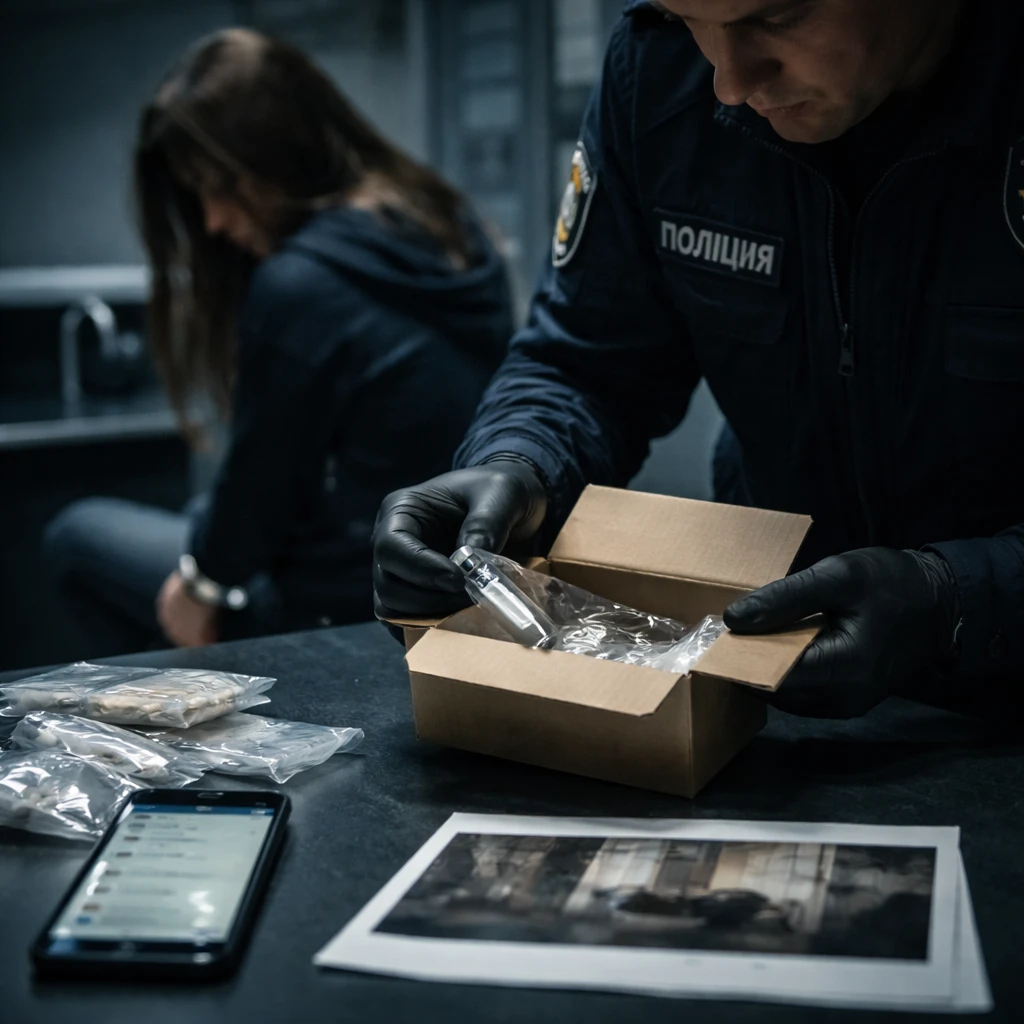
Ukraine's national police chief has publicly accused Russian security operatives of enlisting teenage Ukrainian women to kill members of Ukraine's armed forces, after the recent detention of a 17-year-old suspected of murdering a serviceman on the orders of a Russian handler.
In an interview published by Ukrainian outlet Cenzor.NET, Ivan Vyhivskyi said security services had recorded six instances this year in which contract killings were arranged via the Telegram messaging application, adding that one of those plots had been prevented by authorities.
"We are talking about planned murders organised by the special services of the aggressor state and carried out by Ukrainian citizens," Vyhivskyi said in the interview. The national police chief described a remote recruitment process in which young women were identified on messaging platforms and promised easy money for carrying out attacks.
Vyhivskyi said the recruits were given instructions to search for Ukrainian military personnel on dating websites and were provided funds by their handlers to rent apartments for meetings. He also said the women were told where they could acquire methadone - a synthetic opioid used as a painkiller that can be lethal at high doses - to lace victims' drinks.
Russia's FSB security service was not immediately available for comment on the allegations. The broader information environment includes reciprocal accusations: Russian security services have accused Kyiv of recruiting Russians for bombings inside Russia, while Ukrainian military intelligence has claimed responsibility for the assassination of several senior Russian officers since Moscow's 2022 invasion.
Ukraine's security service has previously stated that more than 1,100 Ukrainians have been accused of committing arson, terrorism or sabotage in what the agency describes as betrayal of their country during the war.
The recent case that prompted Vyhivskyi's remarks involved the detention last week of a 17-year-old in the western Zhytomyr region following the poisoning of a serviceman. Police said she had been communicating via Telegram with a man they believe was likely an agent of the Russian security services.
Investigators reported that the detained teenager received a parcel containing a crystalline substance that police presumed was methadone. Authorities have linked that substance and the communications to the suspected poisoning, and the case remains under investigation.
Summary
Ukraine's police chief claims Russian operatives recruited teenage women through messaging apps to target Ukrainian servicemen, citing six contract-killing cases arranged via Telegram this year and the recent arrest of a 17-year-old suspected of poisoning a serviceman with a parcel presumed to contain methadone.
Key points
- Six contract-killing plots arranged via Telegram were reported this year, with one prevented - sectors affected include national security and law enforcement.
- Recruitment reportedly targeted young women through messaging platforms and dating sites, with handlers providing funds to rent meeting locations - relevant to technology and social platforms handling communications.
- Authorities detained a 17-year-old in Zhytomyr after police say she received a parcel with a crystalline substance presumed to be methadone - public safety and healthcare sectors may be implicated given the use of a pharmaceutical opioid.
Risks and uncertainties
- Attribution and confirmation - Russia's FSB was not immediately available for comment, leaving some claims publicly unconfirmed; this uncertainty affects diplomatic and security responses.
- Potential for further covert plots using messaging platforms - continued exploitation of messaging apps could pose ongoing law enforcement and national security challenges, and implicates the technology sector's role in moderating misuse.
- Investigative limitations - details about the suspected substance and the full extent of coordination remain subject to police investigation, creating uncertainty for prosecution and public assessment of threat scale; this touches on forensic and healthcare capacities.