
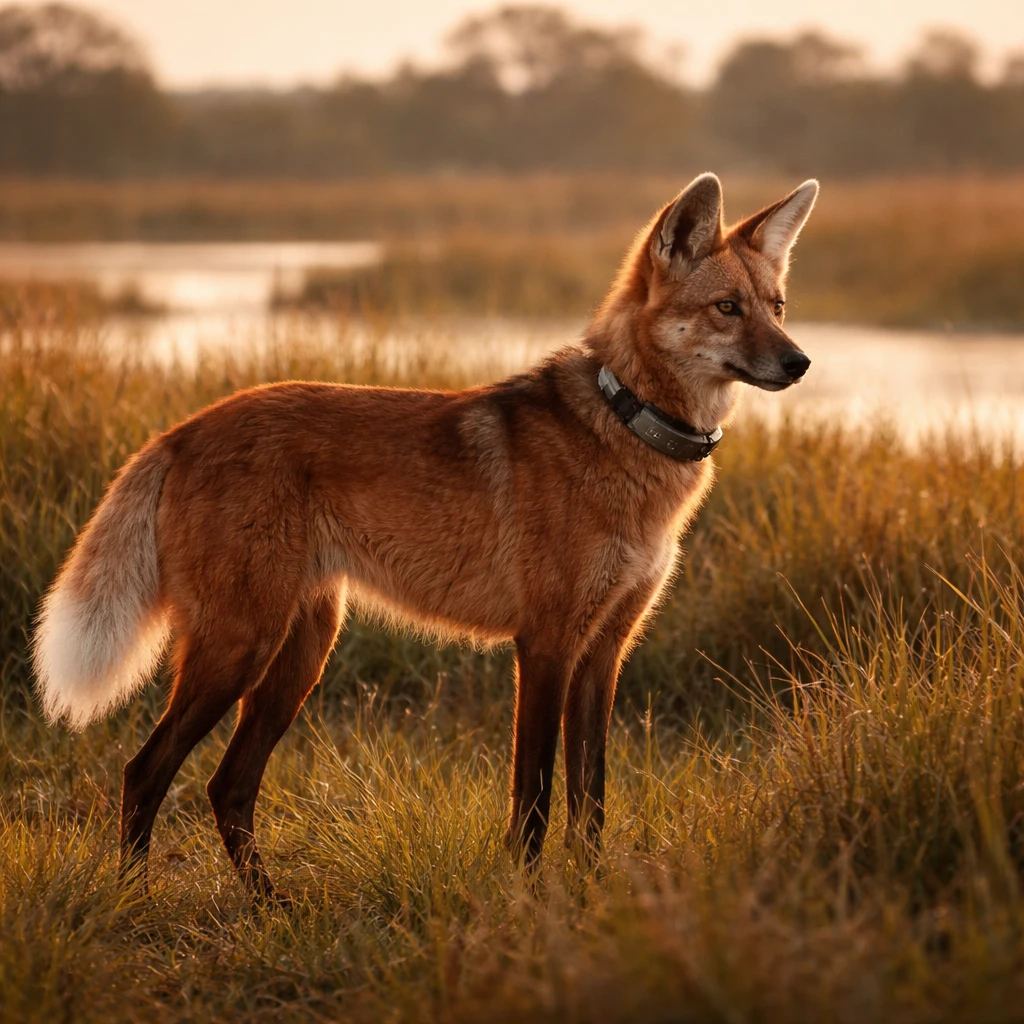
Conservationists will release two maned wolves back into the wild next month in Argentina, officials said, continuing efforts to protect the long-legged wild canine classified as endangered. The male and female siblings, known as Sun and Moon, were received by the Temaikén Foundation in September after their mother died.
Both animals were born in Ibera National Park in northern Corrientes Province and are scheduled to be returned to that same park in July. The nonprofit Temaikén Foundation, which manages their care, arranged the upcoming release. Scientists have fitted the pair with satellite collars so their locations and movements can be tracked once they are back in their native habitat.
The maned wolf is frequently described as resembling a fox on stilts because of its thin, unusually long legs. Although commonly called a wolf, the species is technically neither a wolf nor a fox. Distinctive features include large ears, reddish fur and a bushy white-tipped tail. The animal emits a high-pitched, plaintive howl that has made it a figure in regional folklore.
Paula González, the Temaikén Foundation’s conservation director, noted that local legend has attached supernatural qualities to the maned wolf’s call. In some communities the animal’s howl is linked to tales of the "lobizón," a night-roaming man-wolf hybrid. González said these beliefs create risk for the species where such ideas are deeply held and where people may attempt to kill the animals.
The upcoming release aims to return Sun and Moon to the environment where they were born and to enable researchers to observe their adaptation to life in the park. The satellite collars will provide data to conservation teams following the release, though the article does not provide details on the duration of monitoring or the specific metrics scientists will track.
This operation underscores the intersection of wildlife rehabilitation, scientific monitoring and community relations in efforts to conserve an endangered species. The Temaikén Foundation's role in rescuing, rehabilitating and returning the siblings highlights ongoing conservation actions in the region.