
World June 24, 2026 07:55 AM

Trump Says Iran Told U.S. It Is Not Seeking Tolls on Ships in Strait of Hormuz

President cites Iranian assurance on maritime charges as negotiators report divergent accounts on key elements of their framework deal

By Leila Farooq
Share
Twitter Reddit Facebook LinkedIn

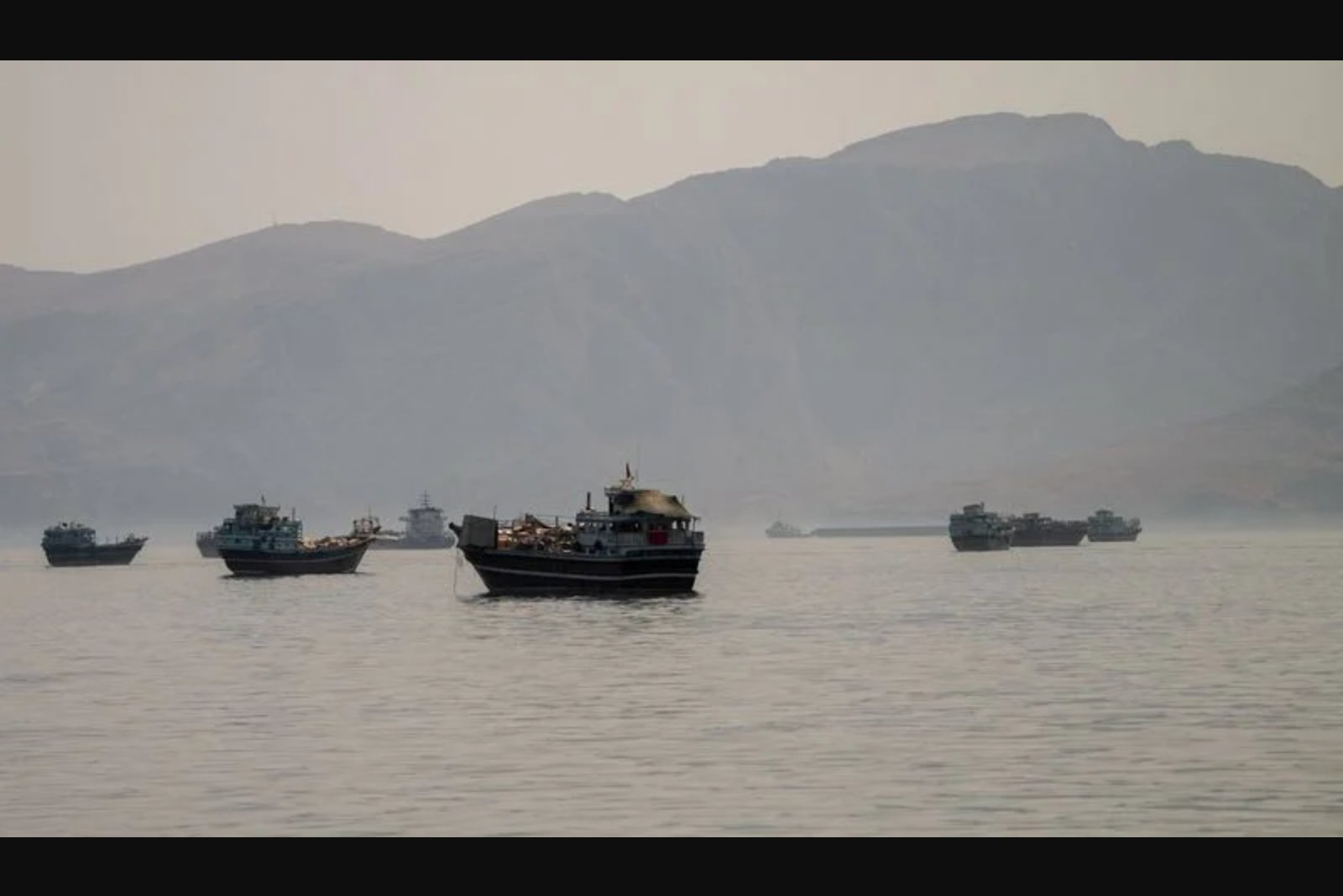
President Donald Trump said Iran informed U.S. officials that it is not asking for tolls, insurance fees, or any other charges on vessels transiting the Strait of Hormuz. The comment comes amid conflicting accounts between the two countries over parts of a framework agreement signed last week and after a first round of talks in Switzerland ended on Monday. Trump also warned the talks would end immediately if the claim proved false.

Trump Says Iran Told U.S. It Is Not Seeking Tolls on Ships in Strait of Hormuz
Summarize with
ChatGPT Perplexity Claude Grok Gemini

Key Points

  • President Trump said Iran informed the U.S. that it is not seeking tolls, insurance fees, or other charges on ships traveling through the Strait of Hormuz - a statement posted on social media.
  • Negotiators from the United States and Iran finished a first round of talks in Switzerland on Monday and have offered conflicting accounts on financial incentives for Iran, control over the Strait, and Israel's parallel war in Lebanon - all aspects of a framework deal signed last week aimed at ending the war.
  • The president faces domestic criticism over the framework deal, including pushback from hardliners within his Republican Party; maritime operations and insurance considerations are among the sectors affected by the dispute in accounts.

U.S. President Donald Trump said on Wednesday that Iran has told American officials there are no charges being imposed on ships passing through the Strait of Hormuz.

The United States and Iran concluded a first round of negotiations in Switzerland on Monday. Since then, officials from both sides have presented differing versions of several elements tied to a broader framework agreement signed last week that is intended to bring an end to the war.

Those contested elements include whether financial incentives were part of the arrangement for Iran, which party would exercise control over movements through the Strait of Hormuz, and how Israel's parallel war in Lebanon fits into the framework - all items the two sides have described inconsistently.

"Iran has informed the U.S. that, despite troublemaking Fake News reporting to the contrary, there are 'NO TOLLS, NO INSURANCE COSTS, & NO OTHER CHARGES OF ANY KIND BEING SOUGHT OR RECEIVED BY IRAN ON SHIPS TRAVELING THE STRAIT OF HORMUZ'"

"If this is false information, negotiations would end, immediately!"

Trump posted the statement on a social media platform, framing it as a direct denial of reporting he described as inaccurate.

Domestically, the president has faced criticism over the framework deal. That pushback has included objections from hardliners within his own Republican Party.

Observers and policymakers are left navigating an environment where official accounts of what was agreed - or discussed - differ between the negotiating parties. The conflicting descriptions touch on matters that could affect maritime operations in the Strait of Hormuz as well as the terms of the broader framework designed to halt the fighting.

Details remain limited to the statements issued by the involved parties. Absent further clarification from the negotiators, public understanding of the precise commitments, if any, tied to financial or operational control in the region will continue to rely on the competing accounts put forward so far.


Summary

President Trump said Iran told U.S. officials it is not seeking tolls, insurance costs, or any other charges on ships transiting the Strait of Hormuz. The comment follows a first round of talks in Switzerland that ended on Monday and comes amid conflicting accounts between the two countries about core aspects of a framework agreement signed last week. Trump warned negotiations would end immediately if the information proved false. He has also faced domestic criticism, including from hardliners in his party.

Risks

  • Conflicting official accounts between the United States and Iran create uncertainty about the exact terms and commitments of the framework deal - this uncertainty affects stakeholders linked to maritime transit and related insurance markets.
  • If the Iranian assurance cited by the president is later shown to be inaccurate, Trump indicated negotiations would end immediately, introducing risk to the ongoing diplomatic process and to markets sensitive to outcomes tied to the Strait of Hormuz.
  • Domestic political opposition, including from hardliners in the president's party, presents a risk to the durability of the framework deal and the negotiations supporting it, with potential consequences for diplomatic continuity.

More from World

U.S. Airstrike in Northwestern Syria Kills Senior Islamic State Commander, Central Command Says Jun 24, 2026 European Commission Finds Five EU Members Not Yet Eligible to Adopt the Euro Jun 24, 2026 ICC Executive Bureau Recommends Removal of Prosecutor Over Inappropriate Sexual Relationship Jun 24, 2026 Two Maned Wolves to Be Returned to Ibera National Park After Rescue Jun 24, 2026 China Defends Extraterritorial Reach of New Ethnic Unity Law Jun 24, 2026