
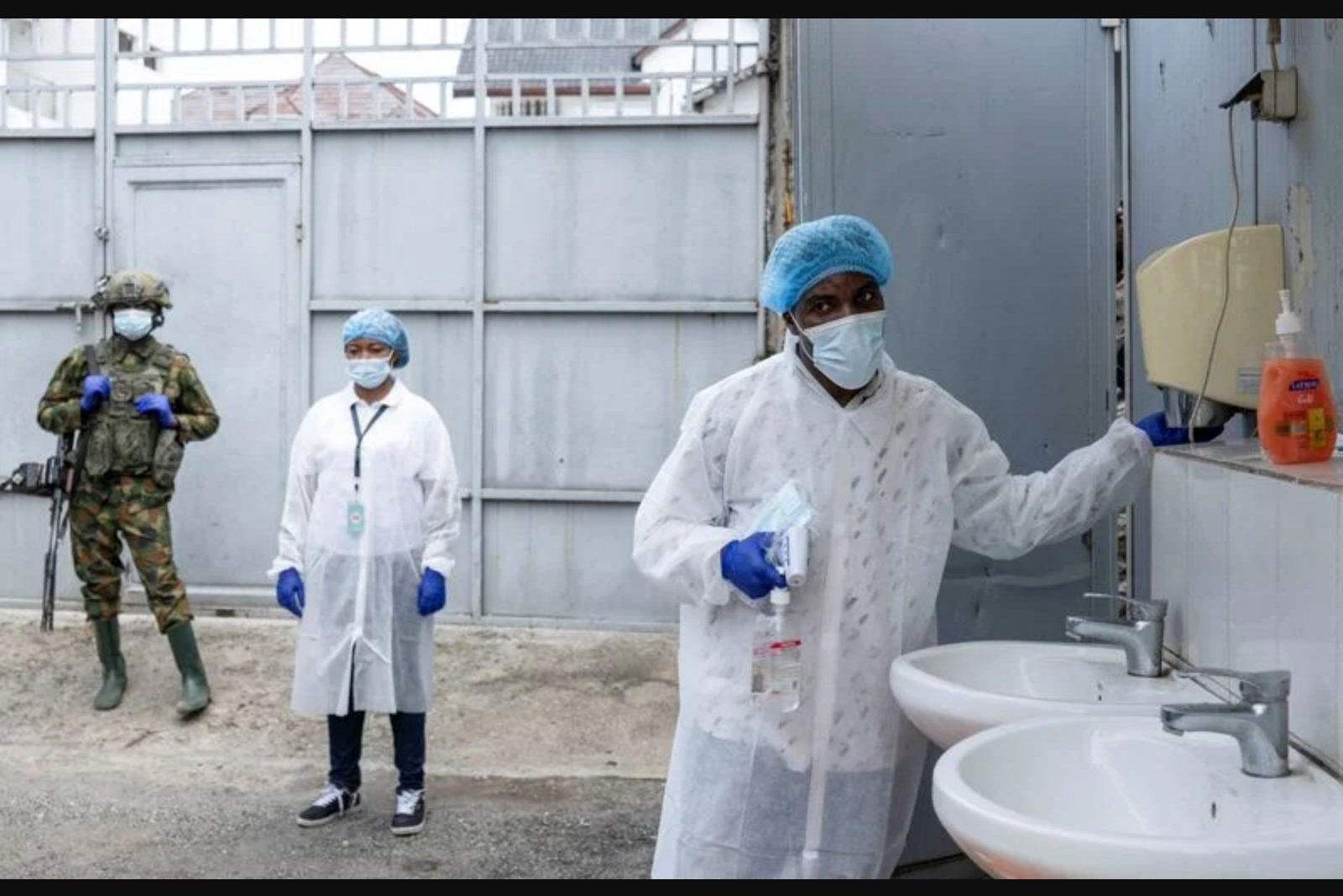
The World Health Organization reported that three laboratories in the Democratic Republic of Congo have run out of the reagents required to process Ebola tests, forcing a temporary halt to testing in those facilities as the outbreak of the Bundibugyo species continues to expand.
In its situation report dated June 7 and released on Tuesday night, the WHO identified the affected laboratories as those in Bukavu and Lwiro, both located in South Kivu province, and the laboratory in Goma in North Kivu. The agency said the laboratories were awaiting arrival of the chemical reagents necessary to address samples that have accumulated while testing was paused.
The WHO did not provide figures on how many samples remain unprocessed in those laboratories, nor did it indicate whether the supplies had arrived after the data in the report was collected. The agency did not immediately respond to requests for comment on those points.
Congolese government figures released on Tuesday evening state there have been almost 600 confirmed cases in the current Ebola outbreak within the country, and more than 115 deaths. Authorities also reported 19 cases and two deaths in neighbouring Uganda that have been linked to the same epidemic. The WHO has declared the outbreak an international public health emergency.
Testing for the Bundibugyo strain initially progressed slowly because the commonly used, widely available Ebola assays did not detect that particular species of the virus. Testing capacity has improved since then, the report noted, with expanded activity led from the Institut National de Recherche Biomédicale, based in Kinshasa. Despite that progress, access to some areas remains constrained by insecurity and armed conflict in provinces most affected by the outbreak.
Professor Jean-Jacques Muyembe, director of the Institut National de Recherche Biomédicale (INRB), told an online briefing on Wednesday that laboratory capacity had grown substantially and that regional laboratories were increasingly able to return same-day results. However, he said other parts of the outbreak response were lagging, particularly efforts to secure the cooperation and trust of local communities so residents can take measures to protect themselves.
"For the moment I am a bit disappointed, because I don’t see in practice these experiences on the ground," he said, referring to lessons learned from past outbreaks. He added that it appeared necessary to re-learn how to involve communities in the response to this outbreak.
This evolving situation leaves testing capacity vulnerable to supply disruptions while the epidemiological picture continues to worsen in the region. Authorities and international agencies have signalled improvements in laboratory capabilities but have also flagged persistent operational challenges in securing both supplies and community engagement.