
South Korea’s government moved to elevate its response to an intensifying heatwave on Tuesday, with President Lee Jae Myung declaring the situation a national disaster and instructing officials to expand assistance for those affected. The announcement came as authorities attributed 19 deaths to the extreme heat and as meteorological data showed record temperatures in parts of the country.
Speaking at a cabinet meeting, the president called for immediate measures to protect daily life and ordered inspections of power systems in light of surging demand for air conditioning. Lee warned that abnormal weather patterns raise the prospect that extreme conditions could persist for some time, and he called for a significant overhaul of the nation’s disaster response arrangements to better accommodate the hazardous circumstances.
The Korea Meteorological Administration reported that Yangsan, an inland southeastern city situated in a basin, reached 42.5 degrees Celsius (108.5 degrees Fahrenheit) on Sunday - the highest temperature recorded in the agency’s 122 years of weather observations. The agency also issued its first-ever heatwave warning for parts of Seoul and neighbouring Gyeonggi on Monday, then extended the warning to cover the entire capital on Tuesday. A heatwave alert advises people to suspend outdoor activities such as farming, sports and construction work.
Residents in areas of western Seoul known for lower-cost single-room housing have described severe discomfort. "I have never felt heat like this so far here," said Cho Sang-yeon, who has lived nearly 20 years in a jjokbang village in Yeongdeungpo district.
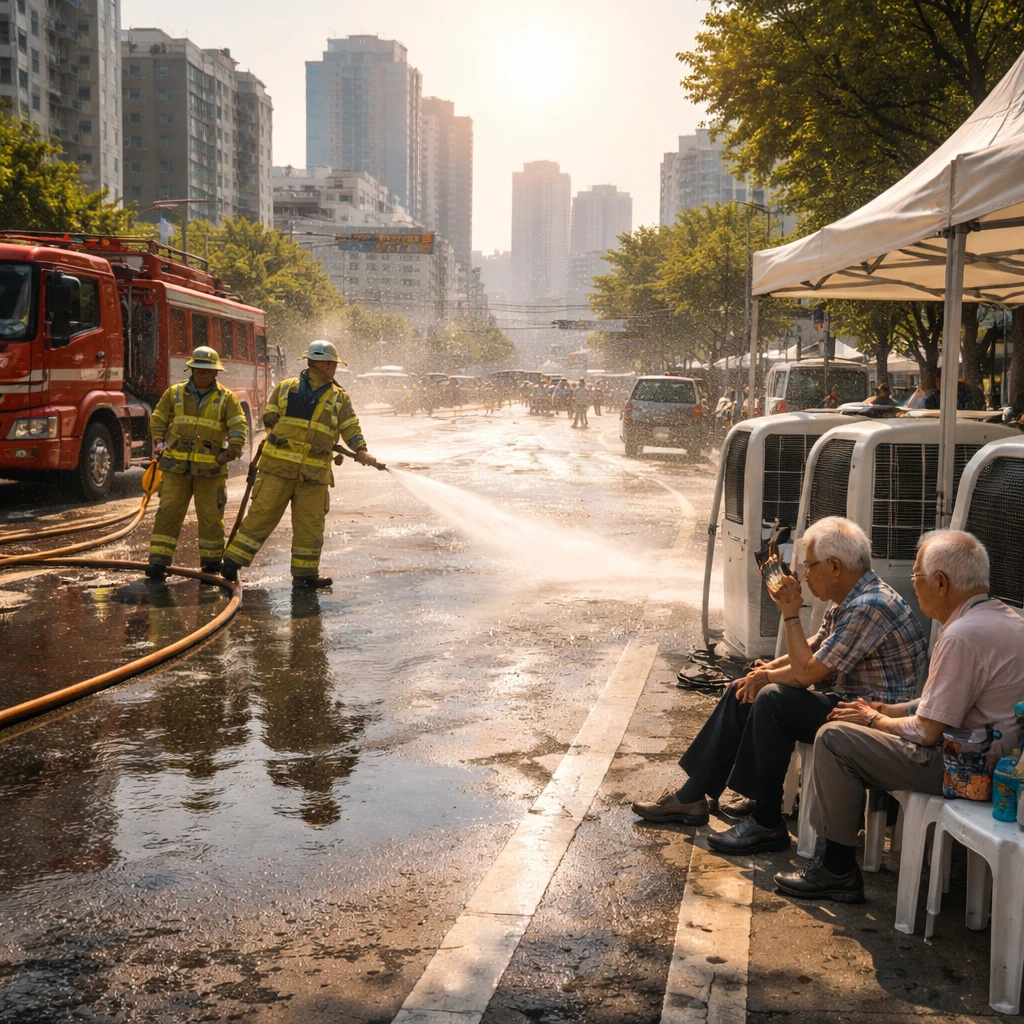
Local authorities have moved some residents into government-provided temporary shelters fitted with air conditioning, but observers and neighbours voiced concern about those who remain on the streets. "I feel sorry to see homeless people who are suffering from the heat on the street," said Son Ki-young, a resident.
Firefighters and other officials have been taking relief actions in affected neighbourhoods. Jun Hong-cheol, an official at Yeongdeungpo Fire Station, said crews have been spraying water on roads and checking on vulnerable people for signs of heat-related illnesses.
Health authorities reported the death toll from the heatwave has climbed to 19, and that 13 of those fatalities were people aged 80 or above, according to the Korea Disease Control and Prevention Agency. The Korea Meteorological Administration’s data show that since May 15, a total of 2,025 people nationwide have suffered heat-related illnesses.
The extreme conditions have disrupted scheduled events: two baseball games set for Tuesday in Seoul and Gwangju were cancelled, according to the Korea Baseball Organization’s website. Officials continue to monitor both public health indicators and infrastructure stress as the heatwave persists.