
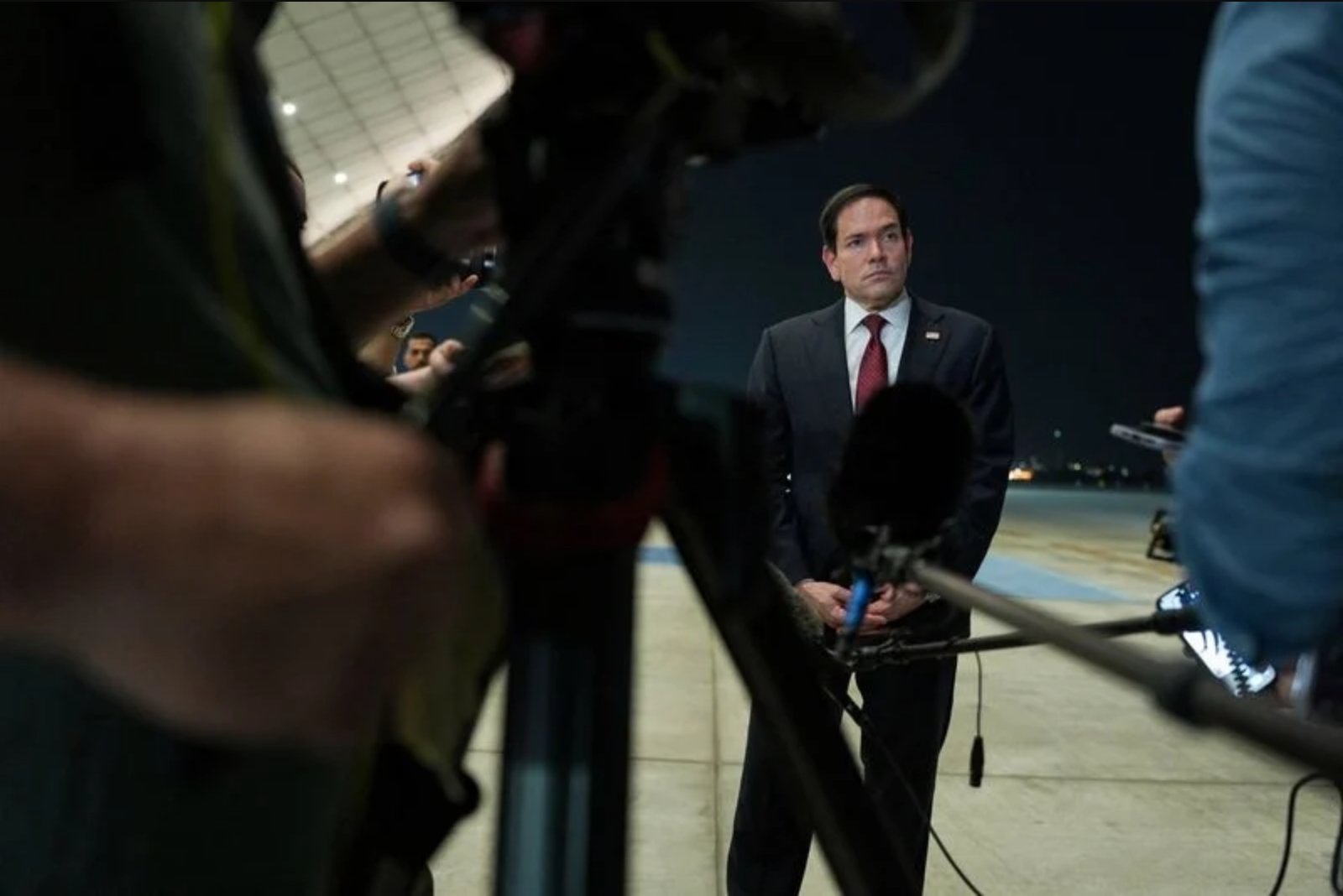
U.S. Secretary of State Marco Rubio opened a diplomatic visit to the Gulf at the end of Tuesday, arriving in Abu Dhabi for what the U.S. diplomat described as a three-day mission to key regional partners. The trip represents Rubio's first high-level engagement directly tied to the recently agreed memorandum that ended a four-month U.S.-Israeli conflict with Iran.
On arrival, Rubio told reporters that concerns voiced by Gulf allies over the agreement would be part of his discussions. 'That most certainly will come up in these discussions,' he said, adding that talks would also cover matters the memorandum of understanding did not address.
The visit comes after a period in which Rubio had not been centrally involved in Iran-focused diplomacy. Instead, Vice President JD Vance took the lead in recent Iran talks, meeting with Iranian counterparts over a weekend in Switzerland.
Rubio's comments as he moves through the region are expected to be watched closely, given his earlier reputation as a hard-line critic of Iran and the unease among many congressional Republicans who view the agreement as an unacceptable concession. Rubio and Vice President Vance, both former U.S. senators, are also frequently discussed within Republican circles as potential successors to the current president, with party insiders and early polls often framing the contest as a two-way race between them.
The diplomatic balancing act Rubio faces is evident: he must defend a preliminary accord that has explicit backing from the president while simultaneously addressing the doubts and security worries of Gulf partners who see the deal as too generous to Tehran.
Gulf governments publicly advocated for a peaceful resolution during the hostilities, yet several leaders reacted with surprise and disappointment to specific elements of the accord once it was unveiled. Central among their concerns is a proposed $300 billion reconstruction fund for Iran, which U.S. regional partners worry could be diverted toward rebuilding military capabilities.
Another major omission from the memorandum, according to Gulf allies, is any restriction on Tehran's ballistic missile arsenal - a capability that many Gulf states fear, especially after being struck by Iranian missiles and drones during the conflict.
Tehran, for its part, has noted that Gulf states provided various logistical accommodations to the U.S. during the four-month war and host U.S. military bases that were integral to the campaign.
Rubio's itinerary includes visits to the United Arab Emirates and Kuwait, two countries that host strategic U.S. military installations and that experienced strikes from Iranian missiles with civilian casualties reported.
The United Arab Emirates is described as facing acute economic strain following the conflict. The wartime period prompted thousands of expatriates - a critical component of the UAE's non-oil economy - to leave the country. That outward movement has raised questions about the longer-term resiliency of the emirates' push to expand as a global financial centre given its proximity to a state that carried out attacks.
Recent reporting has also detailed security concerns tied to new, covert Iran-linked cells established in neighbouring Iraq. Those cells are reported to have executed at least seven drone strikes against sites in Kuwait, the UAE and Saudi Arabia over roughly a one-month span in April and May.
Rubio's engagements over the coming days are likely to focus on reconciling Washington's position on the memorandum with the urgent security and economic worries of Gulf partners. How he frames the accord - and what reassurances he can offer - will be closely monitored by regional capitals and domestic political audiences alike.