
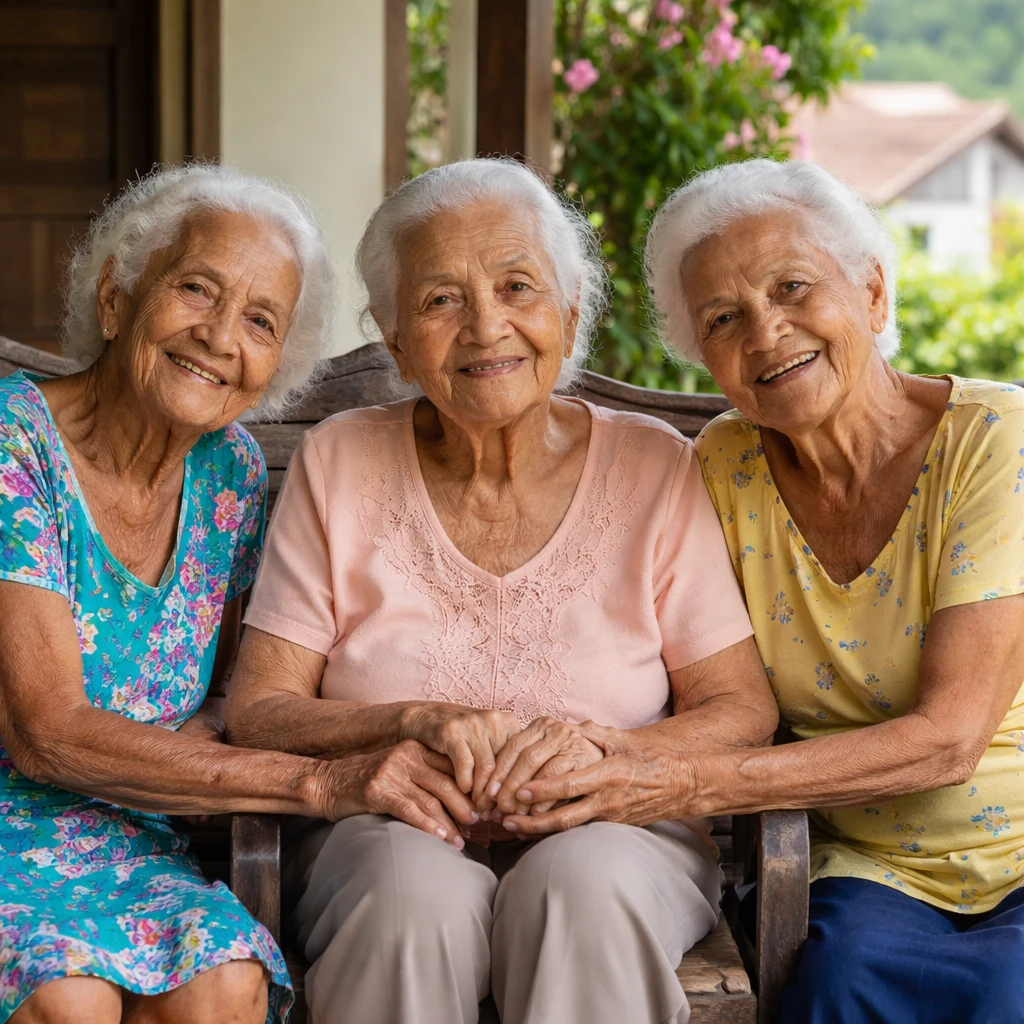
Scientists are turning to an unusually aged family cluster in Brazil for clues about why some people maintain robust health at very advanced ages. The three sisters - Zulina de Deus Nunes, 103; Zoraide de Deus Mota, 104; and Levita de Deus Nunes, 109 - who live in Rio de Janeiro, were recently identified by Guinness World Records as the oldest living trio of siblings globally, with a combined age of 316 years.
The University of Sao Paulo is mobilizing part of its research apparatus to study the sisters. The DNA Longevo Project, under the direction of Mayana Zatz, aims to examine biological contributors to ageing by comparing people who remain physically and cognitively resilient into their 90s and beyond with those who develop frailty, cognitive decline or chronic illnesses.
Zatz, who coordinates the university's Human Genome Research Center, said genetic testing will be used to search for protective genes. "Through DNA testing, we look for protective genes, and we know there are several of them," she said. The project plans to increase the number of centenarians in its data set to improve the accuracy of any associations it discovers.
Researchers involved in the study said inherited factors may have a larger role than environmental influences in preserving health and function later in life. To clarify the balance between genetics and lifestyle, investigators will compare profiles of nonagenarians and centenarians who remain high functioning with those who have experienced age-related declines.
The three sisters were located through LongeviQuest, an organization that verifies longevity records and works with Guinness World Records. Ben Meyers, CEO of LongeviQuest, noted that the sisters' ages point to a strong genetic component, but he also emphasized the practical benefits of proximity. "Because they live near each other, they also have a support network, with family able to help when needed. There is definitely a community aspect as well," he said.
The sisters attribute their long lives to a combination of healthy eating and activity. Zulina recalled a childhood of swimming and fishing in rivers, saying: "Everything was fresh. We didn’t have a refrigerator." Zoraide added, "Breastfeeding is incredibly important."
Outside of their longevity, the sisters led lives that included typical occupations and family responsibilities. Levita worked as a craftswoman and later at a television network. Zoraide was a nurse and raised five children. Zulina was a stay-at-home mother who raised six children. Reflecting on her life, Levita said, "I had a good childhood and adolescence. I can’t complain."
Investigators hope the work will reveal genetic traits that protect vital systems such as the heart, muscles and brain from the usual deterioration associated with ageing. Joao Paulo Guilherme, a researcher collaborating with Zatz, said the study's objective is to reach 500 centenarians so that more definitive conclusions about longevity can be drawn.
Context and next steps
The DNA Longevo Project will continue to recruit and compare centenarians and nonagenarians, as well as those who have experienced age-related conditions, to refine its understanding of protective genetic variants. Expanding the sample size is a stated priority in order to strengthen the statistical power of any findings.