
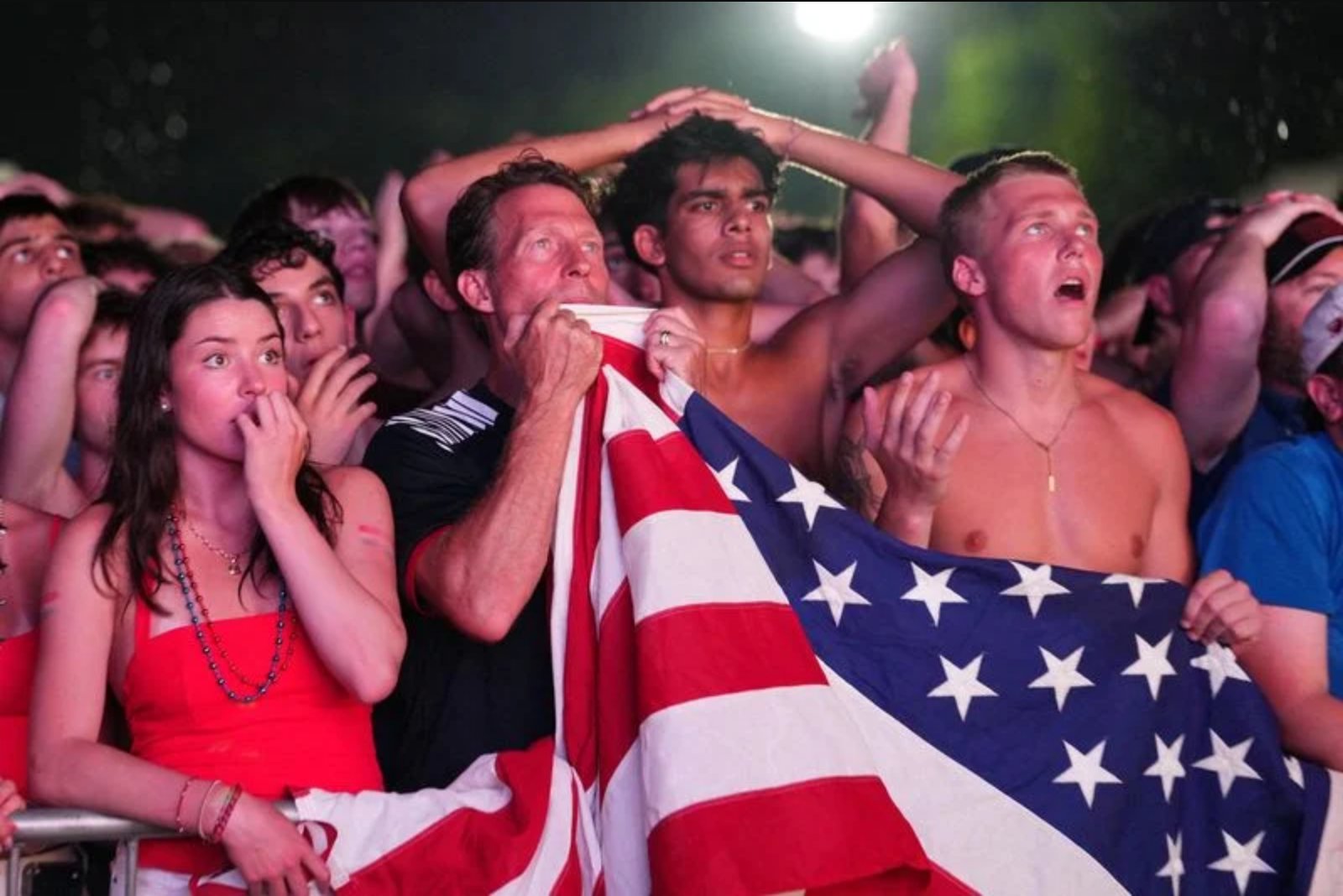
The United States' run in the World Cup on home turf ended in a decisive 4-1 loss to Belgium, a result that shifted the narrative from promotional optimism to a straightforward sporting assessment: the hosts were outplayed by a stronger opponent.
In the run-up to the knockout match, an abundance of marketing, national enthusiasm and talk of destiny surrounded the U.S. side. Television adverts urged belief and banners promised triumph, framing setbacks as stepping stones to glory. Yet when the game unfolded, the contest exposed the limits of that optimism.
According to the live FIFA rankings that applied going into the match, the United States were 16th and Belgium sat eighth. The team ranked 16th advanced to the last 16 and then suffered a heavy defeat to the team ranked eighth. The gap suggested by those rankings, while disappointing for the hosts, made the final scoreline unsurprising once the competitive realities on the field were considered.
The Americans had won plaudits earlier in the tournament, topping their group ahead of Australia, Paraguay and Turkey, and advancing past Bosnia and Herzegovina in the last-32. Those results captured national attention and raised expectations. Still, when kickoff arrived, the qualitative difference between the two sides became evident quickly and decisively.
Off-field controversy dominated headlines in the build-up. The political and disciplinary storm surrounding striker Folarin Balogun took center stage after a high-profile intervention by Donald Trump, who urged FIFA to review Balogun’s case. The governing body suspended the striker’s ban and Belgium’s appeal failed. Despite that backdrop, once play started, Balogun's situation receded into the margins of the match.
Belgium's players appeared puzzled by the level of confidence afforded to the United States before the game. Goalkeeper Thibaut Courtois said: "In recent days, we have been disrespected here in the United States. It was being said that they could beat us easily, but I think today we showed that we are a good team." He added: "I understand that they want to hype America, but I felt a little more certain today that we were going to win than against Senegal. I think Senegal is a better team than the United States."
Belgium - which had beaten Senegal 3-2 in the round of 32 - demonstrated control throughout the match and looked capable of progressing deeply into the tournament. Even with several high-profile names - Kevin De Bruyne, Romelu Lukaku and Jeremy Doku - beginning the game on the bench, Belgium managed the contest from start to finish.
Former U.S. international Carli Lloyd, speaking on Fox Sports, criticized the American approach and individual performances: "The United States lost the game before they even stepped out onto the pitch... From the beginning, they were chasing, tentative, scared and just not confident on the ball," she said. Lloyd also singled out Christian Pulisic: "I was a bit disappointed with Christian Pulisic. Whether he wants to be the star of this team or not, we didn’t see enough from him in this particular game and really the whole World Cup." Against Belgium, AC Milan winger Pulisic lost possession 11 times in the first half alone.
Previous results between the sides may have lingered in players' minds. Belgium had beaten the United States 5-2 in a friendly earlier in the year, a defeat that may not have been prominent in public memory but could have influenced the competitive dynamic among the teams. Courtois said Belgium aimed to extract any early psychological advantage: "We wanted to pin the United States back from the start," he said. "Then they started to doubt themselves."
The Belgian team added a degree of provocation after the match with a social media post that read "Overturn this," and were filmed in the dressing room mimicking Trump’s 'YMCA' dance, moments that amplified the sting of the result for the hosts.
The elimination continued a recurring pattern for the U.S. Men's National Team. They have been knocked out in the last-16 at every World Cup since 2010, excluding 2018 when they did not qualify. Despite the exit and recurring knockout-stage limitation, some observers emphasized positive aspects of the campaign. Lloyd described it as a "fantastic World Cup" for the United States, saying the team had united the country and given American fans reason for optimism about the future.
Beyond on-field outcomes, the tournament has been a commercial and popular success in several respects. Match attendances have been huge and television audiences set records, signaling strong engagement and renewed interest in the sport across the country. Those achievements, while significant for broadcasters, venues, sponsors and related hospitality sectors, do not alter the sporting fact displayed on the pitch: the United States performed broadly in line with its global ranking and were convincingly beaten by a higher-ranked Belgium side.
In short, the conclusion that emerges once the slogans and spectacle fade is straightforward. Marketing and national enthusiasm raised expectations, and the team delivered memorable moments that energized fans and commercial partners. Yet against a better-quality Belgium team, belief alone was insufficient to change the competitive balance.
Summary
The United States' bid in the World Cup held at home ended with a 4-1 defeat to Belgium, underscoring that national hype and promotional campaigns could not overcome a tangible gap in quality. FIFA rankings - with the U.S. 16th and Belgium eighth entering the knockout - reflected the result. Controversy over Folarin Balogun and strong public optimism were eclipsed by Belgium's on-field control. The tournament nonetheless drew large crowds and record television audiences, offering commercial gains even as sporting limitations were exposed.