
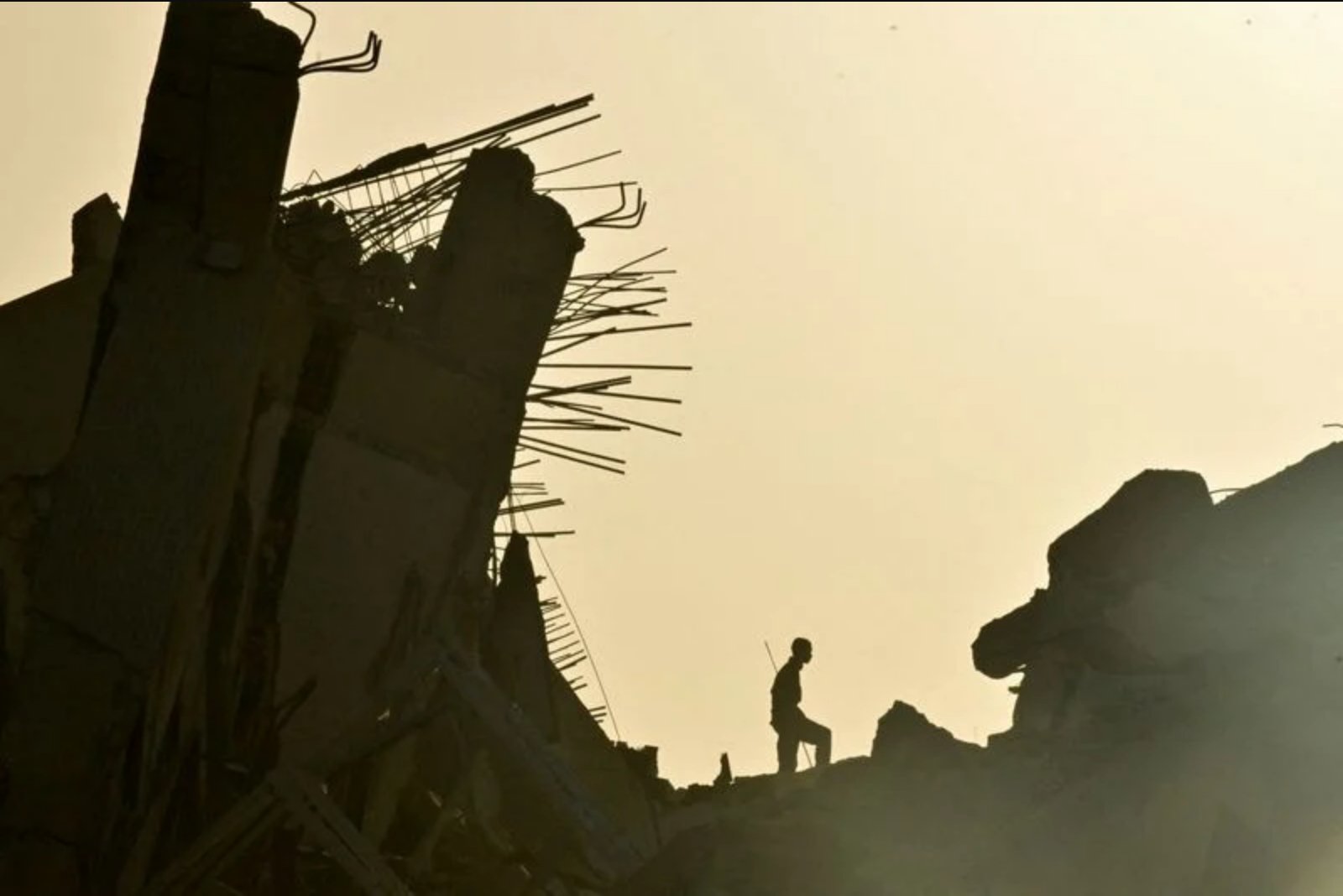
Venezuela is confronting a crisis that could define the early tenure of interim president Delcy Rodriguez after two large earthquakes hit the country on Wednesday evening. The tremors, measured at magnitudes 7.2 and 7.5, were described as the strongest Venezuela has experienced in more than a century. U.S. government data models indicated on Thursday that the eventual death toll could top 10,000.
Immediate priorities are clear: locate and rescue people trapped by collapsed structures, care for the injured and begin the long process of rebuilding homes, utilities and other infrastructure. Public and private resources will be stretched as responders assess damage and coordinate relief across affected regions - and into weeks as the full extent of destruction becomes clearer.
For Rodriguez, who was vice president to socialist leader Nicolas Maduro until Washington removed him from power in January, the catastrophe presents both a political hazard and an opportunity. Rodriguez has sought to project an image of political renewal and change, and analysts say how she handles the emergency may reshape perceptions of her leadership and the interim government's competence.
"The narrative of a new Venezuela is based on reconstruction," said Tony Frangie Mawad, a Caracas-based political scientist. "It ends up being somewhat ironic that the country now has to face, with great difficulty, a very literal reconstruction of its infrastructure."
Frangie cautioned that the rescue and rebuilding effort will contend with long-standing constraints created by Venezuela's prolonged economic crisis and weakened public services. He said such structural limitations could make recovery efforts prone to failure. At the same time, he noted, a well-managed recovery strategy that effectively incorporates international aid could create a short-term national cohesion - a "rally around the flag" effect - that bolsters Rodriguez politically.
Rodriguez has publicly tried to cultivate that unity message. "In unity, we will overcome this situation," she said in the immediate aftermath of the disaster, emphasizing collective resolve in the face of the emergency.
External assistance may prove decisive. Analysts point to historical examples in the region where natural disasters altered political trajectories, noting that the international response and the domestic handling of relief can accelerate political realignment or deepen public discontent.
In a notable contrast, analysts recalled that in 1999, then-leader Hugo Chavez rejected U.S. aid following deadly landslides that killed at least 10,000 people, a choice seen as an early indicator of an anti-U.S. posture that later contributed to Venezuela's international isolation. Observers say U.S. help in the current crisis could both expand Washington's role inside Venezuela and increase Rodriguez's dependence on the United States as a principal ally.
"It’ll be big. It’ll be fast, and it’ll be effective," said Secretary of State Marco Rubio on Thursday, describing the U.S. response.
Ricardo Rios, head of Caracas-based consultancy Poder & Estrategia, argued that the disaster creates an opening for the United States to extend its presence and influence in Venezuela, and for Rodriguez to lean on Washington as her primary backer.
Historical comparisons were drawn to other Latin American earthquakes that reshaped politics: a 1972 quake in Managua that destroyed much of the city and killed 5,000 to 10,000 people, an event linked to the decline of President Anastasio Somoza; and Mexico City's 1985 earthquake, which killed at least 5,000 people and left about 100,000 homeless, a disaster whose rescue failures helped to weaken the ruling party of the time.
In the Venezuelan case, any missteps in the rescue and reconstruction effort are likely to be attributed to Rodriguez and could influence her political standing. Paul Angelo, a Latin America expert at the Washington-based consultancy McLarty Associates who was in Caracas during the quake, said the country's capacity for emergency response has been severely degraded over years of economic upheaval and population displacement.
"Venezuela’s capacity to handle emergency response has been hollowed out over 10 to 15 years of economic turmoil and displacement of 8 million people beyond Venezuelan borders," Angelo said. "Without major international assistance, and without a consolidated plan and lots of money infused into a country that is purportedly $240 billion in debt, this will be a long road to recovery."
The scale of the challenge is substantial: extensive search-and-rescue operations, emergency medical care, restoration of utilities and transport links, and the financing of reconstruction programs. International aid arriving to supplement domestic efforts could alter both the practical trajectory of recovery and the political narratives around whose leadership is credited - or blamed - for outcomes.
As assessments continue and more aid is mobilized, the coming weeks will be critical in determining whether the interim government can translate emergency response into a stabilizing national project or whether shortcomings will fuel public frustration and political risk.
Summary
Two powerful earthquakes hit Venezuela in quick succession, the strongest in over a century, with U.S. models projecting the eventual death toll could exceed 10,000. The scale of rescue, medical care and reconstruction needed presents both an acute humanitarian challenge and a potential turning point for interim president Delcy Rodriguez. Managing international aid and the recovery effort effectively could create political unity for Rodriguez; failing to do so risks significant backlash given Venezuela’s depleted public services, large external debt and widespread displacement.
- Key points
- The earthquakes measured magnitudes 7.2 and 7.5, and U.S. data models project fatalities may surpass 10,000.
- Delcy Rodriguez, who served as vice president to Nicolas Maduro and is aligned with U.S. President Donald Trump, faces a high-stakes test in managing rescue and reconstruction.
- Major sectors likely affected include infrastructure and construction, emergency medical services and public utilities; international aid flows could also influence financial and political dynamics.
- Risks and uncertainties
- Recovery efforts could fail due to weakened public services and prolonged economic crisis, affecting construction and public utilities sectors.
- Substantial reliance on international assistance - particularly increased U.S. involvement - could reshape geopolitical and financial relationships for Venezuela, with implications for government financing and governance.
- Given the country is reportedly $240 billion in debt and has experienced mass displacement of about 8 million people, the pace and scale of reconstruction remain uncertain and may strain health care and emergency response capacities.