
Summary
Barclays' review of recent Chinese trade data found exports climbed 23.9% year-over-year in July, exceeding a 23.0% Bloomberg consensus estimate and marking the sixth monthly outperformance in seven months. The rise occurred despite typhoon-related disruptions at major ports and followed a strong June showing. China’s trade surplus widened to $113 billion in July, and Barclays projects the country’s total trade surplus will top $1.2 trillion in 2026, a potential record.
Detailed findings
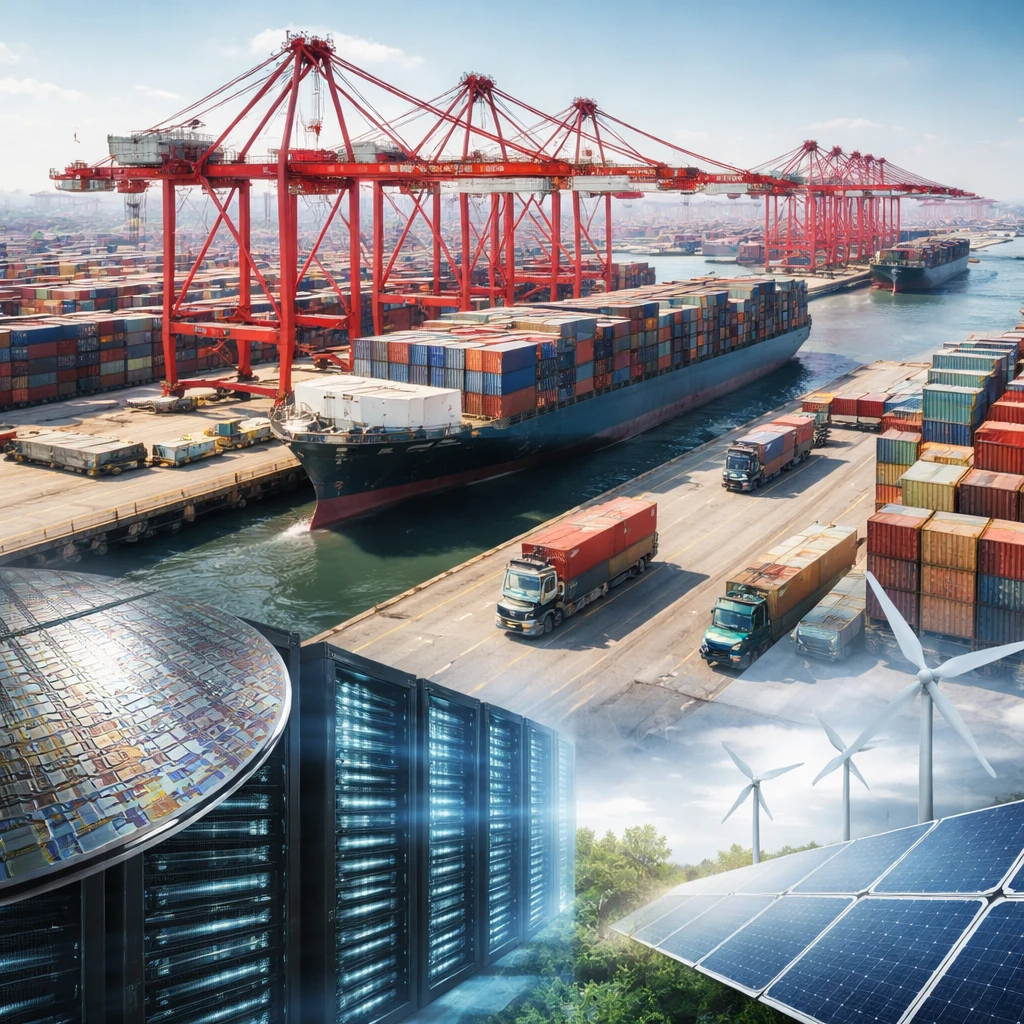
Barclays identified a concentration of gains in capital- and technology-intensive goods. AI-related products made up about 25% of exports, while green technology accounted for approximately 15% - together representing roughly 40% of total exports and underpinning July’s advance. Semiconductor exports have been particularly strong, recording year-over-year growth above 110% for a third consecutive month. Shipments of servers and other automatic data processing equipment rose 67% year-over-year in July and reached a new high.
Despite those gains, the data reveal a clear divergence across sectors. High-tech exports remain robust, while low-tech and labor-intensive categories have lagged. In the first half of 2026, low-tech and labor-intensive sectors comprised about 14% of total exports and have shown signs of weakness, with exports of textiles, footwear, and toys either stagnating or contracting year-to-date.
Barclays highlighted that the underperformance of labor-intensive industries points to continued pressure on China’s labor market, even as overall export figures are lifted by capital-intensive and high-tech industries.
Contextual notes
The July export surprise occurred in spite of weather-related disruptions at major ports, underlining the strength of demand for industrial-scale and high-tech goods. Barclays’ projection that China’s total trade surplus will exceed $1.2 trillion in 2026, if realized, would establish a new record for the country’s trade balance.
Takeaway
July’s trade data show a bifurcated export recovery: vigorous growth in AI, green tech, semiconductors, and server equipment contrasted with stagnation or declines in traditional labor-intensive categories. That split has implications for labor-market dynamics and the composition of China’s export-led expansion.