
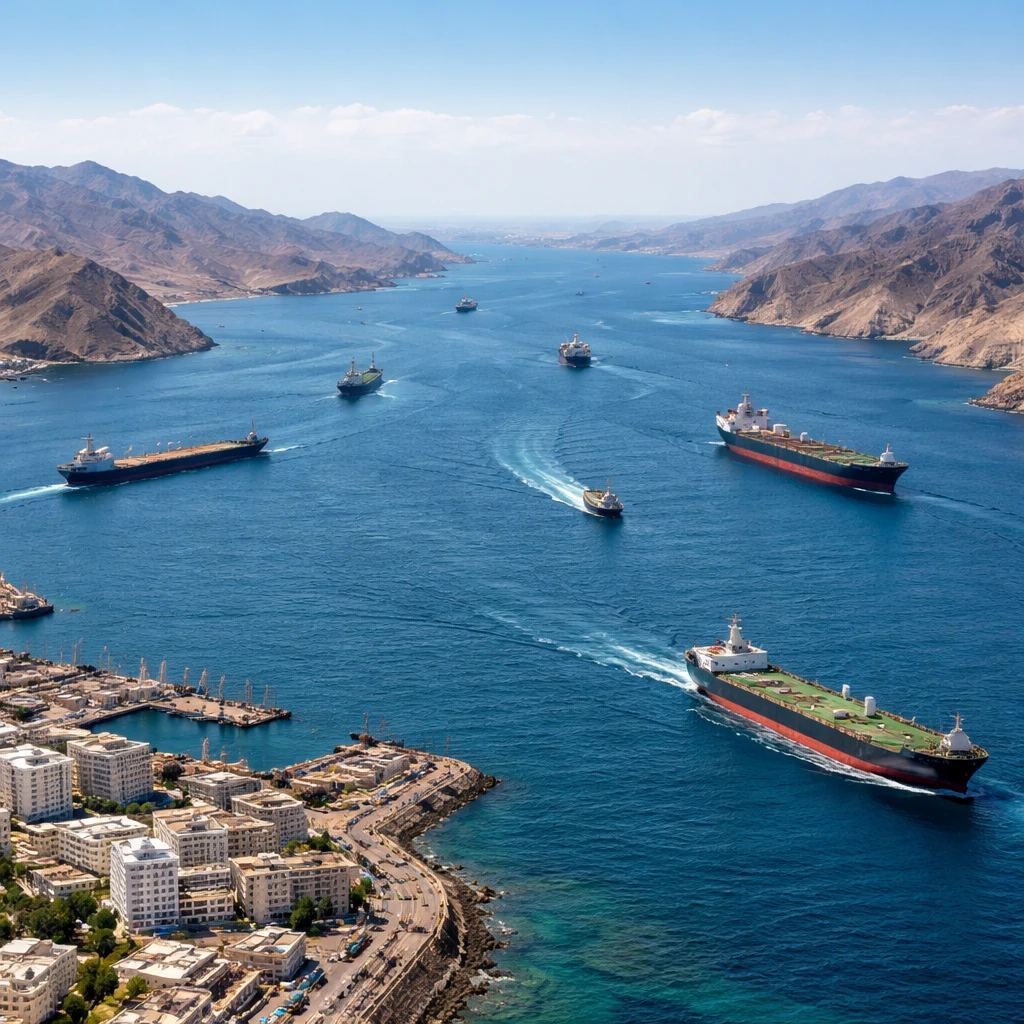
Oman and Iran announced on Tuesday that they will keep negotiating arrangements for navigation in the Strait of Hormuz, with particular attention to maritime services and related costs in the narrow, strategically significant passage.
In a joint statement following talks held in Muscat, the two governments said they will form a joint working group composed of officials from their foreign ministries to carry on the discussions. The statement said both sides intend to consult other coastal states and relevant parties as part of the process.
The move follows a memorandum of understanding signed last week that called for discussions between Iran, Oman and other Gulf coastal states on future management of navigation and maritime services in the strait. That waterway is identified by the parties as a vital route for global oil shipments.
The announcement came after a visit by Iranian Parliament Speaker Mohammad Baqer Qalibaf and Foreign Minister Abbas Araqchi, who met Oman’s Sultan Haitham bin Tariq and held talks with Omani Foreign Minister Sayyid Badr Albusaidi.
In their joint statement, Oman and Iran - the two countries that border the strait - reiterated their commitment to ensuring safe passage through the waterway in line with international law. The statement also underscored each country's sovereignty over its territorial waters.
The agreement to constitute a bilateral working group appears to implement a specific provision contained in the recently signed memorandum of understanding, by providing a mechanism for continued engagement between the two foreign ministries and for outreach to other stakeholders.
Details on the working group's mandate, membership, timetable or specific cost-sharing arrangements were not disclosed in the statement. The parties indicated only that consultations with other coastal states and relevant parties will take place as discussions proceed.
Summary
Oman and Iran have agreed to form a foreign ministry-led joint working group to continue talks on navigation management, maritime services and related costs in the Strait of Hormuz, and will consult other coastal states and relevant parties as part of the process.