
World November 11, 2026 01:18 AM

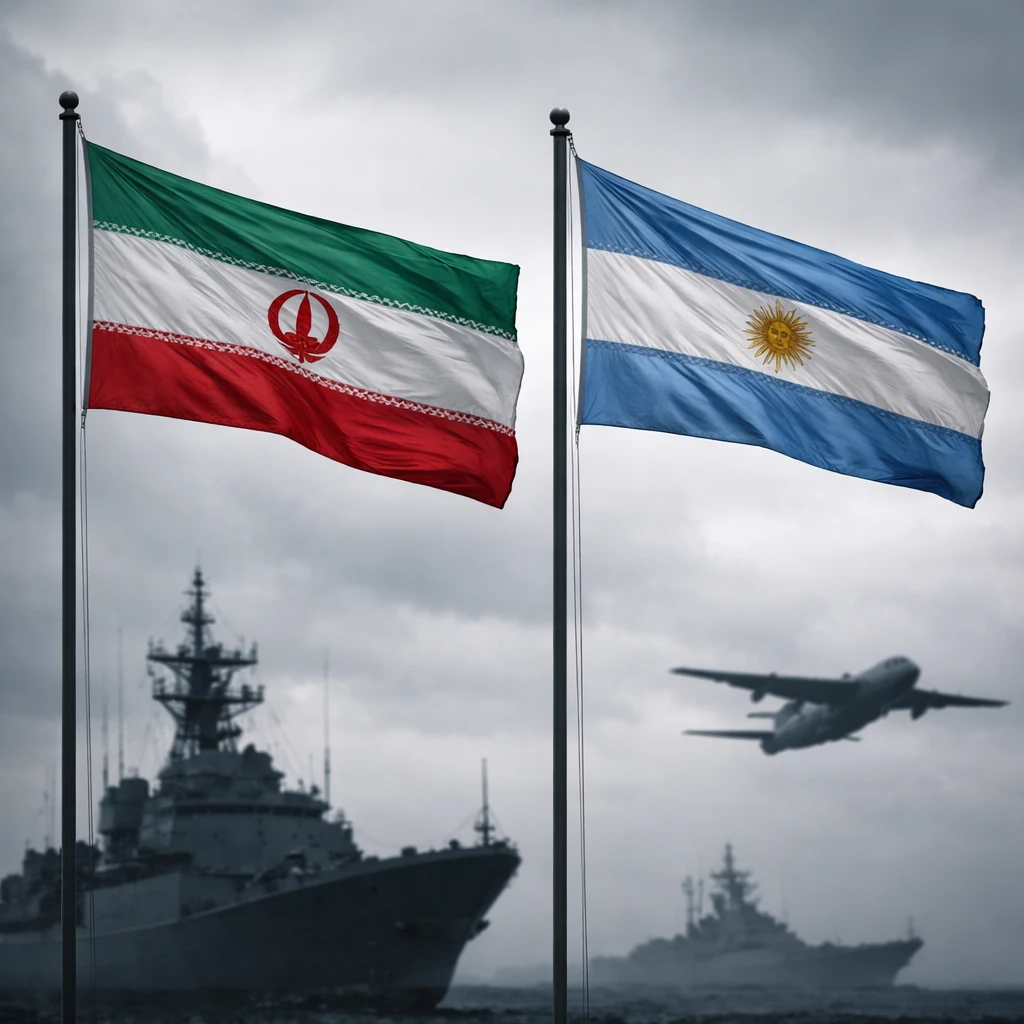
Iran Labels Argentina’s Navy and Air Force as 'Terrorist Organizations' in Reciprocal Move

Tehran says designation is based on reciprocity after Buenos Aires named the IRGC a terrorist entity in April

By Priya Menon
Share
Twitter Reddit Facebook LinkedIn

Iran's Foreign Ministry announced on Nov 11 that it has designated Argentina's navy and air force as terrorist organizations, a reciprocal response to Argentina's earlier designation of the Islamic Revolutionary Guard Corps. Tehran warned Argentina would bear responsibility for the consequences, while making no mention of the Argentine army. Buenos Aires said its April action against the IRGC was tied to the group's support for Hezbollah and its alleged role in the 1994 AMIA bombing that killed 85 people.

Iran Labels Argentina’s Navy and Air Force as 'Terrorist Organizations' in Reciprocal Move
Summarize with
ChatGPT Perplexity Claude Grok Gemini

Key Points

  • Iran announced on Nov 11 it considers Argentina's navy and air force to be terrorist organizations, citing the principle of reciprocity.
  • Argentina designated Iran's IRGC as a terrorist organization in April, linking the decision to IRGC support for Hezbollah and the 1994 AMIA bombing that killed 85 people.
  • Sectors most directly implicated include defense and military relations, with potential knock-on effects for diplomatic engagement and markets tied to defense and aerospace procurement.

Tehran has formally classified Argentina's naval and air arms as "terrorist organizations," the Iranian Foreign Ministry said on Nov 11, describing the step as a direct reciprocal response to a measure Buenos Aires took earlier this year.

The announcement follows Argentina's April designation of Iran's Islamic Revolutionary Guard Corps, or IRGC, as a terrorist organization. Argentina stated at the time that its decision was linked to the IRGC's backing for Lebanon-based Hezbollah, which Buenos Aires holds responsible for the 1994 bombing of the AMIA Jewish community centre in Buenos Aires that killed 85 people and wounded hundreds.

In its brief statement on Wednesday, Iran's Foreign Ministry said it regarded the Argentine air force and navy as terrorist organizations "based on the principle of reciprocity." The ministry added, "It is evident that the responsibility for all consequences arising from this matter will lie with the Argentine government." The statement offered no further elaboration, and specifically made no reference to Argentina's army.

The IRGC is described in the statement as an elite military force that defends Shi'ite clerical rule in Iran and exerts control over large segments of the country's economy. Argentina's April move to designate the IRGC followed appeals from the administration of former US President Donald Trump for allied countries to take similar action.

The Iranian statement did not detail what form the reciprocal designation would take in practice, nor did it enumerate any immediate operational measures tied to labeling the Argentine naval and air services as terrorist organizations. It limited itself to invoking reciprocity and cautioning that Argentina would be held responsible for the ensuing consequences.

Observers and officials have not provided additional commentary within the scope of this announcement, and the Iranian declaration left open questions about the practical implications of such a designation - including whether and how it might affect diplomatic, military or logistical interactions between the two countries.


Summary of facts

  • On Nov 11, Iran's Foreign Ministry designated Argentina's navy and air force as terrorist organizations, citing reciprocity.
  • Argentina had designated Iran's Islamic Revolutionary Guard Corps as a terrorist organization in April, citing the IRGC's support for Hezbollah and its alleged role in the 1994 AMIA bombing.
  • Iran warned that Argentina would be responsible for any consequences, and made no mention of Argentina's army.

Risks

  • Increased diplomatic tensions - The reciprocal designation explicitly ties responsibility for consequences to the Argentine government, raising the risk of deteriorating bilateral relations that could affect diplomatic and defense cooperation.
  • Operational and contractual uncertainty in defense-related sectors - With naval and air forces labeled as terrorist organizations, there is uncertainty for defense, aerospace and logistics sectors around existing or future cooperation, contracts, and engagements.
  • Ambiguity over scope of measures - Iran's statement did not specify practical steps or reference Argentina's army, leaving unclear the precise implications and creating uncertainty for policymakers and markets tracking defense and geopolitical risk.

More from World

EU accession for Ukraine faces growing obstacles as war persists and domestic opposition rises Nov 11, 2026 Over 100 Indonesian MPs submit petition that could trigger vice president's impeachment Nov 11, 2026 U.S. Federal Workers to Serve in Taiwan Offices Under New Fellowship Aimed at Deepening Ties Nov 11, 2026 Chinese Military-Linked University Acquired Nvidia H200 Chips Despite U.S. Export Blacklist, Procurement Records Show Nov 11, 2026 Zelenskiy Says US Envoys’ Messages Signal Movement Toward Ending War; Describes Abu Dhabi Talks as Constructive Nov 10, 2026