
When Russia invaded Ukraine in 2022, villagers living near the Polish border opened their doors and their fields to people fleeing the fighting. Over time, however, goodwill in some communities has hardened into unease as the crisis stretches into its third year and discussions about Ukraine joining the European Union intensify.
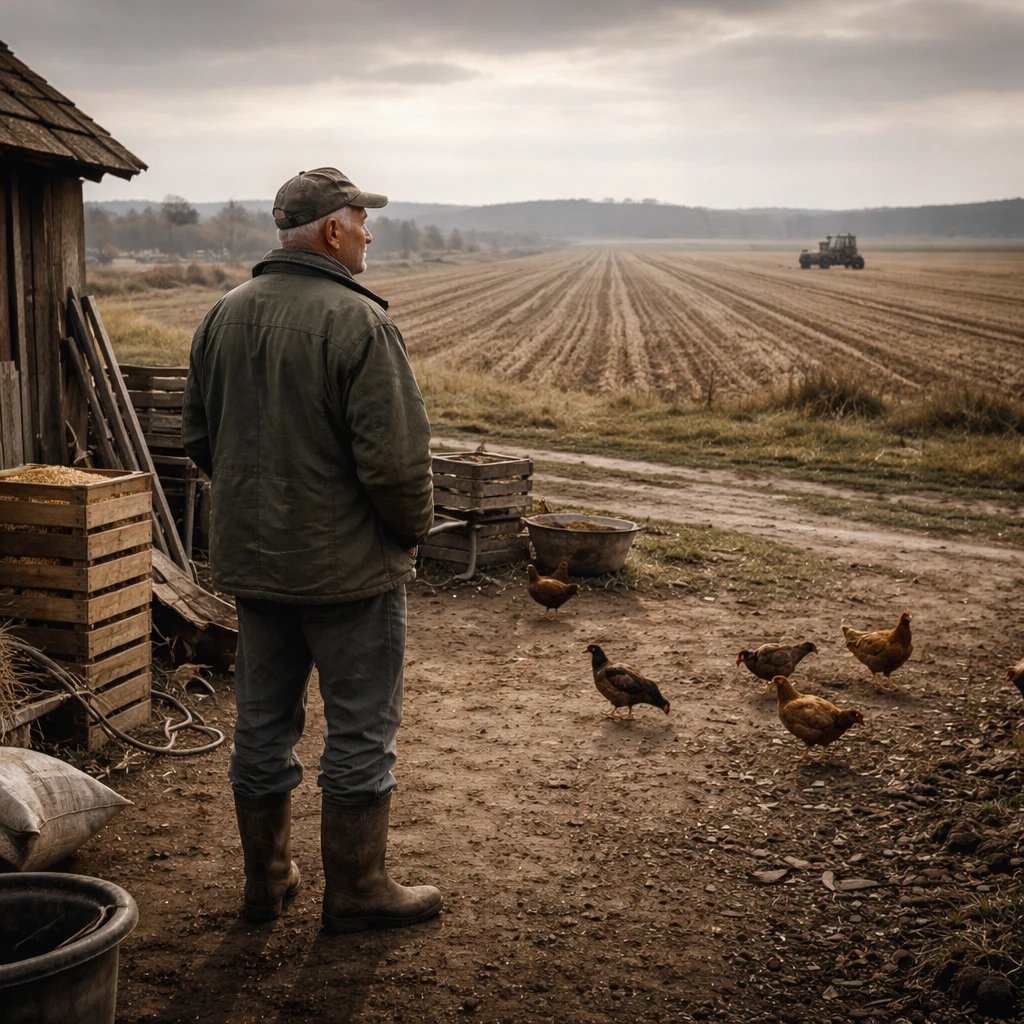
In Oszczow-Kolonia, a tiny settlement of about 70 residents roughly 280 km southeast of Warsaw, farmer Miroslaw Halej initially helped distribute food and clothing to refugees. Halej, 63, who cultivates wheat, beets, rapeseed and beans, says his feelings have cooled as he watches some newcomers appear to prosper while local farmers fret over their own prospects.
"The mood has definitely changed," Halej said, as chickens wandered across his yard. He has taken part in demonstrations by Polish farmers protesting the flow of Ukrainian grain into the European market. His core concern is straightforward: Ukraine’s agricultural sector produces many commodities at substantially lower cost than EU farmers, and an influx of cheaper produce could depress prices and squeeze margins for EU producers.
"The biggest worry is definitely that the prices of our products would drop," he said. "If there were a free market, we wouldn’t stand a chance." Halej’s anxiety reflects wider fears across European farming communities that accession, unless tightly managed, would expose them to competition they are not prepared to absorb.
At the political level, Kyiv’s bid to join the EU is framed as a key step in distancing itself from Moscow’s sphere of influence. Securing membership would carry symbolic and practical weight, but within the European Union there is a growing gap between public declarations of support and private assessments of feasibility.
Some national leaders have expressed hopes of welcoming Ukraine within a relatively short time frame, but more than a dozen diplomats and EU officials who spoke privately pointed to a different reality: formidable obstacles remain on both sides. Gerald Knaus, chairman of the European Stability Initiative, cautioned that expectations among national politicians are often more circumspect. "You go around and you realise that, in many countries, politicians don’t expect Ukraine to join in 10 years," he said. Knaus warned that signalling a lack of seriousness about accession efforts could have a demoralising effect on Ukraine "that nobody in Europe wants to see."
Even in straightforward cases, accession typically requires years of negotiations and deep legal and institutional change. For Ukraine, the process is complicated by several additional factors cited by officials and analysts: the uncertainty of how the war will evolve, a history of entrenched corruption and the very scale of Ukraine itself, which presents unusual integration challenges for the EU.
Public sentiment across the bloc has also shifted. A recent survey commissioned by a German political foundation found that 47% of EU residents now say Ukraine should join in the coming years, down from 69% in March 2022. Opposition is particularly marked in some large member states: 57% of respondents in both France and Poland oppose Ukrainian membership in the near term, and the figure is 59% in Germany.
Political resistance is rising in several capitals. Far-right and populist parties have been vocal in their opposition. France’s Marine Le Pen, a leading contender in the presidential race, warned on social media that "If Ukraine joined the European Union, we would be the first losers, doubly so," adding that France would face "fierce unfair competition" and suffer a reduction in its share of EU agricultural subsidies. In Germany, the Alternative for Germany party presented a parliamentary motion urging the government to rule out Ukraine’s accession.
Membership approval requires unanimity among the EU’s 27 states. Some member governments have indicated they would seek domestic referendums on the issue - France is likely to do so - creating another layer of political complexity.
The practical implications of accession are substantial. Prior to the conflict, Ukraine’s population was about 40 million, which would likely make it among the five or six largest EU countries. That demographic scale translates into political weight: EU decision-making is conducted either by unanimity or through a voting system that gives larger members more influence. Under current accession rules, Ukrainians would eventually gain the right to live and work across the EU and Ukraine would become eligible for significant economic development funding from Brussels. EU diplomats say those provisions could be modified through transitional arrangements, but such adjustments would require detailed negotiations and, potentially, internal reforms of EU institutions.
Against this backdrop, EU member states and institutions have been exploring alternative models of integration that would bring Ukraine closer to the bloc without immediately granting full membership rights. German Chancellor Friedrich Merz has floated the idea of an "associate member" status that would allow Ukrainian officials to attend EU summits and ministerial meetings without voting privileges. Kyiv has rejected the idea, calling it unfair because it would let Ukraine participate without a voice in the decision-making process.
The European Commission has proposed a more gradual approach: deepening integration by extending participation in specific EU programmes and economic sectors - energy, transport, digital and defence among them - once Ukraine meets sector-specific criteria. The Commission also recommends restricting financial support and market access for "sensitive agricultural products" during any transitional period, a concession aimed at shielding EU farmers from sudden competition.
Those conditional measures have the potential to alter attitudes on the ground. Halej said that if the accession framework included explicit limits - "Saying, for instance, 'You can sell this much of this, and that much of that' - then maybe it could work," he said. "But as long as the market is uncontrolled, then no."
Local leaders along the frontier strike a nuanced tone: many see strategic benefits in closer ties between the EU and Ukraine but balk at open-ended obligations for their countries. "I believe it is in Poland’s interest for Ukraine to join the European Union - but under certain conditions," said Grzegorz Drewnik, mayor of the Dolhobyczow municipality, which includes Oszczow-Kolonia.
Security considerations also feature in the debate. Ukrainian officials highlight the country’s military capabilities as an asset for the continent’s defence posture. Heorhii Tykhyi, a spokesman for the Ukrainian Foreign Ministry, framed membership as mutually advantageous: "Getting Ukraine inside the European Union is beneficial for the European Union," he said, adding: "This is not simply Ukraine asking to get inside. Ukraine has the most capable, battle-tested and combat-ready army on the continent - one million people." Supporters argue Kyiv’s forces and experience with drone warfare could strengthen collective security, a point echoed by political leaders in the Baltic states and by some residents near the border who say accession could enhance regional safety - provided that the costs are managed and not solely borne by neighbouring EU states.
Despite these arguments, several senior diplomats interviewed for this report stressed that accession was unlikely in the near term. One senior diplomat, speaking on condition of anonymity, said Ukrainian entry was not a realistic prospect within the next few years. Another raised the practical impediment of electoral timetables: with multiple national elections scheduled in EU countries next year, governments may lack the political bandwidth to advance enlargement negotiations.
For Kyiv, EU membership represents not only a geopolitical objective but also an engine for domestic reform. Analysts say the accession process incentivises legal, administrative and democratic changes in candidate countries - a dynamic that European leaders cite as a reason to maintain engagement even if full membership remains distant.
EU officials concede that uncertainty about the war’s trajectory, Kyiv’s governance record and the complexity of integrating a large population all complicate the path to accession. As Brussels debates phased integration, transitional safeguards and possible institutional reforms, the outcome will depend on an intricate balance of political will, public opinion and economic management across the entire union.
For farmers like Halej and local officials such as Drewnik, the resolution will hinge on concrete guarantees that protect livelihoods while advancing broader strategic aims. Until those guarantees take shape they remain wary of a rapid opening of the single market to a neighbouring state with a vast agricultural sector and a population size that could rebalance decision-making within the EU.