
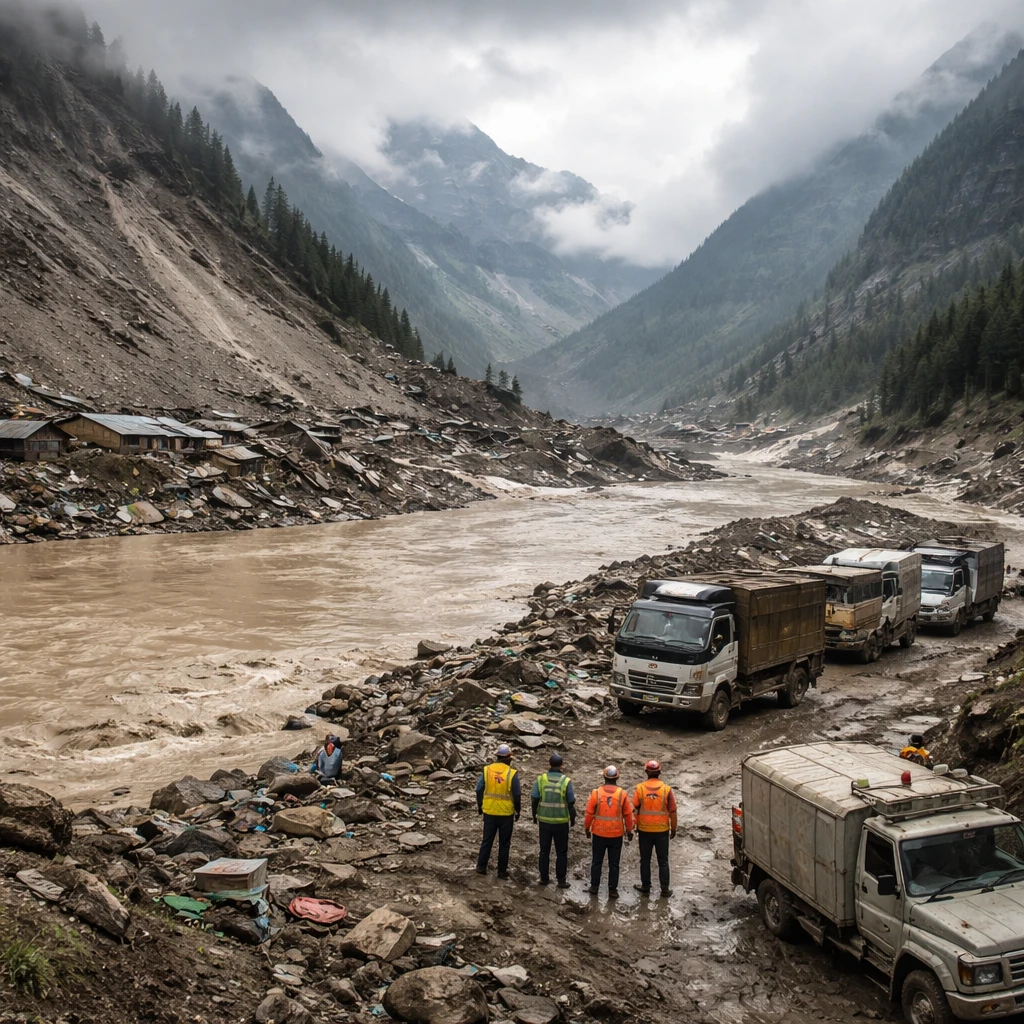
Humanitarian authorities said on Friday that the scale of impact from a major landslide in the Himalayan region has left a significant number of people in urgent need of assistance, and that efforts to reach them have been interrupted by new flooding.
"We believe that at least 93,000 people have been affected and are in great need," David Fisher, head of delegation for the International Federation of Red Cross and Red Crescent Societies in Nepal, told a press briefing in Geneva. Fisher said the organisation was particularly worried about the potential for a secondary flood to compound the disaster.
Relief logistics were disrupted when a lake created by the landslide broke its banks, Fisher said, temporarily blocking the organisation’s trucks carrying relief supplies and pausing rescue operations.
Kamal Kishore, Head of the United Nations Office for Disaster Risk Reduction, cautioned that additional hazards could follow the initial event. "In a sense, the disaster is not yet completely over. It is still unfolding in some ways," he said, warning of "cascading hazards that might unfold." His comments underscored that the situation could evolve further even after the main landslide episode.
Public health officials raised further alarms about the consequences for medical care and population health. At the same Geneva briefing, World Health Organization spokesperson Tarik Jasarevic reported that six health facilities sustained damage in the landslide and that eight healthcare workers are currently missing.
Jasarevic emphasized the secondary health challenges linked to disasters of this scale. "Following a disaster of this scale, displacement, overcrowding and disruption to water, sanitation and health services can increase the risk of infectious diseases, including diarrhoea and respiratory illnesses," he said, highlighting the potential for disease transmission where shelter, clean water and functioning health services are compromised.
The statements from Red Cross, U.N. and WHO officials collectively portray an emergency in which immediate needs for shelter, medical care and safe water are high, rescue and relief movements face logistical obstacles, and the risk of further hazards and public health threats remains a pressing concern.
Context notes: The information above reflects assessments and statements provided by humanitarian and public health representatives at a Geneva briefing. Officials pointed to ongoing risks and operational interruptions without offering additional operational timelines or new numerical updates beyond the estimates cited.