
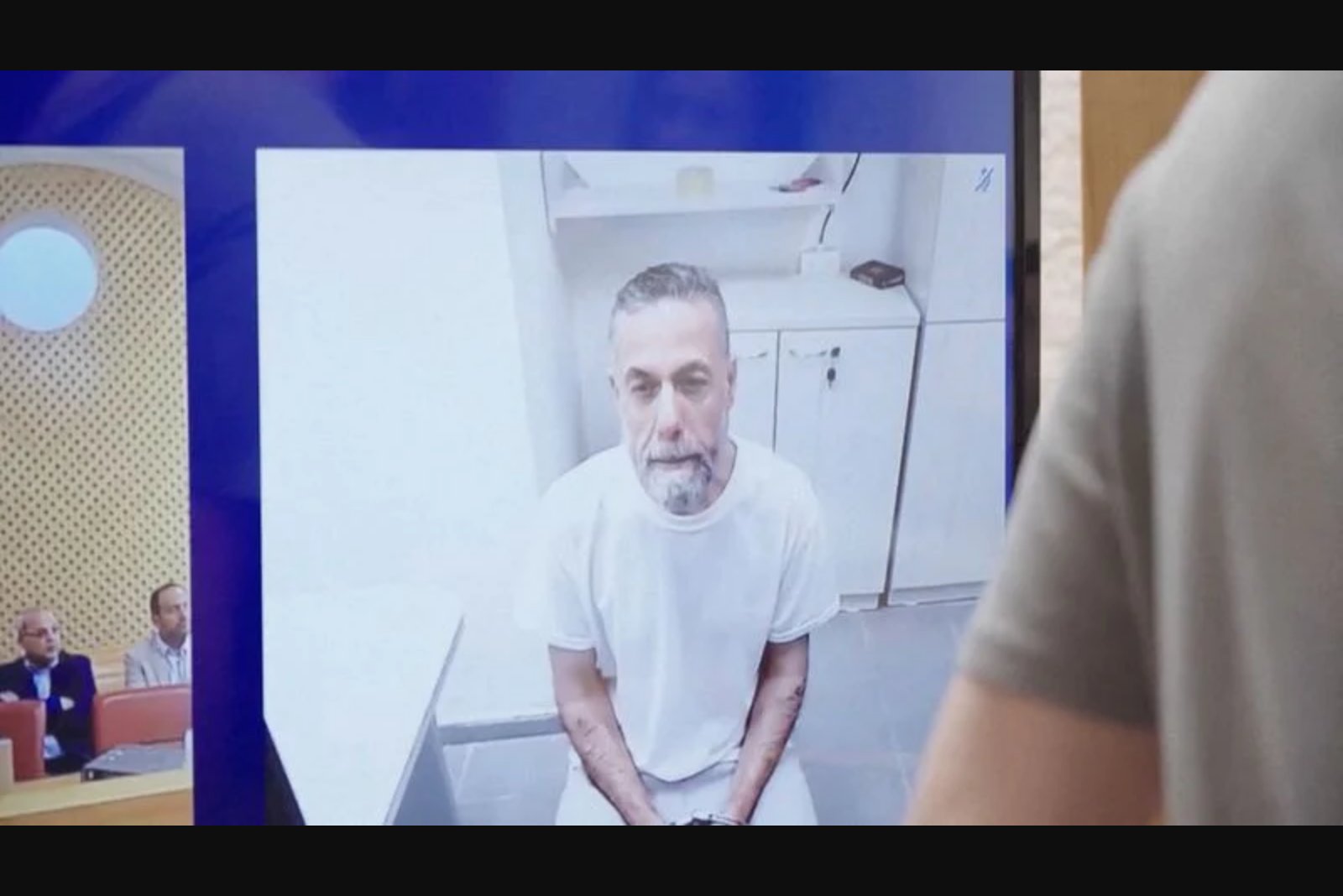
A Palestinian physician who was seized by Israeli forces in Gaza in late 2024 was presented by video link at a hearing of Israel's Supreme Court in Jerusalem on Wednesday, officials and rights groups said. The doctor, Hussam Abu Safiya, appeared on the screen looking significantly thinner than earlier public images suggested, with visible weight loss in his face and around his midsection.
Media access to the courtroom was brief: journalists were allowed in for a short period before being asked to leave once the proceedings began. The hearing was convened to hear an appeal filed by Abu Safiya's lawyer, Nasser Odeh, challenging the legality of his detention. The court was expected to reach a decision later on the same day.
Family accounts and statements from advocacy groups supplied further detail about Abu Safiya's condition. In April, his brother Muafaq told the family - through the doctor's lawyer - that Abu Safiya had lost 40 kg (88 lb) while in custody and had sustained four fractured ribs along with other medical problems. An Israeli rights organization, Physicians for Human Rights Israel (PHRI), has identified Abu Safiya as part of a group of Gazan physicians held by Israeli authorities who it says were denied sufficient food.
Israel's Prison Service has rejected allegations that detained medical personnel have been mistreated or denied adequate nutrition. The military has accused Abu Safiya of membership in Hamas; however, according to the available information disclosed at the hearing and by rights groups, no verifiable evidence supporting that accusation has been presented publicly. Gaza's health ministry and Hamas have both denied that allegation.
PHRI has stated that Abu Safiya has been detained without charge for more than 500 days. The group's announcement also said this marked the first public sighting of him since February 2025. Abu Safiya was taken by the Israeli military from the Kamal Adwan Hospital in Beit Lahiya, located in northern Gaza, where he had been working prior to his capture.
After the hearing, Odeh told reporters that his client had been placed in handcuffs and shackles for the duration of the proceedings and was being held in solitary confinement. According to Odeh, Abu Safiya was receiving medical treatment while in custody, including care for severe neck and back pain that the lawyer attributed either to an assault during detention or to medications required for a pre-existing chronic condition.
Odeh also said that Abu Safiya's eyeglasses had been confiscated, resulting in vision difficulties, and that there were signs of a skin disease on his hands. The lawyer described that skin condition as widespread among Palestinian prisoners held in Israeli facilities. Israel's Prison Service did not provide an immediate response to questions about Abu Safiya's medical treatment or the other claims made about his condition.
During the video appearance, Abu Safiya was visibly restrained and clothed in what observers described as the common prison attire worn by Palestinian detainees in Israel - a white t-shirt and grey tracksuit pants. He is one of 14 Palestinian doctors who were captured in Gaza by the Israeli military and have been held for more than a year without formal charges, according to PHRI.
In April, PHRI urged the release of those 14 detainees, asserting they had been subjected to physical abuse and denied sufficient medical care and food while incarcerated. Israel's Prison Service responded at the time by rejecting the allegations of mistreatment.
PHRI also reported that the 14 doctors are part of a larger cohort of nearly 400 Palestinian healthcare workers detained by Israel during its ongoing military operations in Gaza, which were launched by Israel in response to Hamas' attack on southern Israel on October 7, 2023.
Summary
Hussam Abu Safiya, a Palestinian doctor apprehended by Israeli forces in late 2024, appeared via video link before Israel's Supreme Court as his lawyer appealed his detention. Observers and the family reported substantial weight loss and other health problems. Rights groups say he is among dozens of healthcare workers held without charge and suffering inadequate care; Israeli authorities have denied mistreatment and asserted accusations of militant affiliation without publicly providing verifiable evidence.
Key points
- Abu Safiya appeared by video link at a Supreme Court hearing in Jerusalem challenging his detention; the court was expected to rule on the appeal the same day.
- Rights groups and family members report significant health deterioration, including weight loss and injuries; Israeli prison authorities deny those allegations.
- Abu Safiya is among 14 doctors held more than a year without charge and is included in a wider group of nearly 400 Palestinian healthcare workers detained, according to Physicians for Human Rights Israel. Potentially affected sectors include healthcare operations in Gaza and legal-judicial oversight institutions; no direct market impacts were stated in the available information.
Risks and uncertainties
- Ongoing medical concerns for detainees - reports of weight loss, fractures, and skin conditions raise uncertainty about the immediate health outcomes of those held; this primarily affects the healthcare sector involved in prisoner care and humanitarian monitoring.
- Legal uncertainty - Abu Safiya has been held without charge for over 500 days while legal challenges proceed, leaving the outcome of the Supreme Court appeal and the jurisdictional treatment of detainees unresolved; this impacts the legal and judicial oversight sector.
- Evidence and allegation disputes - Israeli authorities have accused Abu Safiya of membership in Hamas but have not provided verifiable public evidence, while Gaza's health ministry and Hamas deny the claim; this generates uncertainty around the factual basis for detention and has implications for rights monitoring and adjudication processes.
Note: Details in this report are drawn from statements made by family members, the detainee's lawyer, and Physicians for Human Rights Israel, as well as actions and responses attributed to Israeli authorities. Where information is limited or contested, this article reflects those limitations rather than introducing unverified material.