
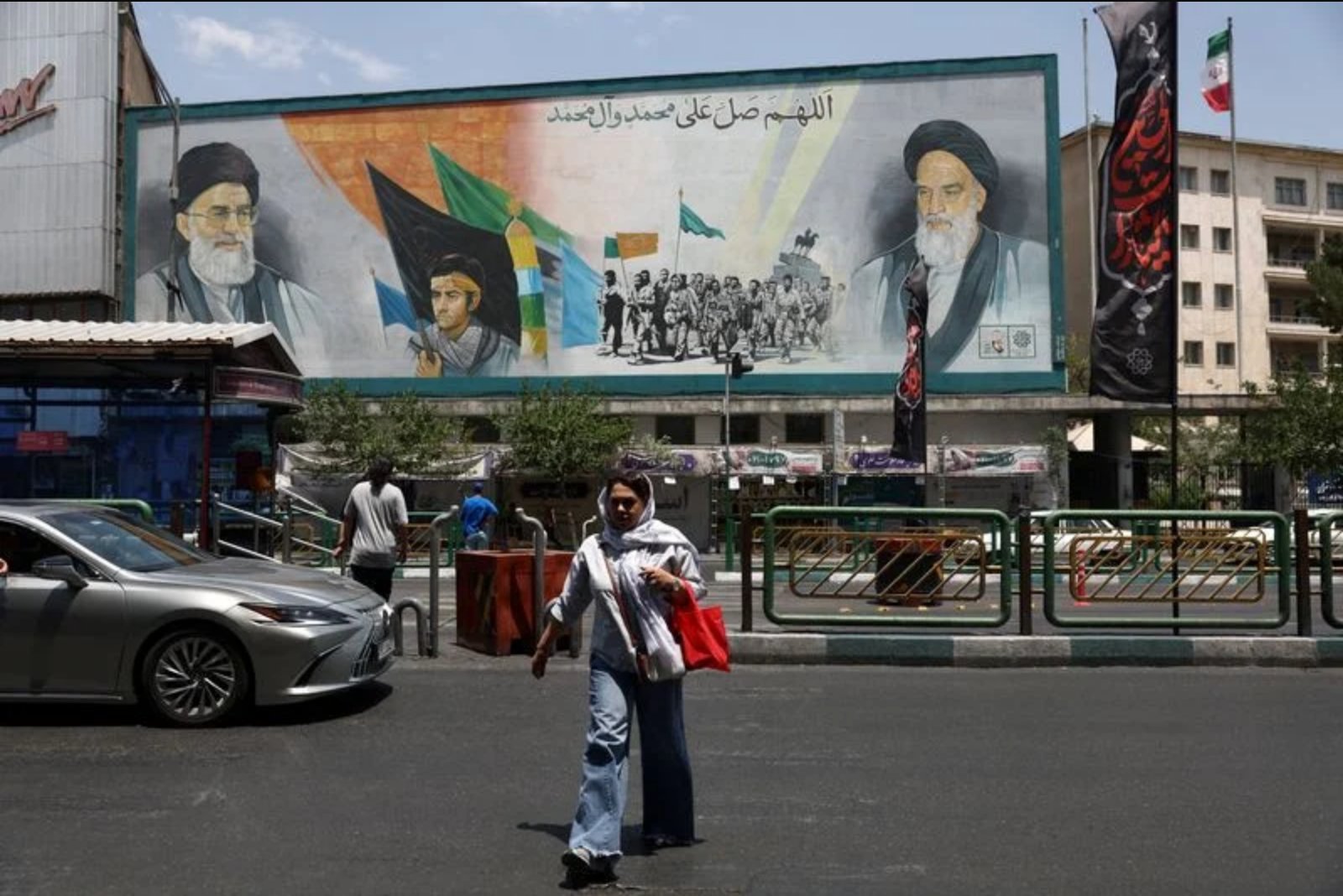
Negotiators for the United States and Iran concluded a first round of talks in Switzerland and issued a joint framework intended to end the recent conflict, but public comments from each capital presented sharply different readings of what was agreed. The discrepancies, particularly over nuclear inspections and control of frozen funds held overseas, have cast doubt on how durable the nascent settlement may be.
Speaking at a campaign rally in Pennsylvania, U.S. President Donald Trump said Iran had accepted long-term - even indefinite - access for international nuclear inspectors to damaged facilities. "Iran has fully and completely agreed to highest level Nuclear inspections long into the future (Infinity!!!)," he wrote on social media. Tehran, however, denied that its nuclear program had been discussed during the talks and said it had not consented to invite back inspectors from the International Atomic Energy Agency.
Disagreement extended to the financial provisions of the framework. The deal signed last week envisions the lifting of certain U.S. sanctions for an initial 60 days and the unfreezing of Iranian assets held abroad. President Trump described those funds as to be used to purchase food and medical supplies from U.S. suppliers. Iran's ambassador to the United Nations in Geneva, Ali Bahreini, said instead that Tehran would determine how any released funds would be spent, signaling a clear split in expectations over conditionality.
The framework also sets out an investment plan - described as a $300-billion fund to finance Iran's reconstruction - and calls for an immediate cessation of hostilities, including in Lebanon. But on the ground in southern Lebanon the situation remains volatile: Israeli gunfire killed two people, according to Lebanon's civil defence and health ministry, an incident that prompted Hezbollah to accuse Israel of violating a fragile ceasefire that has largely held since Sunday. Iran-backed Hezbollah and Israel continue to disagree about whether Israeli forces will remain in southern Lebanon as part of a security posture described by Israel as necessary to "neutralize" threats.
One practical consequence of the initial agreement has been the reopening of the Strait of Hormuz, a strategic waterway that commonly handles around one-fifth of global energy flows. Shipping that had been impeded when Iran closed the strait has been allowed to resume under the terms of the agreement, which stipulates free passage for a 60-day period. Iran and Oman issued a joint statement stressing their sovereign rights in the waterway and said they will cooperate in managing traffic and associated costs. Oman also said it coordinated with the International Maritime Organization to provide a temporary corridor for vessels transiting the strait.
U.S. officials visiting Gulf partners sought to reassure regional allies. U.S. Secretary of State Marco Rubio, on a trip to consult Gulf governments unsettled by the framework, said Iran would not be permitted to levy tolls in the strait as part of a final deal - a point at odds with Tehran's statement that it may impose fees or tolls after the initial 60-day period.
In domestic U.S. political developments, the Republican-controlled Senate voted 50-48 to halt the war in a largely symbolic measure that nonetheless underscored divisions within the president's own party. The vote endorsed a House resolution directing the president to remove U.S. armed forces from hostilities under the War Powers Act. It was the first time both chambers of Congress had approved such a resolution, though how those votes will influence the trajectory of the conflict was not immediately clear.
Political headwinds for the administration were evident in public opinion data: a Reuters/Ipsos poll cited by officials showed 35% of Americans believe the U.S. is in a weaker position with Iran now than before the war, while 23% said the U.S. is stronger. The poll results were among several indicators of fraying domestic support for the conflict that began on February 28.
The partial relaxation of travel curbs on Iran's national soccer team offered a lighter but tangible sign of thawing relations. U.S. officials allowed the team to travel from Tijuana, Mexico, to Seattle two days ahead of its next match rather than the previously permitted one day, easing constraints on its U.S. itinerary.
Energy markets reacted to the diplomatic developments. Oil prices fell more than 1% on Wednesday, extending losses for the week and trading near levels last seen before the war began on February 28. President Trump urged the Justice Department to examine oil companies for failing to pass on declines in crude prices to consumers at the pump, pressing for quicker reductions in gasoline prices.
The United Nations' shipping agency reported it was working to evacuate roughly 11,000 seafarers who had been stranded when Iran closed the Strait of Hormuz. The agreement's 60-day corridor is intended to restore a measure of normalcy to maritime traffic, though Iran's reference to potential tolls after that period remains a point of contention between the parties.
Officials on both sides said further negotiations will aim to resolve outstanding issues within a 60-day window. The framework itself does not impose limits on Iran's nuclear program; those limits are among the topics slated for the forthcoming round of talks. At the same time, questions over who controls the newly accessible funds, the precise terms for maritime transit beyond the initial two-month window, and the status of Israel's operations in Lebanon all remain unsettled.
Summary
The initial U.S.-Iran framework agreement has produced contradictory public statements from Washington and Tehran on several central provisions, notably nuclear inspections, the use of unfrozen assets, and future control of the Strait of Hormuz. While the pact has allowed a resumption of shipping and prompted a temporary easing of travel restrictions, core elements will be negotiated over the next 60 days and remain fragile amid domestic political pushback and ongoing clashes in Lebanon.
Key points
- The United States says Iran agreed to indefinite nuclear inspections; Iran denies that the nuclear program was discussed or that inspectors were agreed to.
- The framework unfreezes Iranian assets and waives certain U.S. sanctions for 60 days, but Washington and Tehran dispute how any released funds may be spent.
- The agreement has reopened the Strait of Hormuz for 60 days, easing a significant chokepoint for global energy flows, though Iran has suggested it may charge tolls or fees afterward and Oman has coordinated a temporary shipping corridor with the International Maritime Organization.
Risks and uncertainties
- Discrepancies between U.S. and Iranian public statements on inspections and asset use create uncertainty about whether negotiators share a common interpretation of the framework, which could jeopardize final agreement - relevant to diplomatic and financial sectors.
- Potential for renewed friction in southern Lebanon and differing Israeli and Iranian expectations about troop deployments could destabilize the ceasefire and affect regional security - relevant to defense and insurance markets.
- The temporary nature of the strait transit arrangement and Iran's suggestion of possible tolls after 60 days could introduce volatility to oil and shipping markets if the arrangement is not extended or clarified.