
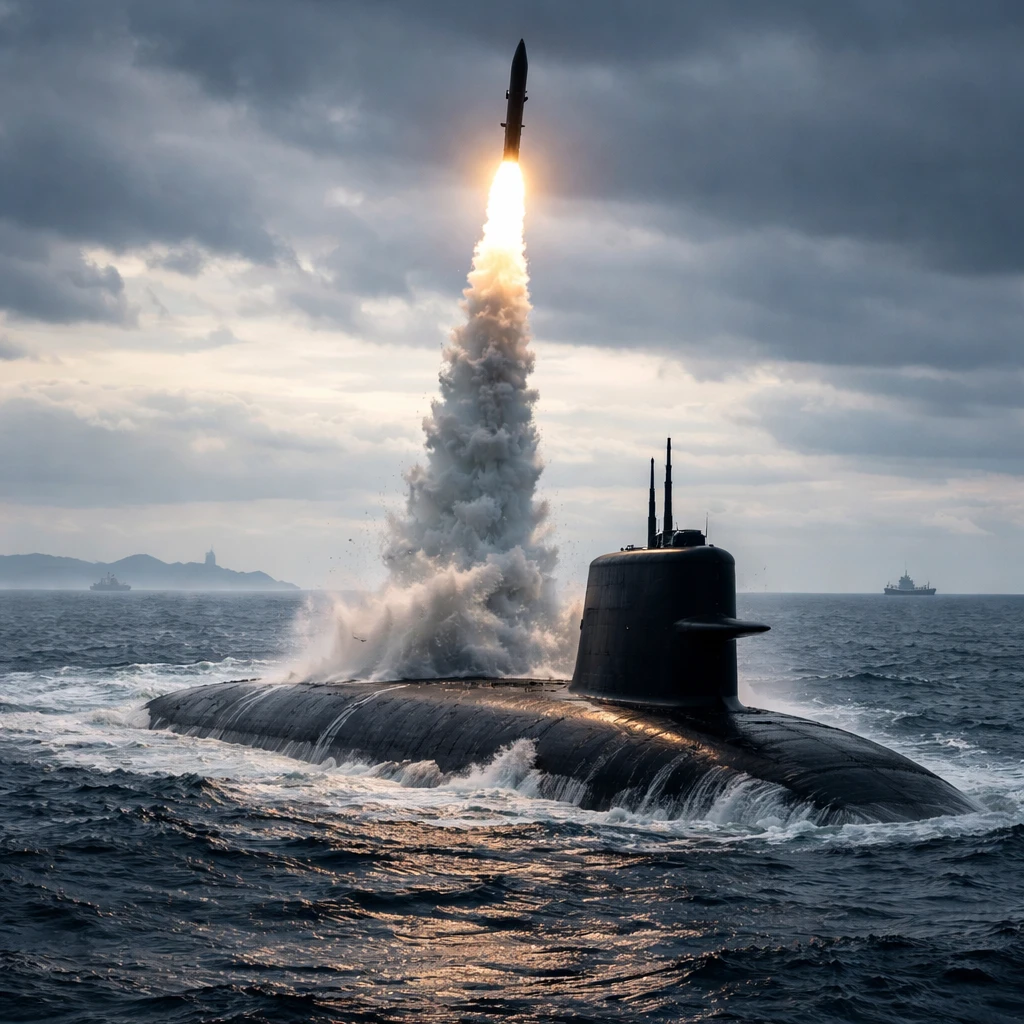
BEIJING, July 6 - China’s military carried out a missile launch from a nuclear-powered submarine into the Pacific Ocean on Monday, state-run media reported, a move that prompted negative reactions from neighbouring countries in the region.
According to Xinhua, a submarine of the People’s Liberation Army Navy fired a missile equipped with a dummy warhead toward international waters at 12:01 p.m. (0401 GMT). The agency said the missile fell in "designated waters," but did not disclose further specifics on the target area.
Xinhua framed the exercise as part of China’s recurring annual military training schedule, calling the launch a "routine arrangement" and stating that it was not aimed at any particular country or target.
Despite that official description, several governments in the region registered concern. Australian Foreign Minister Penny Wong confirmed Canberra had been notified in advance of the planned test, but described the launch as "destabilising" for the region. "Australia has been clear that this proposed test is in the context of a rapid military buildup by China, which is lacking in the transparency and reassurance as to intent that the region expects," Wong said at a news conference in Suva, the Fijian capital.
Japan’s authorities said they also received notice of the launch and urged China to reconsider such activities. Tokyo said it had conveyed "grave concern over the Chinese military’s increased activity." It added that the Japan Coast Guard had been informed on Sunday by Chinese authorities about potential falling space debris that could enter areas within Japan’s exclusive economic zone.
Reports citing a Japanese government source and carried by Kyodo indicated that the missile landed outside Japan’s exclusive economic zone.
New Zealand likewise expressed disquiet. Foreign Minister Winston Peters said his government was informed "within hours" of the launch and described the event as "an unwelcome and concerning development." Peters added: "We, like our neighbours in other Pacific countries, have no interest in China using the South Pacific as a testing site for missile capability."
The test follows a previous Chinese launch in 2024 when the country last tested an intercontinental ballistic missile, an episode that authorities described at the time as a rare demonstration of expanding military capabilities.
Summary: On July 6, China launched a missile with a dummy warhead from a PLA Navy nuclear submarine into the Pacific at 12:01 p.m. (0401 GMT). State media labelled the action a routine annual training exercise and said the missile landed in "designated waters." Japan, Australia and New Zealand received notifications of the test and publicly voiced concerns about regional stability and safety.