
Arriving at a neighborhood polling place in Seoul intending a quick vote, voter Yoomi Lee found the station had exhausted its supply of ballot papers. What she expected to be a brief errand turned into hours of queuing, tense exchanges with election staff and a feeling that preparations had been inadequate. "They should have prepared the right amount," she said. "They know the number of the voters (expected)."
The ballot shortages, reported across more than 90 polling sites in last week's local elections, have ignited one of the largest political demonstrations in South Korea since the 2024 martial law controversy. The episode saw scuffles between voters and police at some locations, the rapid spread of conspiracy theories and accusations of electoral malpractice, and the resignation of the head of the independent election authority. It also prompted President Lee Jae Myung to order an investigation and promise procedural reforms.
Interviews by Reuters staff with six voters who were affected at their local stations, and discussions with over a dozen protesters at subsequent rallies, illustrate how a landslide outcome anticipated by the president's ruling party devolved into a political crisis. Taken together, the accounts show how a sequence of choices made by the National Election Commission contributed to printing fewer ballots than in previous comparable contests.
Public confidence under strain
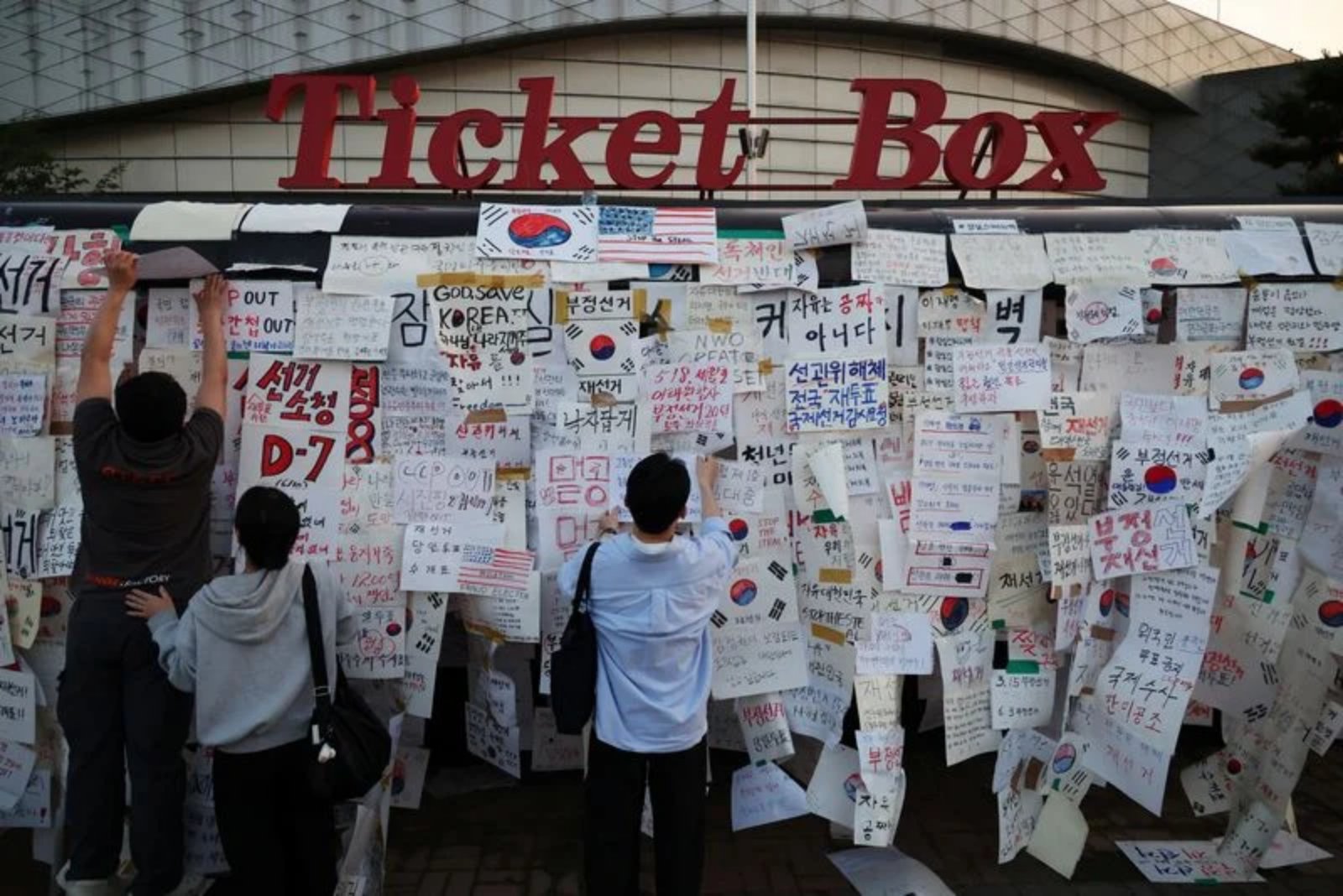
Within two days of the ballot shortage becoming public, crowds would sometimes reach 40,000 people gathering nightly outside a stadium in Seoul where ballot boxes had been taken for counting. Demonstrators demanded a full rerun of the election, saying that without one, public faith in the process could not be restored. An investigator cited in the reporting noted that if officials are seen as defensive or evasive in their response, public criticism could increase and confidence in institutions could erode. Conversely, a transparent and thorough explanation, the same source suggested, could help rebuild trust.
Early polling after the events suggested immediate political consequences. A Realmeter survey conducted after the election indicated the opposition had nearly closed its gap with the ruling Democratic Party of Korea (DPP) - a sharp narrowing from the DPP's near 25% lead registered late in March. Realmeter attributed part of that shift to a public perception of "administrative responsibility for the ballot shortage." Opposition figures said the shortages were particularly acute in conservative-leaning districts.
Many protesters were first-timers
Several people at the rallies said they had never before taken part in street demonstrations. For some, concern over the immediate logistics of the shortage evolved into a broader worry about democratic rights being impaired. "At first it was concern about the ballot shortage," said office worker Cha Ye-rin, 41, who attended a protest for the first time. "But after coming here and talking to people, I am more certain about how democracy is under threat by the people in power."
The protests persisted throughout the week, swelling in the evenings. They attracted a mix of participants including far-right online personalities and figures from the main opposition party, the People Power Party (PPP). Demonstrators frequently invoked South Korea's hard-won democratic history and cast the shortage as a potential repeat of earlier threats to civil liberties.
Resignation and continuing tensions
On Thursday, Rho Tae-ak, who had served as NEC chief since April 2022 and is a former Supreme Court justice, resigned amid the controversy. His departure did not quell the demonstrations. In Songpa, a southeastern district of Seoul, voters at a polling station in a senior citizens' center said the shortage stretched voting into the late evening - reportedly dragging on for four hours until 10 p.m. Yet even after those extended hours, many people remained unable to cast ballots.
Cho Eun-kyung, 67, described how a protest began at her station and escalated into a standoff with staff when more people arrived and attempted to prevent officials from removing ballot boxes for counting. She said human chains of residents formed to guard the site and were dispersed by police the following day. Video footage from other locations showed police pulling away dozens of protesters who were blocking entrances to polling places; Seoul police declined to offer a separate comment about those clashes.
As word spread, people from across the capital converged outside the stadium where ballots were being counted. Students from top universities and social media networks urged followers to attend, warning of a threat to democratic norms. The crowd included young couples with infants in strollers, gig economy workers and university students, some holding hand-lettered signs and chanting for an "Election Rerun." Many said they were angered by the juxtaposition of ballots being counted from 6 p.m. while others had been denied the chance to vote.
Conspiracy narratives and suspicions of manipulation proliferated on social media, and even some conservative officeholders publicly questioned specific results, feeding public unease about the integrity of the counting process.
Why fewer ballots were printed
The NEC has not provided a definitive tally of how many voters were left unable to vote because officials said it was unclear whether complete records were kept of people who departed without voting. One NEC official, speaking on condition of anonymity because of the sensitivity of fraud allegations, explained that the commission had set a minimum ballot-printing guideline of 50% of eligible voters for the most recent election.
That 50% benchmark differs from prior practices: the NEC traditionally printed a minimum of 70% for presidential elections and 60% for local elections, the latter reflecting typically lower turnout. The 50% figure followed recommendations from a task force created last year to streamline procedures, which itself built on a 2022 study that examined ballot volumes. The NEC official cited several factors that influenced the change: higher levels of early voting in recent contests, and concerns in earlier years about large numbers of leftover unused ballots that critics said could be used to allege concealment of evidence of fraud.
"These various factors combined and led to the result we have today," the official said.
Political fallout and calls for a rerun
Despite sweeping most seats for roles such as mayors, provincial governors, county officers and local assembly members, the DPP lost the high-profile Seoul mayoralty to the incumbent and a member of the opposition. The main opposition PPP argued the proper remedy would be a nationwide re-election; PPP leader Jang Dong-hyeok declared that a rerun was the only solution, though some in his party - including Seoul's re-elected mayor Oh Se-hoon - have opposed that step.
The NEC official pointed out a legal barrier to a rerun: the Public Official Election Act does not list ballot shortages among the statutory triggers that would require cancelling and redoing an election, limiting the commission's authority to call a rerun on its own.
At the stadium protests, demonstrators made individual appeals framed as defenses of civic rights. "At the very least, our basic rights must be protected," said Gu Young-gwang, 33, a protester who said it was his first time joining a political demonstration. Another, 25-year-old Lee Hee-won, said the demand was not one of retribution but of restoring trust. "The goal is not revenge," Lee said. "The goal is to restore trust in democracy."
As inquiries proceed and political leaders navigate a charged environment, the central questions remain how many voters were prevented from participating and whether procedural choices by an independent commission unacceptably compromised ballot access. Protesters have made clear their demand for a transparent accounting; officials face pressure both to explain the decision-making that reduced print runs and to outline steps that will ensure voters are not disenfranchised in future contests.