
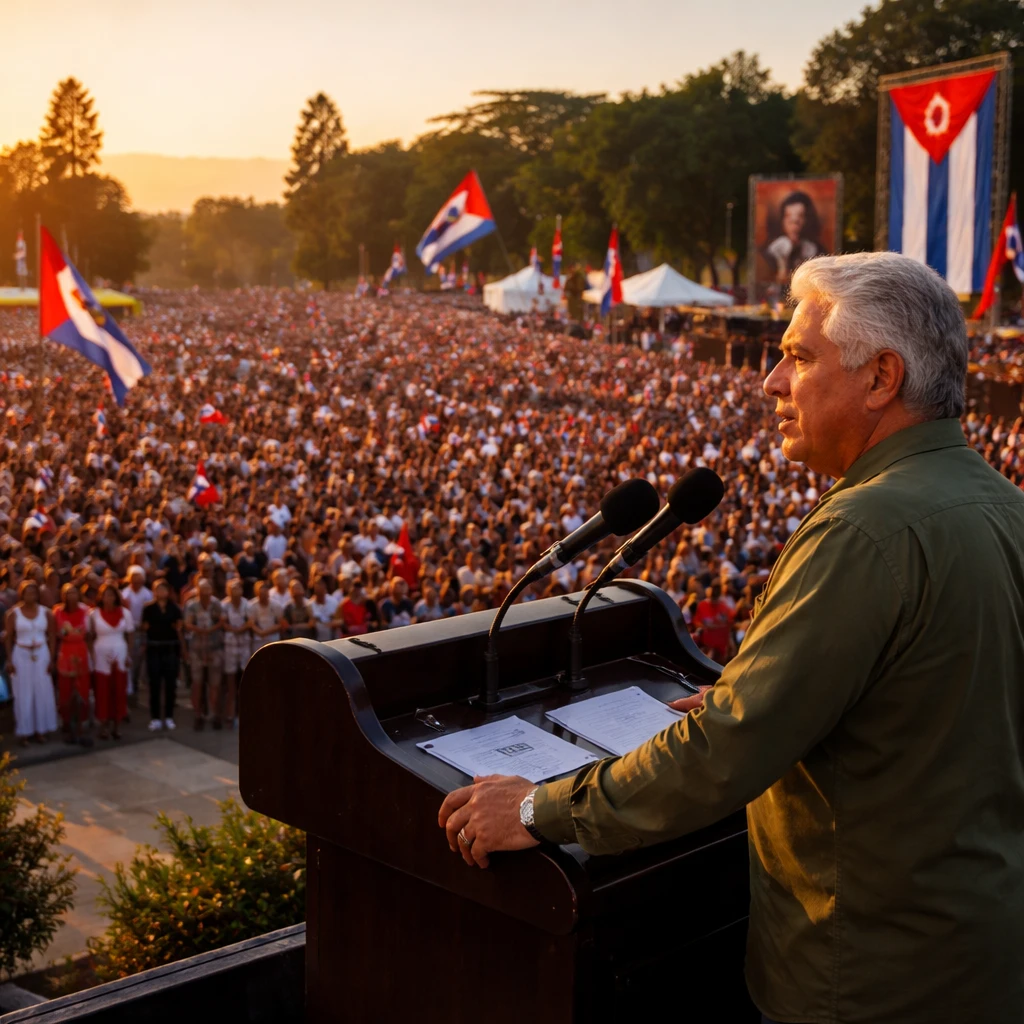
Pinar del Rio, Cuba, July 26 - Cuban President Miguel Diaz-Canel sharply condemned Washington's oil embargo and widening sanctions in a speech delivered on Sunday, labeling the measures instituted under U.S. President Donald Trump's administration as "political genocide."
Diaz-Canel singled out a recent U.S. State Department report that accused Havana of infiltrating the U.S. government and of supporting what the report described as an "unprecedented wave of leftwing terrorism on American soil." He said the Trump administration's focus on left-leaning groups inside the United States had intensified, and charged that by blaming Cuba, Washington was seeking both a scapegoat and an explanation for domestic unrest.
"By accusing Cuba, they are not only looking for a scapegoat, an external agent. They are looking for someone to blame for the protests of the sectors hardest hit by an economy that makes the rich richer and the poor poorer," Diaz-Canel said, adding that such accusations provided "a new excuse to sustain their political genocide against Cuba."
The address underscored increasingly tense relations between Havana and Washington as the U.S. oil embargo and expanded sanctions have coincided with what the Cuban government describes as its worst economic crisis in decades. Officials and observers on the island have pointed to severe fuel shortages that have caused rolling blackouts and multiple nationwide grid collapses.
Those energy shortfalls have had cascading effects on daily life and commerce. Public transportation systems have been crippled, the school year was shortened because of lack of fuel, and a number of international companies, particularly in the tourism and financial sectors, have ended operations in Cuba, the president said. The depleted fuel supply has been identified as a proximate cause for large-scale interruptions to the national power grid.
Washington has attributed Cuba's economic troubles to government mismanagement and insufficient investment in aging infrastructure. In his remarks, Diaz-Canel appealed for the lifting of sanctions and the end of the oil blockade. He also expressed gratitude to international organizations and groups that have delivered humanitarian assistance and supplies to the island.
"Let Cuba live in peace, and also let the noblest of the American people, who have historically fought for the human rights of other peoples, without expecting recognition and often facing persecution, imprisonment, and risks to their lives, live in peace," he said, asserting that "Cuba is not a threat to the United States or to any other country on earth."
The speech was part of state-organized commemorations marking the 73rd anniversary of the first offensive by Fidel Castro's guerrillas against the army of U.S.-backed leader Fulgencio Batista in 1953. The event, described as the most important holiday on Cuba's revolutionary calendar, took place at dawn and included artistic performances before thousands of government supporters.
Diaz-Canel's remarks reiterated Havana's stance that external pressure in the form of sanctions and blockades is a primary driver of the island's economic hardship, while U.S. authorities point to domestic factors such as mismanagement and lack of investment in infrastructure. The competing narratives highlight the diplomatic and economic tensions that continue to shape the bilateral relationship.