
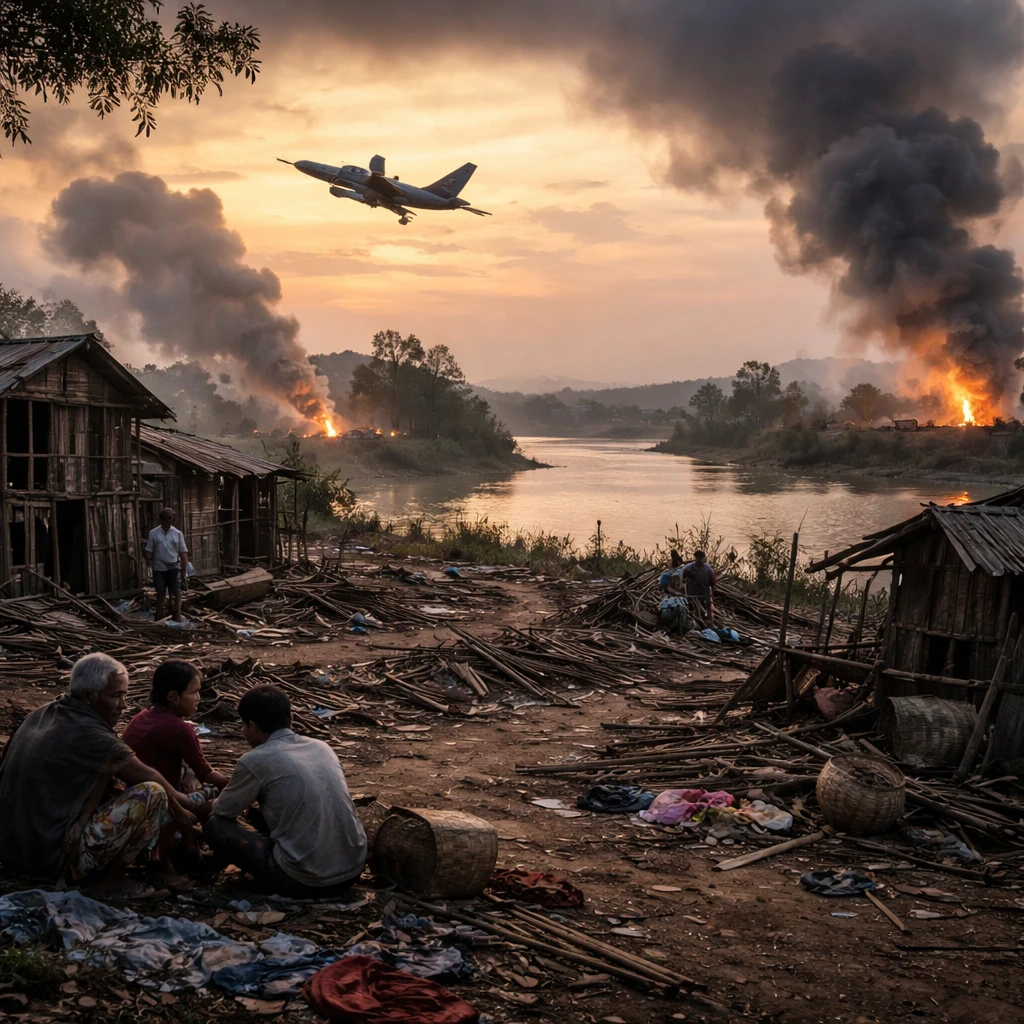
Myanmar’s armed forces have markedly increased attacks on civilians since the military altered its command structure and installed a new commander-in-chief in late March, according to an independent conflict monitor. The escalation has occurred even as regional diplomacy toward the junta has resumed and leaders work to secure international recognition for the political shift.
The Armed Conflict Location & Event Data Project (ACLED) said the uptick in violence followed a reorganisation of military leadership that coincided with the outgoing commander preparing to assume the presidency. ACLED linked the increased civilian toll to changes in operational tactics under the new military chief.
"Since the ruling junta in Myanmar reconfigured its military command structure in March, civilians have been subject to the military’s worsening repression and intensified aerial bombing campaign," ACLED said. "These adjustments included the regular deployment of specialised groups of two to five jet fighters executing sustained airstrikes against single targets."
ACLED compiles its assessments using media reporting and information from local partners, and also draws on reports from the United Nations, international monitoring organisations and local human rights groups.
The country has been engulfed in violent instability since the military removed the elected government led by Aung San Suu Kyi in February 2021. That move precipitated a civil war that ACLED and other monitors estimate has resulted in roughly 100,000 deaths and forced millions from their homes.
Days before assuming the presidency after an election that excluded most opposition figures, the country’s coup leader appointed a trusted ally and former intelligence chief, Ye Win Oo, as commander-in-chief. Under Ye Win Oo’s leadership, ACLED reports the military has reopened offensives in multiple border areas, including a frontier zone that contains important rare earth deposits and key trade corridors.
ACLED warned that a meaningful break in the violence appears unlikely while the junta concentrates on consolidating control following the coup leader’s transition from military commander to civilian president in April.
"Reprieve for civilians is unlikely as the junta focuses its efforts on consolidating control following coup leader Min Aung Hlaing’s transition from commander of the military to civilian president in April," ACLED said.
Mass killings have been a notable and brutal feature of the violence so far in 2026, ACLED said. During the first half of the year the monitor recorded more than a dozen mass killings that together resulted in over 450 civilian deaths. Approximately 40% of those fatalities occurred in the central dry zone referred to by monitors as the Anyar region.
In one instance in May, hundreds of junta soldiers moved through parts of Myit Chay township, situated across the river from the ancient temple complex at Bagan, and residents say the operation left dozens dead. "About 700 soldiers came into the town, grabbed the belongings of the people here and then beat them and killed them," said one resident, Ye Naung, 35. Those accounts could not be independently verified.
ACLED characterised the military’s 2026 tactics as shifts in how the junta represses civilians rather than any sign of diminished severity.
At the same time as the violence has intensified on the ground, Yangon’s military leadership has stepped up diplomatic moves. The junta leader has undertaken visits to key neighbours, and there has been tentative re-engagement with the 11-member Association of Southeast Asian Nations, which had previously barred Myanmar’s ruling generals from its summits after the coup.
As part of that diplomatic push, the former commander-turned-president is scheduled to make an official visit to Thailand on August 6 and 7 as he seeks broader recognition and legitimacy for the political transition.
Summary
ACLED reports a marked escalation in civilian-targeted violence in Myanmar following a March reconfiguration of military command and the appointment of Ye Win Oo as commander-in-chief, actions that preceded the coup leader’s transition to the presidency. The intensified campaign has included sustained airstrikes and numerous mass killings, concentrated in areas including the central Anyar region and border zones with important mineral deposits and trade routes, even as regional diplomacy resumes.
Key points
- ACLED documents a worsening campaign against civilians after the military reorganised its command in March and installed a new commander-in-chief - sectors affected: civilian safety, humanitarian response.
- More than a dozen mass killings in the first half of 2026 resulted in over 450 civilian deaths, with about 40% in the Anyar central dry zone - sectors affected: local economies, agricultural communities.
- The military has renewed offensives in border regions that include critical rare earth deposits and vital trade routes, posing risks to mining and cross-border trade sectors.
Risks and uncertainties
- Continued and intensified violence against civilians as the junta focuses on consolidating control - this threatens humanitarian stability and displacement trends.
- Disruption to regions with rare earth deposits and key trade corridors due to renewed military offensives - this could affect mining operations and regional trade flows.
- Limited independent verification of some reported incidents on the ground, creating uncertainty over precise casualty figures and event details.