
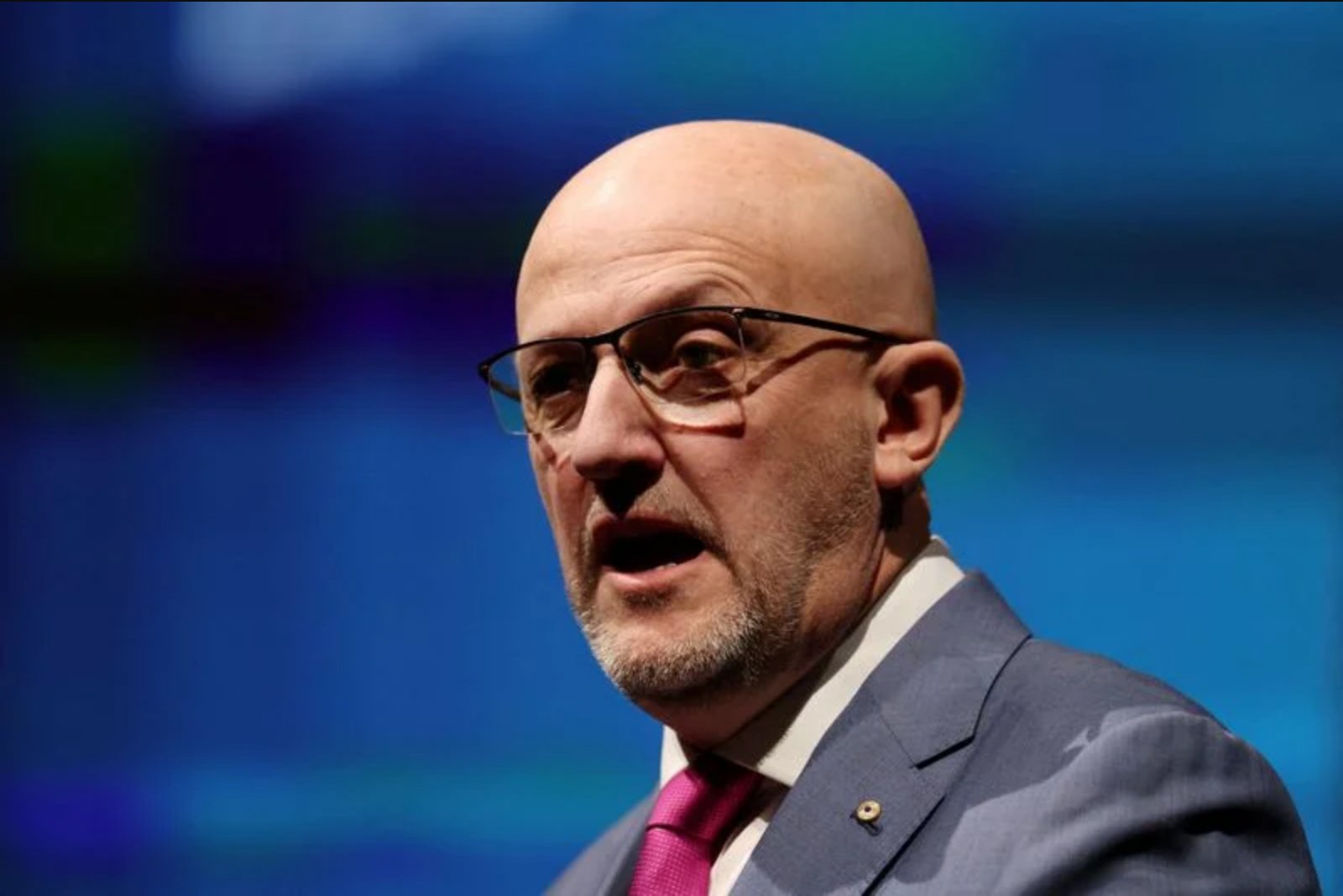
The head of Australia’s domestic intelligence agency has warned that the country faces an increasingly complex security landscape driven by a mix of autocratic regimes, cyber-enabled intrusion and antisemitic extremist acts. In his annual threat assessment speech, the Australian Security Intelligence Organisation (ASIO) Director-General set out a picture of overlapping pressures that, he said, are collectively eroding the nation’s security environment.
ASIO’s public designation of the terrorism threat level remains at "probable," but the director-general argued that this label does not reflect the plurality and interaction of threats confronting Australia. "'Probable' does not tell the full story. The next level on the scale is 'expected', which applies when we have intelligence about a specific attack. We do not," he said. "But we do know the environment is degrading and acts of politically motivated violence are becoming more likely than 'probable' suggests."
The annual assessment follows a year marked by a variety of major security incidents. Authorities addressed problems ranging from online radicalisation and foreign state-sponsored cyberattacks to a wave of arson targeting Jewish-owned businesses and a mass shooting at a Hanukkah celebration in Sydney. That shooting, at Bondi Beach in December, killed 15 people, and police said the two alleged gunmen appeared to have been inspired by the Islamic State militant group.
ASIO stressed that despite the deteriorating environment the agency and security partners remain positioned to respond. Since 2014, ASIO says it has disrupted 31 major terrorism plots, and it has resolved more than a dozen significant terror-related investigations following the Bondi Beach attack. The director-general defended the agency’s choices on where to focus resources in the lead-up to that shooting, noting the difficulty of sharply redirecting efforts when multiple threats must be confronted at the same time.
"We cannot stop every terrorist, just as we cannot catch every spy. But we continue to work around the clock to keep Australians safe," he said, acknowledging the limits of preventive work while emphasising ongoing efforts.
Technology and foreign espionage featured prominently in the assessment. Encrypted chat services were singled out as rapidly radicalising users, including children, sometimes within weeks, while broader social media platforms amplify grievance narratives, undermine confidence in institutions, stoke division and spread inflammatory rhetoric that deepens polarisation.
Foreign intelligence activity has targeted sensitive programs, including classified material related to Australia’s AUKUS nuclear submarine collaboration with the United States and Britain. The director-general reported an incident in which an official with security clearance was approached by an individual posing as a representative of a consulting firm.
The ASIO chief also attributed a series of arson attacks on Jewish businesses since the Gaza conflict began to Iran. He said one attack on a Sydney restaurant was likely coordinated by an Australian citizen resident in Iran who acted as an agent for Iran’s Islamic Revolutionary Guard Corps. The Iranian embassy did not immediately respond to a request for comment.
Reflecting on the arson campaign, the director-general said: "Thankfully, no-one died as a result of the arson attacks...but I do worry that one day an Australian will be killed at the hands of a foreign government here in Australia." In a related development cited in his remarks, Australia in August 2025 publicly accused Iran of directing two antisemitic arson attacks in Sydney and Melbourne and expelled Tehran’s ambassador, the first such expulsion since World War Two.
Context and implications
- ASIO warns that multiple, interacting threats are changing the character of national security risk in Australia.
- Technology platforms and foreign espionage are central concerns, alongside domestic extremist violence.
- The agency emphasises its record of foiling plots while acknowledging the limits of prevention.