
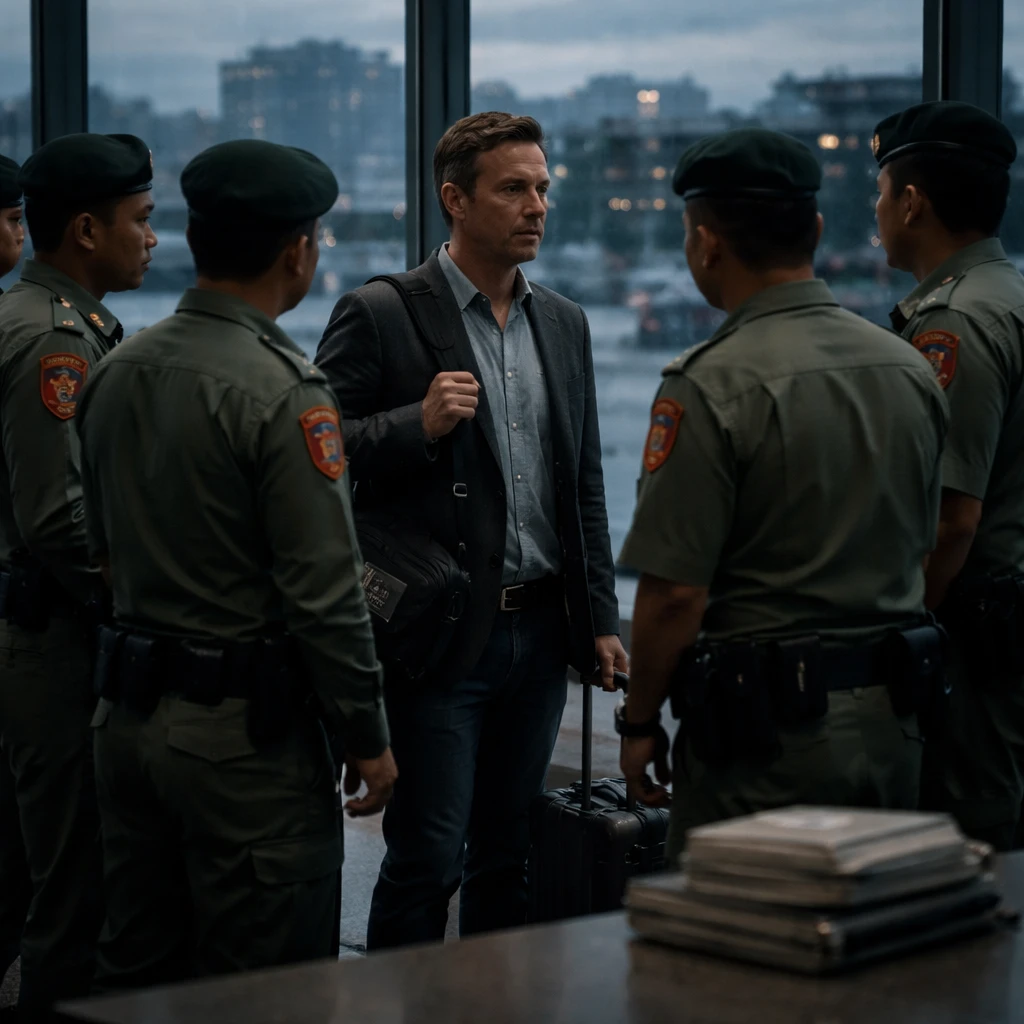
An American businessman who authored a book about living in Myanmar after the 2021 military takeover was detained upon his arrival back in the country on Thursday, two people briefed on the situation said.
The individual, Adam Castillo, is a former head of the American Chamber of Commerce in Myanmar and is based in Yangon, where he operates a security firm. One of the people familiar with the matter said Castillo was stopped at an airport after travelling to Myanmar.
A spokesperson for the U.S. State Department said officials were aware of reports that an American had been detained in Myanmar but declined to provide further comment "due to privacy concerns." A representative of the military-backed government did not immediately respond to requests for comment.
Castillo has been abroad promoting his book, Finding Our Voice, which recounts his experience of staying in Myanmar following the 2021 coup. The book describes the military's violent response to pro-democracy demonstrations and offers criticism of U.S. policy, including sanctions, arguing they have been ineffective and calling instead for increased business engagement.
The 2021 seizure of power ended a short period of civilian rule under Aung San Suu Kyi and precipitated a wider internal conflict. The takeover led to a civil war between the armed forces and a coalition of pro-democracy resistance groups aligned with longstanding ethnic minority organizations.
In early April, the former junta leader Min Aung Hlaing was sworn in as Myanmar's president after an election widely criticised as being engineered by the military. That contest excluded major opposition groups, including the political party associated with Aung San Suu Kyi, and took place amid ongoing conflict.
Castillo, a former U.S. Marine, visited the White House last year and suggested to officials that the United States take on a peace-broker role with a view to gaining access to rare earth minerals. His recent book documents the military's bloody crackdown on pro-democracy protesters while also arguing that greater commercial engagement could be a more effective policy lever than sanctions.
The reported detention has drawn limited public comment from U.S. officials and no immediate reply from Myanmar's authorities. Beyond the immediate factual circumstances, the case underscores tensions between business actors operating in Myanmar and the country's ruling authorities, as well as the contested nature of international policy approaches toward the country.