
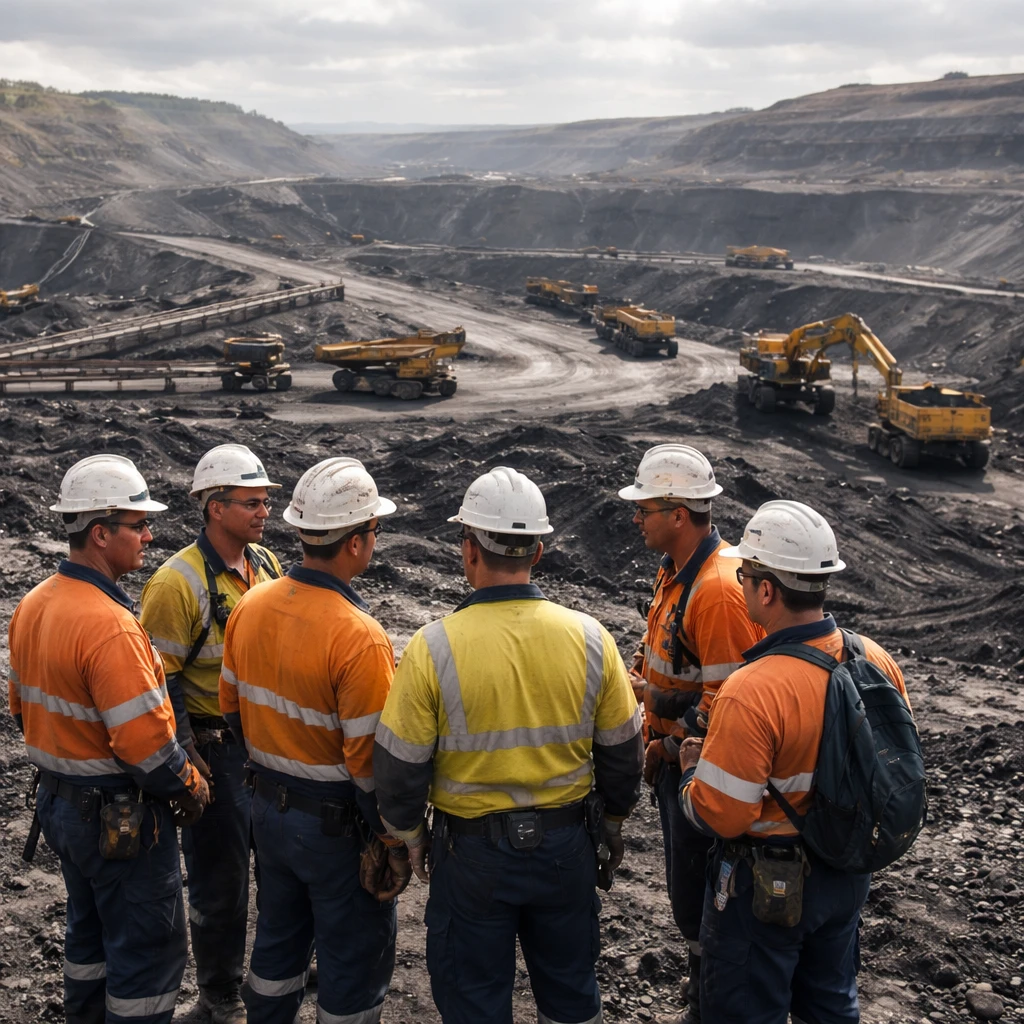
Workers at the Premier coal mine operated by Yancoal Australia approved potential strike action on Wednesday, the Mining and Energy Union said, with more than 90% of voting union members supporting the proposed measures. Those measures include the option of work stoppages lasting longer than 12 hours, though the union did not specify when any industrial action would begin.
The Australian Manufacturing Workers’ Union also recorded strong support for industrial action at the site, with 93% of its members voting in favor of the proposed measures.
The Premier mine provides coal to power generators in Western Australia. The facility is scheduled to close around the end of the decade as Western Australia transitions away from government-owned coal-fired electricity generation by 2030.
The union has raised concerns about the current enterprise agreement, noting it contains six different roster arrangements. The union said some of these roster options could affect how redundancy entitlements are calculated if they are implemented.
Yancoal Australia did not immediately respond to a request for comment on the voting outcome. The company’s majority shareholder is Yankuang Energy (SHA:600188), a Chinese state-backed mining company, according to the company information cited in reporting.
Unions and the industry have reported a rise in industrial action among Australian mining companies, a trend the article attributes to rising inflation pressures on workers and changes to workplace laws under the Labor government.
Context and implications
The result reflects strong support within the workforce for escalation should negotiations not meet their demands. The prospect of stoppages at a mine that supplies power generators highlights potential operational risks for electricity production in Western Australia, while the scheduled closure of the facility by around 2030 sets a finite horizon for workforce and asset transitions.
This report is limited to the facts provided by the unions and company information in the reporting. No timing for action was specified by the unions, and the company had not offered a public response at the time of reporting.