
Stock Markets June 11, 2026 07:50 AM

William Blair Lowers Data Center and Power Index to 75 Citing Local Opposition and Supply Constraints

Firm raises 2030 U.S. data center power deficit forecast as demand and planned capacity grow amid power delivery challenges

By Marcus Reed
Share
Twitter Reddit Facebook LinkedIn
AMZN EQIX DLR META

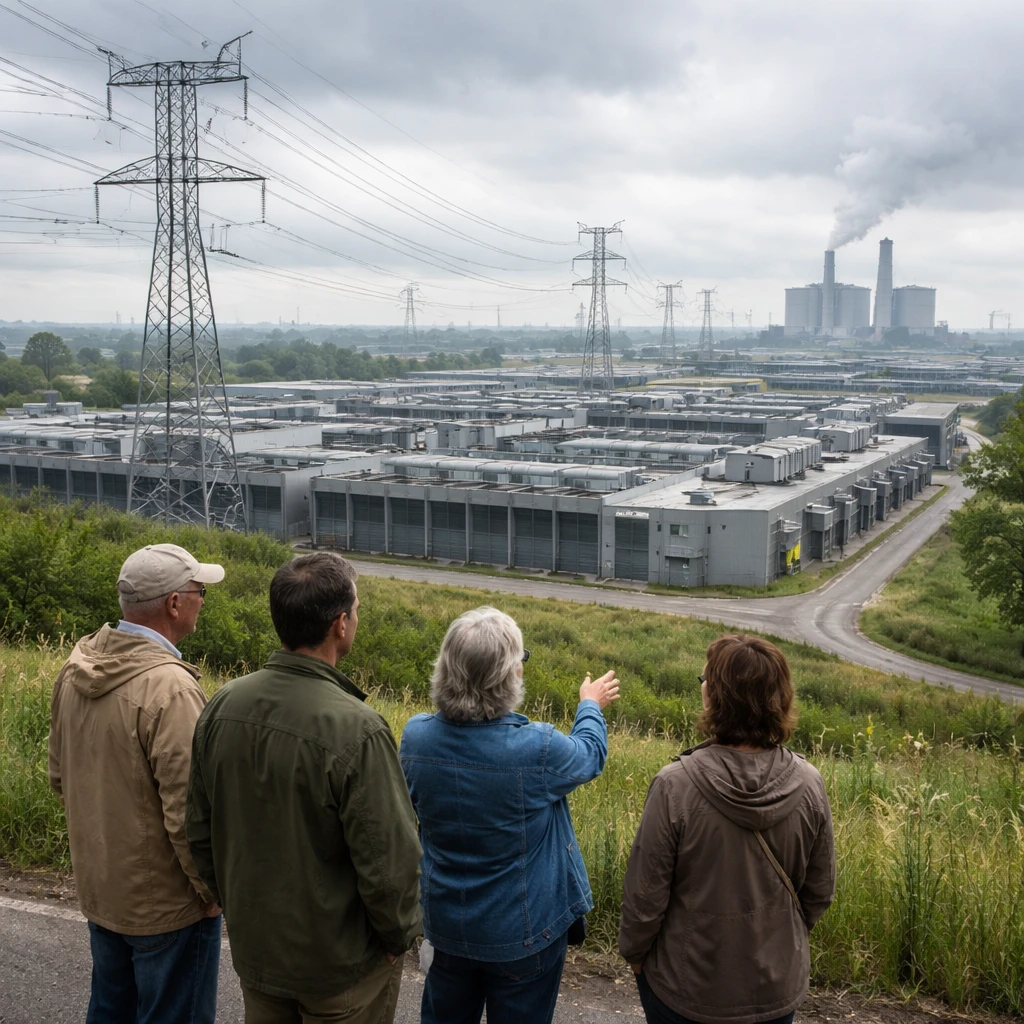
William Blair cut its data center and power index to 75 in May 2026 from 78, pointing to heightened community resistance to new data center locations and tightening power availability. The firm increased its projection for the U.S. data center power supply-demand shortfall in 2030 to 28 gigawatts from 21 gigawatts, while the broader U.S. power deficit stands at 127 gigawatts. Data center demand scores and active capacity moved modestly higher, while sentiment fell on concerns over siting, grid connections and equipment lead times.

William Blair Lowers Data Center and Power Index to 75 Citing Local Opposition and Supply Constraints
AMZN EQIX DLR META
Summarize with
ChatGPT Perplexity Claude Grok Gemini

Key Points

  • William Blair lowered its data center and power index to 75 in May 2026 from 78, citing local opposition and power supply constraints - sectors affected include data centers, utilities and power infrastructure.
  • The firm increased its 2030 U.S. data center power deficit forecast to 28 gigawatts from 21 gigawatts; the overall U.S. power supply and demand deficit is 127 gigawatts - relevant to grid operators and energy markets.
  • Active U.S. data center capacity edged to 46 gigawatts and planned capacity rose to 205 gigawatts; active AI capacity is 4.48 gigawatts with 109 gigawatts planned - implications for hardware suppliers and equipment manufacturers.

William Blair revised its data center and power index down to 75 in May 2026 from 78, citing growing obstacles associated with local opposition to data center projects and mounting constraints on power supply.

The firm raised its estimate for the U.S. data center power supply and demand deficit in 2030 to 28 gigawatts, up from its prior forecast of 21 gigawatts. William Blair also reported that the total U.S. power supply and demand deficit is 127 gigawatts.

Within the firm's scoring framework, the data center demand score declined to 83 from 91. At the same time, total active data center capacity in the United States increased to 46 gigawatts from 45 gigawatts, and planned capacity moved higher to 205 gigawatts from 198 gigawatts.

Focusing on artificial intelligence workloads, William Blair said active AI data center capacity in the U.S. rose to 4.48 gigawatts from 4.46 gigawatts. Planned AI data center capacity expanded to 109 gigawatts from 104 gigawatts.

The power supply score in the firm's index remained unchanged at 89. William Blair flagged significant activity in turbine orders: global turbine orders in 2025 totaled 136 gigawatts, an 87% increase from 73 gigawatts in 2024. U.S. turbine orders were reported at 55 gigawatts in 2025, a rise of 198% from 19 gigawatts in 2024.

Sentiment in the firm's data center and power outlook eased, with the sentiment score falling to 48.9 from 51. A survey accompanying the analysis showed stronger support for nuclear fleet expansion, while also identifying several operational and siting challenges: difficulties with local opposition to data center locations, delays in power availability, limits on grid connections, and lengthy lead times for power generation equipment.


Contextual note: The firm’s revisions reflect both rising planned capacity for data centers and persistent questions about the pace and availability of power at the locations where that capacity is being developed.

Risks

  • Local opposition to data center locations may slow or block projects, affecting the data center sector and related construction markets.
  • Delays in power availability and limits on grid connections risk postponing operations or increasing costs for data center developers and utilities.
  • Long lead times for power generation equipment could extend the timeline to close supply gaps, impacting energy suppliers and grid planners.

More from Stock Markets

Pentagon Seeks $13.7 Billion to Reverse Drop in F-35 Readiness Jun 11, 2026 Kimco Realty Shares Rise After Subsidiary Prices Upsized Exchangeable Notes Jun 11, 2026 UniCredit Reduces Moscow Footprint, Moves Russian Network Toward Remote Service Jun 11, 2026 GE Vernova Advances After Analyst Re-rating and Datacenter Demand Signals Jun 11, 2026 Oppenheimer Opens Wall Street Coverage of SpaceX, Issues Bullish Outlook Jun 11, 2026