
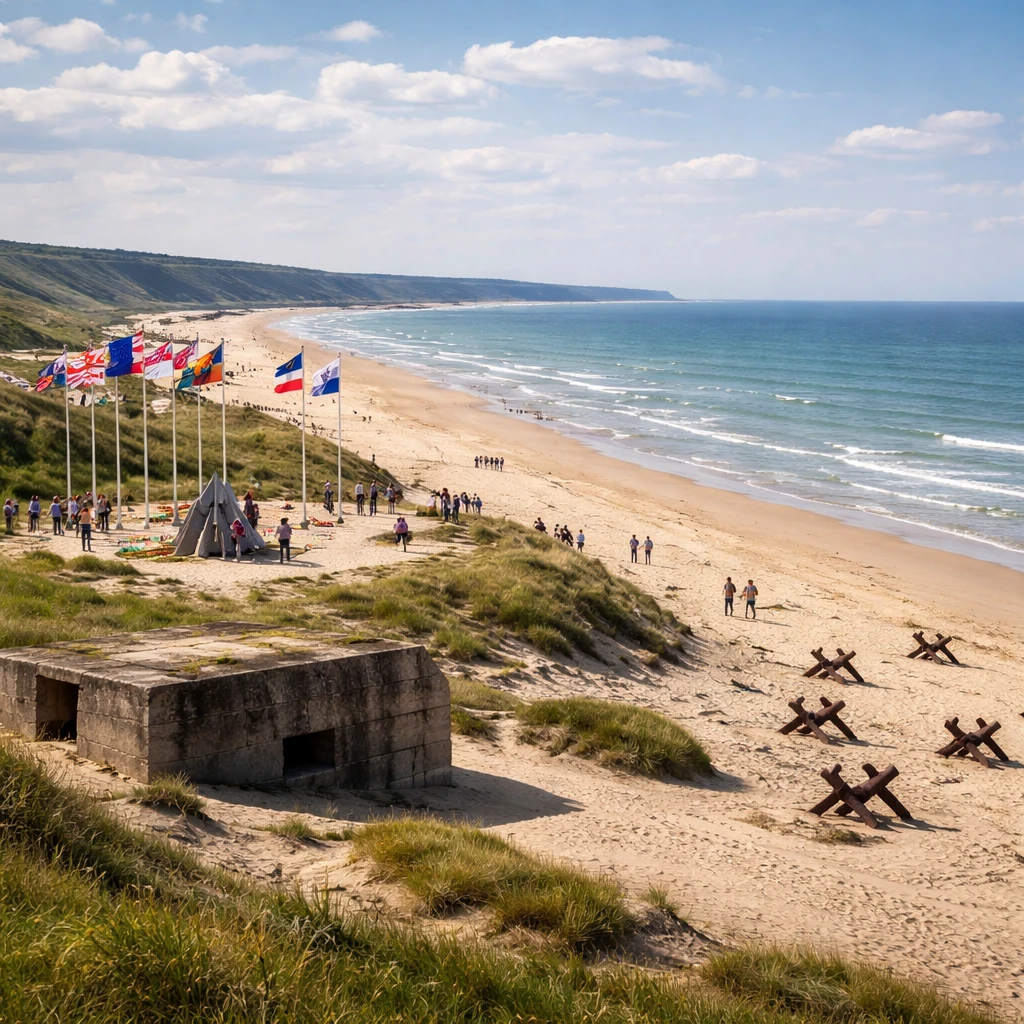
PARIS, July 26 - The Normandy beaches where Allied forces landed on June 6, 1944, to confront Nazi troops and later contribute to the liberation of France have been added to the UNESCO World Heritage list, the United Nations body said on Sunday.
In an announcement on its website, UNESCO framed the coastline as an "exceptional cultural landscape shaped both by the events of 1944 and by their enduring remembrance," language the organization said underpinned its decision to afford the area protected status.
The stretch of coastline is a regular focal point for international commemorations. World leaders from the United States, Britain, Canada and France customarily attend ceremonies there to mark the landings and honor those who took part.
The military operation that began on June 6, 1944, involved soldiers from a broad array of Allied nations. Forces who participated in the Normandy landings came from the United States, Britain, Canada, Belgium, Norway, Poland, Luxembourg, Greece, Czechoslovakia, New Zealand and Australia. Additionally, some 177 French commandos were involved in the assault.
UNESCO and the announcement emphasize the dual character of the site: both as the scene of a major wartime operation and as a place of ongoing collective memory. The assault is noted in the announcement as having marked a decisive stage in the liberation of Europe from Nazi Germany during World War Two.
According to the information released, a total of 156,115 Allied troops either went ashore by sea on five beaches codenamed Utah, Omaha, Gold, Juno and Sword or were dropped by air behind German coastal defenses. The five codenames remain associated with the initial amphibious landings of the operation.
The UNESCO inscription recognizes the Normandy coastline for its historical significance and for the way memories of the June 1944 events have been preserved and commemorated. The declaration follows longstanding commemorative use of the beaches, which regularly draw international delegations and ceremonies.