
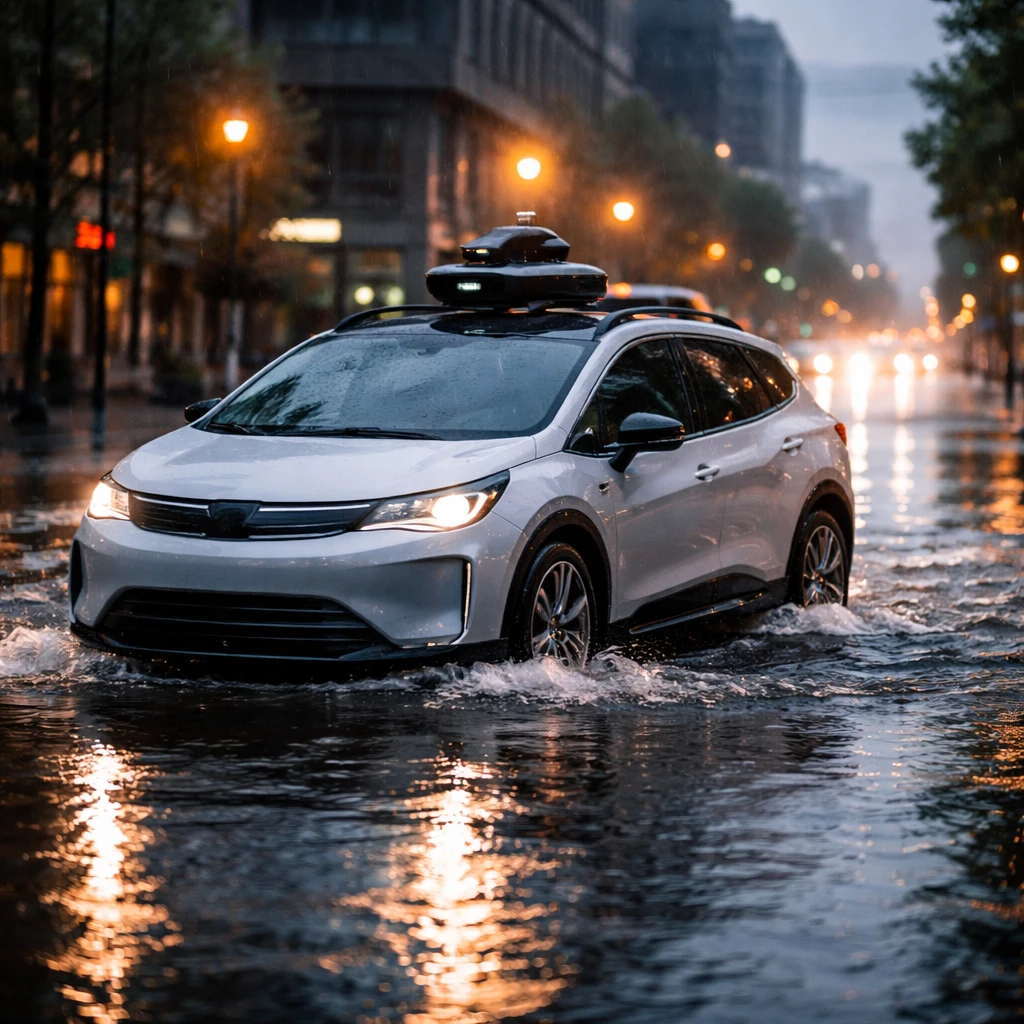
Waymo has initiated a recall affecting 3,791 of its robotaxis to correct a software defect that can lead the autonomous vehicles to traverse flooded roadways. According to documents posted on the National Highway Traffic Safety Administration (NHTSA) website, the recall applies to vehicles outfitted with the company’s fifth- and sixth-generation automated-driving systems.
The company said it has introduced additional operational constraints on the affected software while engineers develop a permanent fix. The measures are intended to limit exposure to the condition that prompted the recall until the underlying issue is corrected.
The defect came to light following an April 20 event in which an unoccupied Waymo robotaxi encountered a flooded portion of roadway. Rather than avoiding the water, the vehicle proceeded into the flooded section at a reduced speed, according to the NHTSA documents. The agency’s posting notes that no injuries resulted from that occurrence.
Regulators characterize the recall as relatively small in scale. Separately, NHTSA is conducting another investigation into Waymo’s self-driving vehicles after an incident in January in Santa Monica, California, in which one of the company’s vehicles struck a child near a school. The two actions are distinct but reflect continued regulatory scrutiny of the fleet.
Waymo has been expanding its robotaxi service across multiple U.S. cities. The recall targets a subset of that deployed fleet based on the generations of the automated-driving stack involved, as set out in the NHTSA documents.
Analysis
From an operational perspective, limiting software capabilities through temporary constraints is a common interim step while a permanent remedy is developed and validated. The recall affects vehicles running specific generations of the automated-driving software, which enables the company to narrow the scope of remediation to systems that share the same software architecture.
For regulators and operators, the incident underscores the challenges of edge-case environmental detection - in this case, flooded roadways - and the need to validate sensor fusion and decision logic across those scenarios. The recall and the separate NHTSA probe into the January collision highlight the layered oversight the fleet faces as it scales.
Key Points
- Waymo is recalling 3,791 robotaxis equipped with its fifth- and sixth-generation automated-driving systems to address a flood-detection software flaw.
- The recall follows an April 20 incident in which an unoccupied vehicle entered floodwater at reduced speed; no injuries were reported.
- Sectors affected include autonomous vehicle operations, regulatory oversight bodies, and investor considerations for the parent company given ongoing scrutiny.
Risks and Uncertainties
- Regulatory scrutiny - NHTSA has posted documents related to the recall and is conducting a separate investigation into a January collision, creating ongoing oversight uncertainty for the fleet.
- Operational limitations - The temporary operational constraints may restrict how affected vehicles are deployed until a permanent software solution is validated and rolled out.
- Scope of remediation - While described as relatively small in scale, the recall targets specific software generations; the timeline and validation of the permanent fix remain unspecified in the documents.