
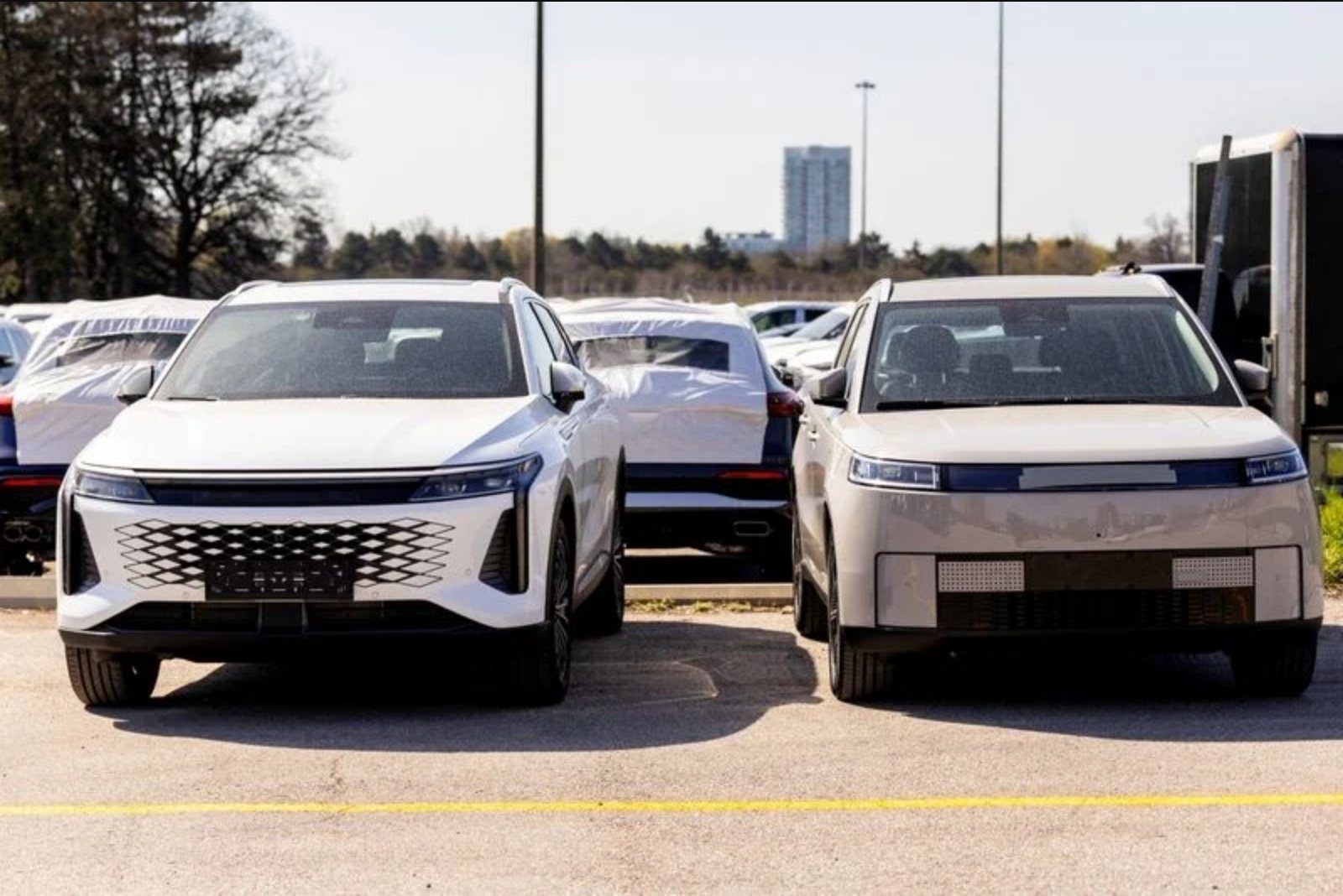
China’s ambassador to Canada, Wang Di, said on Friday that electric vehicles from Geely Holding Group’s Lotus brand will be delivered to Canada next month under a trade arrangement between Prime Minister Mark Carney and Chinese President Xi Jinping. Wang described the arrival as the first instance of Chinese-owned and manufactured cars entering Canada under a special framework that permits up to 49,000 Chinese-made EVs per year to enter with a reduced tariff.
"Geely EVs will be arriving in Canada next month and they will be holding a ceremony when the cars are delivered in Montreal," Wang said. The ambassador indicated that other Chinese marques, including Chery and BYD, are working with Canadian government agencies to finish procedural steps required before their vehicles can be shipped for sale in Canada.
Lotus Cars had not immediately replied to a request for comment, and Canada’s Global Affairs department did not provide an immediate comment on the expected arrival of the initial cars. Wang also noted that some vehicles from Chinese manufacturers have arrived earlier in Canada for testing in country-specific conditions.
Wang expressed hope that "in autumn this year, the truly, genuinely other Chinese brand EVs will complete the procedures and get into the Canadian market," adding that BYD’s Executive Vice President Stella Li recently told Reuters the company would likely begin sales next year. The ambassador further observed that U.S.-based Tesla has already imported Chinese-made vehicles into Canada, demonstrating that imports of China-manufactured cars are not unprecedented.
Beyond the incoming passenger cars, Wang framed the arrivals in the context of broader trade and investment goals between the two countries. He said Chinese EV makers are interested in establishing joint ventures in Canada but will initially concentrate on building retail sales and assessing market demand before making local manufacturing or supply-chain commitments.
Carney’s decision to allow Chinese EV imports received criticism from some U.S. officials and lawmakers, Wang acknowledged, noting that the policy was part of Ottawa’s efforts to diversify trade away from the United States. The reduced-tariff provision for up to 49,000 vehicles annually is a central element of that policy shift.
Wang also addressed broader trade ambitions. During Carney’s visit to China in January, the Canadian prime minister said Ottawa would try to increase exports to China by 50% by 2030. Wang Yi, China’s Minister of Foreign Affairs, asserted last month that exports could grow by 100%. Wang Di explained the arithmetic behind doubling exports, saying such a target would require near 15% annual growth for five years, and noted that Canadian exports have risen 27.5% in the five months since Carney’s visit.
On energy and agricultural trade, Wang set out figures and areas of potential expansion that Ottawa and Beijing have discussed. He said Canada could supply nearly 22 million metric tons of crude oil to China annually, up from 15.5 million tons the previous year. He also indicated there is "great potential" for China to buy liquefied natural gas from Canada, without providing further detail.
Wang pointed to Canada's agricultural exports as another growth area, observing that Canada, a major exporter of canola, peas and beef, currently accounts for roughly 2% of Chinese agricultural imports. He portrayed that share as evidence of room to expand market access for Canadian farm exports.
Tariff measures remain an unresolved factor for exporters. China reduced duties in March on some Canadian products, but kept a 100% duty on canola oil and a 25% duty on pork. Temporary tariff relief covering items such as canola meal, peas and lobster is set to expire at the end of the year, creating uncertainty for those sectors. Wang declined to say whether China would extend the tariff suspensions or adjust the remaining duties on pork and canola oil.
Repeatedly emphasizing diplomatic principles, Wang said progress depends on both countries adhering to mutual respect, equality and reciprocity. "As long as we keep to the right track, at the right pace, towards the right direction, there will be a lot of potential for us to increase our trade," he said. He warned that when those principles are not followed, negative consequences can follow.
The unfolding entry of Chinese-made EVs into Canada - starting with Lotus - and the discussions around joint ventures and energy and agricultural exports reflect an active, if cautious, phase in bilateral trade relations. Canadian officials, Chinese manufacturers and export-dependent sectors, including energy and agriculture, will likely watch closely as shipments, tariff measures and procedural approvals play out in the coming months.