
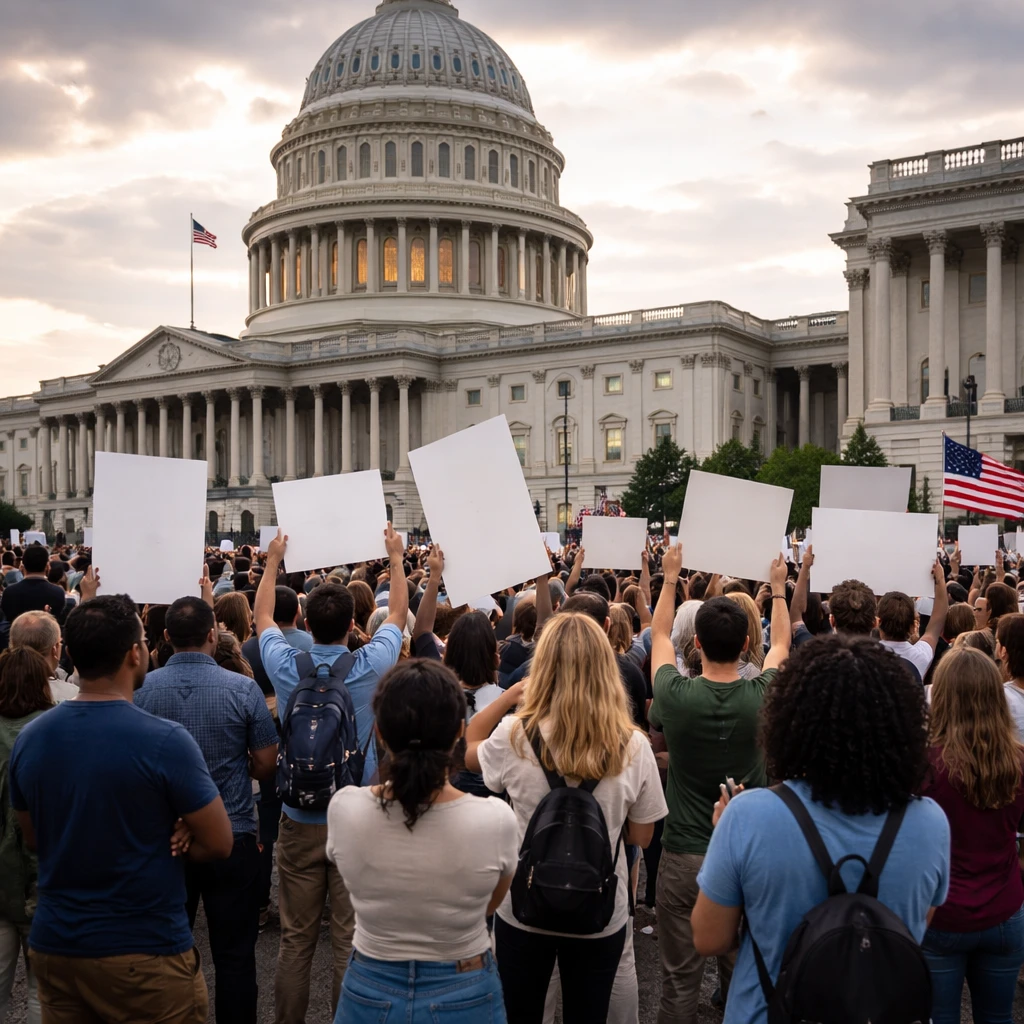
A new Reuters/Ipsos survey conducted over four days and completed on Monday finds broad public support for the incoming Democratic-majority Congress to pursue legislation aimed at ending the war with Iran and to roll back tariffs instituted by the Trump administration.
The poll reports that 71% of respondents favor congressional action to end the conflict with Iran that President Donald Trump launched alongside Israel in February. That figure includes 93% of Democrats and 51% of Republicans, according to the survey results.
In the wake of last week’s midterm elections, Democrats won their largest Senate and House majorities since at least 2008. Party leaders say they will address cost-of-living pressures and will seek to press for an end to the U.S. war with Iran. The new Democratic majority will take control when the next Congress is sworn in on January 3.
The same poll shows 62% of respondents would back efforts to repeal tariffs on imports that were put in place under the Trump administration. The survey notes the war with Iran has contributed to a sharp rise in fuel prices, compounding inflation that was also driven, in part, by new taxes the Trump administration applied to hundreds of imported goods.
The poll includes the president’s stated rationale: Trump has defended the military action as necessary to prevent Iran from obtaining a nuclear weapon. On tariffs, the president has said the measures are intended to bolster American industry by shielding it from cheaper foreign imports.
Bipartisan Cooperation and Policy Priorities
Respondents broadly expressed a desire for cooperation across party lines. Large majorities in both parties said it was important for Trump to try to work with Democratic leaders, and that Democratic leaders in the new Congress should also try to work with the president.
Cost-of-living concerns emerged as the dominant priority: nine in 10 respondents said these issues should be a focus for Congress during its first 100 days. Other policy priorities attracted smaller shares of support, including regulation of artificial intelligence, immigration reform and climate change.
On regulation of artificial intelligence, 28% of respondents said Democrats had the better approach while 20% favored Republicans; the remainder were unsure or saw no clear advantage for either party.
Public Sentiment on Impeachment, Leadership and Party Favorability
The poll also captured public concern that the new Democratic majority might use its powers to pursue legal action against the president. Some 42% of respondents said it would be "bad for the country" if the new Congress attempted to impeach Trump, while 33% said impeachment would be "good for the country." The rest were undecided or did not respond.
Certain Democratic lawmakers remain split over domestic priorities, including how aggressively to lower healthcare costs, and are divided on tactics for challenging the president and members of his administration, including whether to pursue impeachment proceedings against the president or cabinet officials.
The survey notes an immediate legal flashpoint: Defense Secretary Pete Hegseth is expected to face a House impeachment vote this week after an action by a Republican lawmaker.
Following the elections, Trump said he would "probably" get along with Democrats, yet he has elevated Stephen Miller, a polarizing aide who has described the Democratic Party as a domestic extremist group, to the position of White House chief of staff.
Approval and favorability ratings in the poll portray a polarized and unsettled electorate. The president’s approval rating stands at 32%, near the lowest of his political career, the survey shows. Party favorability numbers are weak for both sides: 45% of respondents viewed Democrats favorably while 51% viewed them unfavorably; Republicans were seen favorably by 35% and unfavorably by 60%.
Survey Methodology
The Reuters/Ipsos poll was conducted online and nationwide, collecting responses from 1,705 U.S. adults. The reported margin of error for the survey is about 2 percentage points.