
Stock Markets June 9, 2026 08:27 AM

Thoma Bravo's Orlando Bravo: The 'SaaSpocalypse' Has Ended as AI Becomes a Tailwind

Private equity veteran says AI-driven 'agentic' tools will lift software revenue and spur a new class of corporate solutions

By Leila Farooq
Share
Twitter Reddit Facebook LinkedIn
CRM NOW IGV HUBS MNDY

Orlando Bravo, founder and managing partner of Thoma Bravo, told CNBC that fears of an AI-driven collapse in software stocks - dubbed the 'SaaSpocalypse' - are over. Speaking at the SuperReturn International conference in Berlin, Bravo called AI an "enormous tailwind" for software companies, saying roughly half of new revenue at his firm comes from AI-related, agentic solutions. He said his firm's portfolio, which generates about $35 billion in combined revenue and sits within nearly $200 billion of assets under management, is largely thriving amid the AI transition. The comments follow a February sell-off in many software names after Anthropic released advanced tools for its Claude co-working agent, and come as parts of the sector have since rebounded.

Thoma Bravo's Orlando Bravo: The 'SaaSpocalypse' Has Ended as AI Becomes a Tailwind
CRM NOW IGV HUBS MNDY
Summarize with
ChatGPT Perplexity Claude Grok Gemini

Key Points

  • Orlando Bravo said the 'SaaSpocalypse' is over and called AI an "enormous tailwind" for software companies.
  • Thoma Bravo's portfolio companies generate about $35 billion in combined revenue and the firm manages nearly $200 billion in assets; roughly 50% of new revenue is AI-related, according to Bravo.
  • After a February sell-off following Anthropic's advanced Claude agent tools, some software stocks and the iShares Expanded Tech-Software Sector ETF have rebounded, with the ETF up 21% in May and more than 9% over three months.

Orlando Bravo, the founder and managing partner of private equity firm Thoma Bravo, told CNBC that concerns about an AI-induced "SaaSpocalypse" have dissipated and that artificial intelligence is serving as "an enormous tailwind" for software companies.

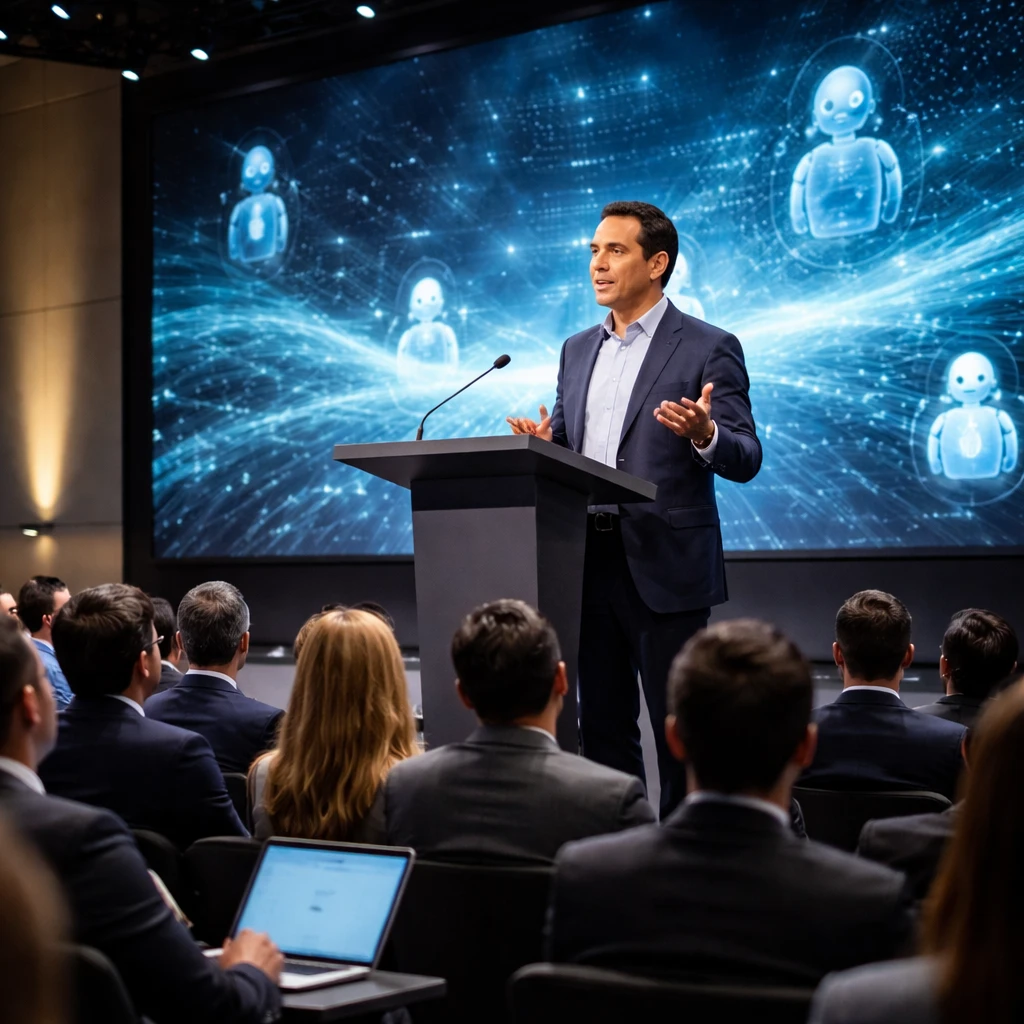
Speaking at the SuperReturn International private equity and venture capital conference in Berlin, Bravo said software firms and AI products are converging into what he described as new "agentic solutions" designed for corporate customers. He argued these developments will enable software companies to scale by automating elements of human judgment and routine processes.

Bravo was explicit in his assessment: "The SaaSpocalypse is over. It's finished, no more." He added that software firms stand to reach a "completely new level" by incorporating automation that takes on aspects of human decision-making.

On the revenue front, Bravo said roughly half of Thoma Bravo's new revenue is coming from AI-related streams, which he called "AI revenue, agentic revenue." He noted that the firm's portfolio companies, which collectively produce about $35 billion in revenue, are generally "booming" in the wake of AI-driven demand. Thoma Bravo manages close to $200 billion in assets.

Bravo's comments follow volatility in the software sector earlier this year. In February, Anthropic released advanced AI tools for its Claude co-working agent, an event that coincided with a sharp sell-off in a range of software stocks. Names that experienced downward pressure included Salesforce, Figma, Monday.com, HubSpot, ServiceNow and others.

Since that pullback, parts of the software complex have staged a recovery. The iShares Expanded Tech-Software Sector ETF rallied 21% in May, marking its strongest monthly gain since October 2001, and the ETF has risen more than 9% over a three-month span. Short-term price movements shown in market data included CRM down 1.61%, NOW down 4.26%, IGV down 1.38%, HUBS down 2.64% and MNDY down 2.1% at the time of reporting.

Bravo also acknowledged there is an adjustment underway in markets and among companies as participants work through governance, cybersecurity and return-on-investment questions tied to newer AI agentic tools. He suggested that investors may be underestimating software companies' capacity to adapt to the AI era, a view he reinforced in his discussion of portfolio performance and revenue composition.


Contextual note: Bravo's remarks emphasize a bullish view on AI's role in software monetization while recognizing outstanding questions about implementation and value capture. The comments link sector rebounds to the evolving integration of AI into commercial software offerings.

Risks

  • Ongoing governance, cybersecurity and return-on-investment questions for new AI agentic tools could create uncertainties for software firms and their customers - this affects the enterprise software and cybersecurity sectors.
  • Short-term market volatility remains a factor, as shown by the February sell-off in multiple software names and the mixed near-term price moves reported for specific tickers - this impacts software equities and related ETFs.
  • Investor concerns about how quickly and profitably companies will integrate AI capabilities could lead to periods of re-pricing or uneven adoption across the software sector.

More from Stock Markets

Hinge Health Boosts 2026 Revenue Outlook; Shares Rise After Hours Jun 9, 2026 Mixed Close for U.S. Equities as Dow Inches Higher; Tech, Energy Slip Jun 9, 2026 Toronto market edges lower as energy, materials and tech weigh on S&P/TSX Jun 9, 2026 Bovespa Advances as Real Estate, Consumer and Financial Stocks Lead Gains Jun 9, 2026 Options Traders Anticipate Smaller Moves for Several Companies Ahead of Earnings Jun 9, 2026