
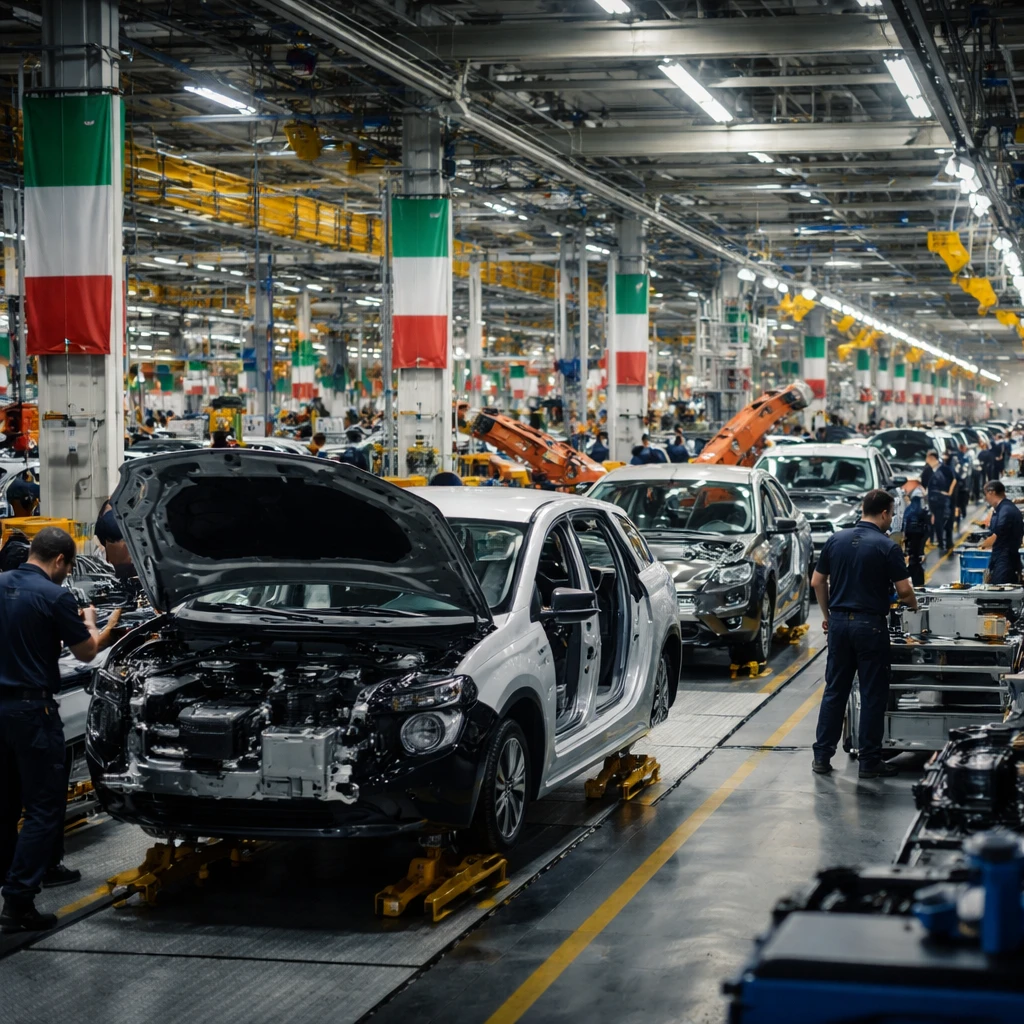
Stellantis' European head described maintaining production in Italy as a mounting operational challenge, stressing the need for closer coordination between industry, national and local authorities to preserve local manufacturing.
Speaking at a conference in Verona, Emanuele Cappellano outlined the group's ongoing and planned investments in Italy and explained why, despite substantial spending, keeping production on Italian soil is becoming more complicated. He said Stellantis would invest more than c5 billion over the next five years in research and development inside Italy, and that the company currently manufactures 14 models in the country with plans to add nine more by 2030.
Cappellano also highlighted Stellantis' local procurement footprint, saying the group expends over c7 billion each year on purchases from Italian suppliers. He presented those commitments as evidence of the automaker's dedication to the country, while acknowledging that the broader context is increasingly difficult and rapidly evolving.
According to a company spokesperson quoting Cappellano, several factors are squeezing production economics: rising costs tied to present global conflicts, stronger competition due to increasing vehicle imports, and the financial burden of the transition to electric vehicles. "Under these conditions, ensuring the continuity of production that Italy needs becomes a daily challenge," the spokesperson said.
Stellantis remains Italy's only major automaker. Its local output, however, sits well below historical levels despite a modest recovery this year from a sharp contraction in 2025. In that year, production fell about 20% to roughly 380,000 vehicles - the company's lowest output in decades and about half the volume manufactured in 2023.
To help sustain Italian production, Cappellano urged policymakers to act on specific fronts. He called for measures to lower energy costs and to reduce administrative hurdles that can slow industrial activity. At the same time, he said Stellantis is engaging with European Union authorities to seek "pragmatic solutions" that balance environmental objectives with industrial viability.
Cappellano said recent talks on European local-content requirements and CO2 rules have produced encouraging signs and could lead to new regulations by next spring. He framed these discussions as potentially constructive for aligning environmental standards with industrial needs.
The commentary included a conversion note present at the conference: $1 = 0.9124 euros.
The conference remarks were accompanied in the original briefing by a commercial notice related to an investment product evaluating Stellantis; that promotional content described an AI-driven stock selection process and referenced historical strategy returns and a temporary discount offer. The remarks and the promotional material were presented together at the time of the event.
Contextual note - The statements and figures in this report reflect the information provided during the Verona conference and the company spokesperson's summary of Cappellano's remarks. No additional external data or commentary has been introduced.