
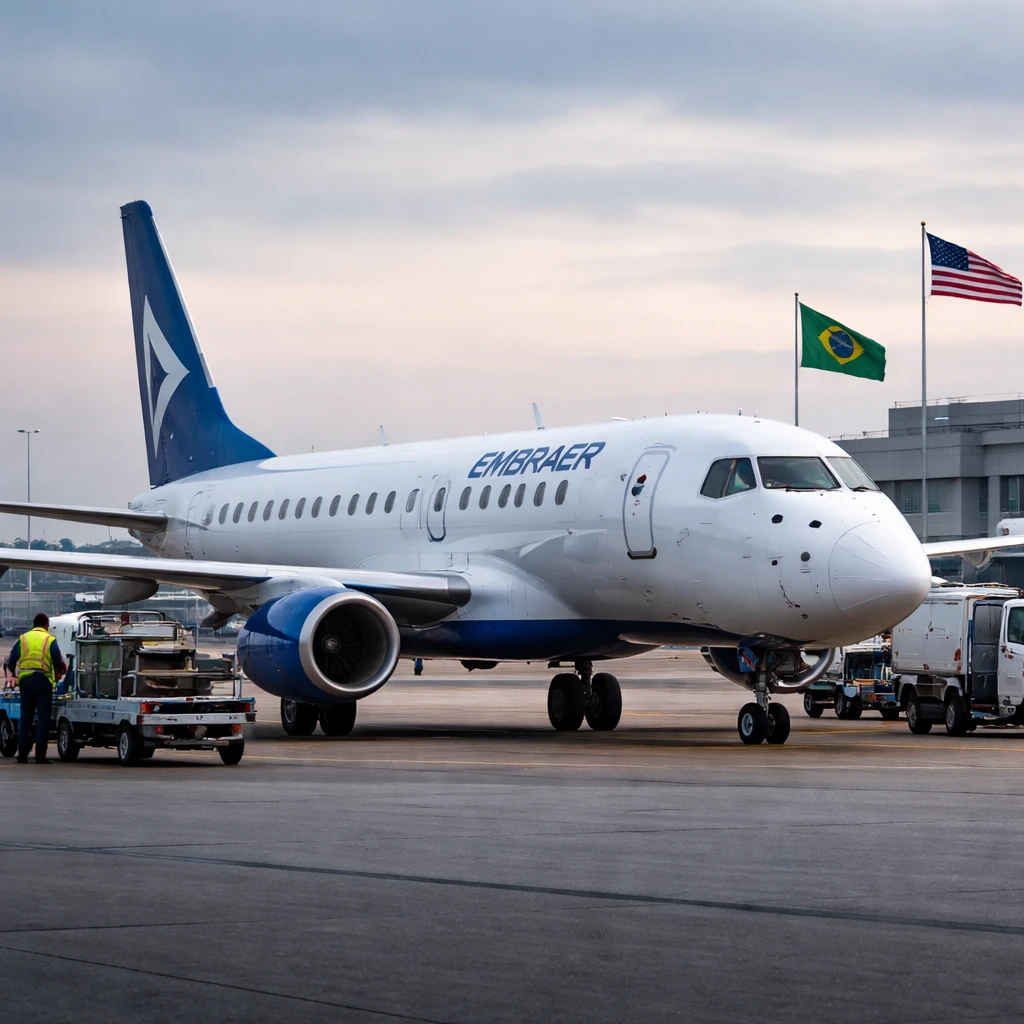
BRASILIA, Nov 26 - Brazilian planemaker Embraer said it was taken aback by a recent U.S. proposal to levy new tariffs on products from Brazil, with the company's chief executive adding that the measures should not affect Embraer in the current year because any enforcement would probably begin in 2027.
On Wednesday U.S. authorities proposed adding new duties on Brazilian goods, among them a 10% tariff on finished aircraft. Embraer's chief executive highlighted the potential end-user impact, focusing on the role of the E175 in the U.S. market.
"The E175 is currently the most-flown aircraft in the United States, and more than 40% of its content is sourced from the US. Imposing a tariff on this aircraft would penalize airlines by forcing them to pay more for the plane. That cost would likely be passed on through higher ticket prices and could even contribute to inflation," CEO Francisco Gomes Neto told reporters in Brasilia.
The comments underline two points emphasized by company leadership: first, the immediate commercial effect on Embraer should be limited this year because of the expected timeline for any tariff implementation; second, the secondary consequences would fall primarily on airlines and passengers if the levy is enacted.
Executives pointed to the E175's market position in the United States and the significant share of U.S.-sourced content in the jet. Those factors, they said, mean a tariff on finished aircraft would raise acquisition costs for carriers operating the type. The CEO expressed concern that airlines would likely pass added costs on to consumers through higher fares, and that outcome could exert upward pressure on inflation measures.
Beyond Embraer's immediate business impact this year, the remarks frame the proposed tariff as a policy measure with downstream effects for the aviation sector, travelers, and potentially broader price dynamics in the economy should it be implemented on the projected timetable.
Summary
Embraer was surprised by the U.S. proposal to add a 10% tariff on finished aircraft from Brazil. Management expects no company-level impact in the current year because implementation would likely occur in 2027. The CEO warned that a tariff on the E175 would raise costs for airlines and could lead to higher ticket prices and a contribution to inflation.
Key points
- U.S. proposal includes a 10% duty on finished aircraft from Brazil, announced on Wednesday.
- Embraer says it was caught off guard but expects no impact this year because enforcement would likely begin in 2027.
- The E175 is the most-flown aircraft in the U.S. and contains more than 40% U.S.-sourced content; a tariff would raise airline acquisition costs and likely push up ticket prices.
Risks and uncertainties
- Timing uncertainty - implementation is likely to take effect in 2027, which leaves open the potential for policy or procedural changes before then.
- Economic passthrough - if airlines absorb higher aircraft costs, consumers could face increased ticket prices, affecting air travel demand and the airline sector.
- Inflationary pressure - higher fares could contribute to broader price pressures in the economy if the tariff is enacted as proposed.