
Overview
SK Hynix is exploring the possibility of contracting Intel Foundry to manufacture the base dies for its next-generation HBM4E products, industry sources told South Korea's Herald Economy. The potential move is presented as a bid to diversify manufacturing options away from a heavy reliance on Taiwan Semiconductor Manufacturing Co (TSMC).
Market reaction
The report coincided with a pullback in related equities. SK Hynix shares dropped 1.9% to 1.621 million won in early trading, while the broader KOSPI index fell 2.5% over the same period. TSMC's shares were reported down 1.7% to NT$2,380, in contrast to a 0.8% rise in the Taiex.
What the proposed change would mean
According to the Herald Economy account, SK Hynix could split base-die production between TSMC and Intel starting with HBM4E, the company's seventh-generation high-bandwidth memory product. Using multiple foundries would provide SK Hynix with additional avenues for manufacturing capacity and cost management, while also lowering dependence on a single external supplier.
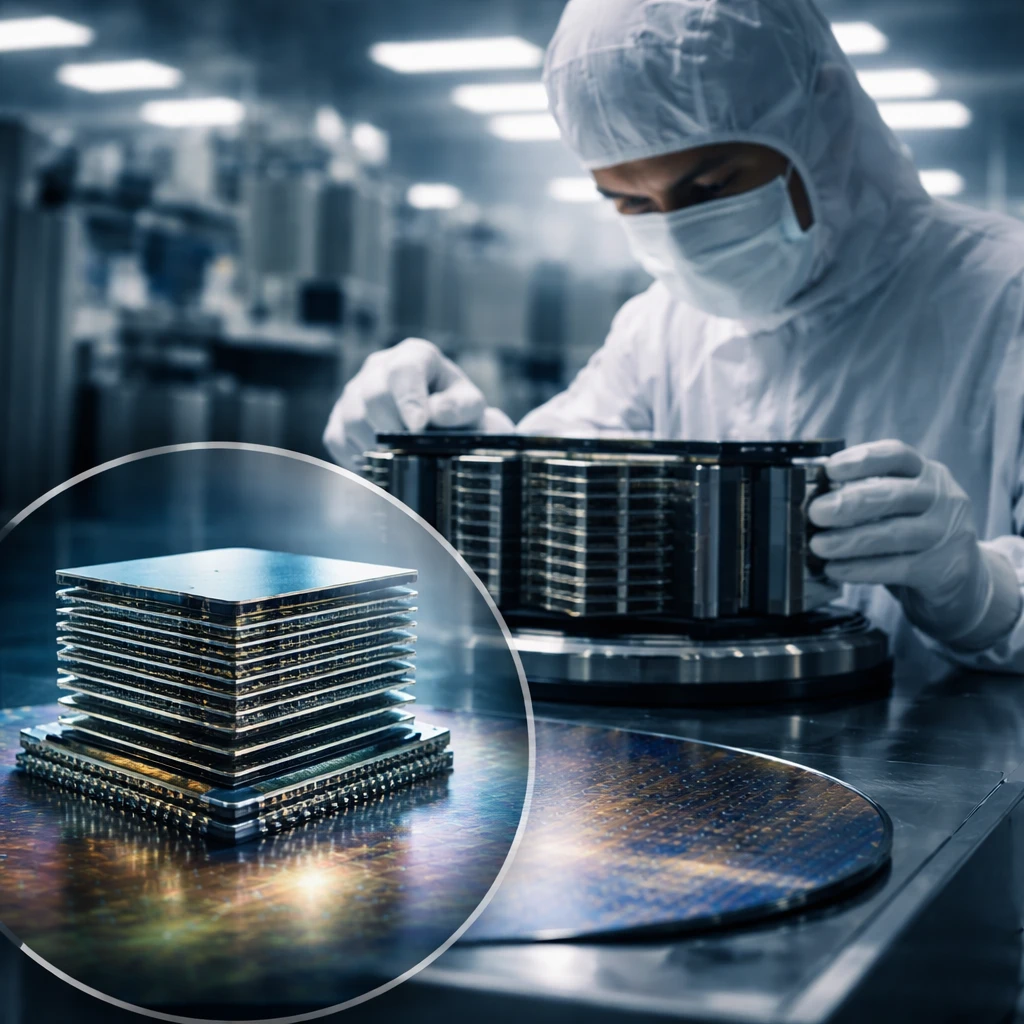
The base die serves as the logic layer at the bottom of an HBM stack and manages the interface between the memory stack and external processors such as GPUs and CPUs. As HBM architectures have grown more complex, the role and importance of this logic layer have increased. SK Hynix previously moved from internally produced base dies through HBM3E to outsourced production for HBM4, and the trend toward outsourcing appears set to continue.
Cost dynamics noted in the report
The Herald report said SK Hynix currently employs TSMC's 12-nanometer-class process for the base die in its HBM4 products. Industry estimates cited by the report indicate that the base die produced at TSMC for HBM4 costs roughly three to four times more than the core DRAM die, creating a material cost component as HBM4E scales to production.
The HBM industry often operates under long-term supply contracts, which can restrict a vendor's ability to immediately pass on higher foundry costs to customers. Introducing an additional foundry partner would, according to the report, give SK Hynix more leverage on pricing and supply security while supporting a multi-vendor manufacturing approach as demand for customized HBM increases.
Packaging and broader technology evaluation
Beyond the base die, the company has been evaluating advanced packaging options from both TSMC and Intel. The report cites interest in TSMC's CoWoS-S and CoWoS-L technologies and Intel's EMIB packaging approach as part of SK Hynix's broader assessment of manufacturing and integration strategies.
Product roadmap update
The potential Intel cooperation comes as SK Hynix advances its next-generation HBM roadmap. In June, the company said it had shipped samples of a 12-layer HBM4E to major customers. The product is designed to deliver up to 16Gbps per pin and to improve power efficiency by more than 20% relative to prior generations.
Status of negotiations and remaining uncertainty
The Herald Economy described the Intel arrangement as a plan under consideration rather than a finalized agreement. As a result, the report makes clear that the precise scope and schedule for any Intel production role remain undetermined.